Travel guide
Ban Gioc and Nguom Ngao: reading water and rock in Cao Bang
At Ban Gioc, look at water meeting rock steps. Inside Nguom Ngao, shift your attention to forms on the ceiling and floor. These places invite different questions about water and stone rather than serving as interchangeable backdrops. The sources here do not establish that the waterfall flows through this particular cave.
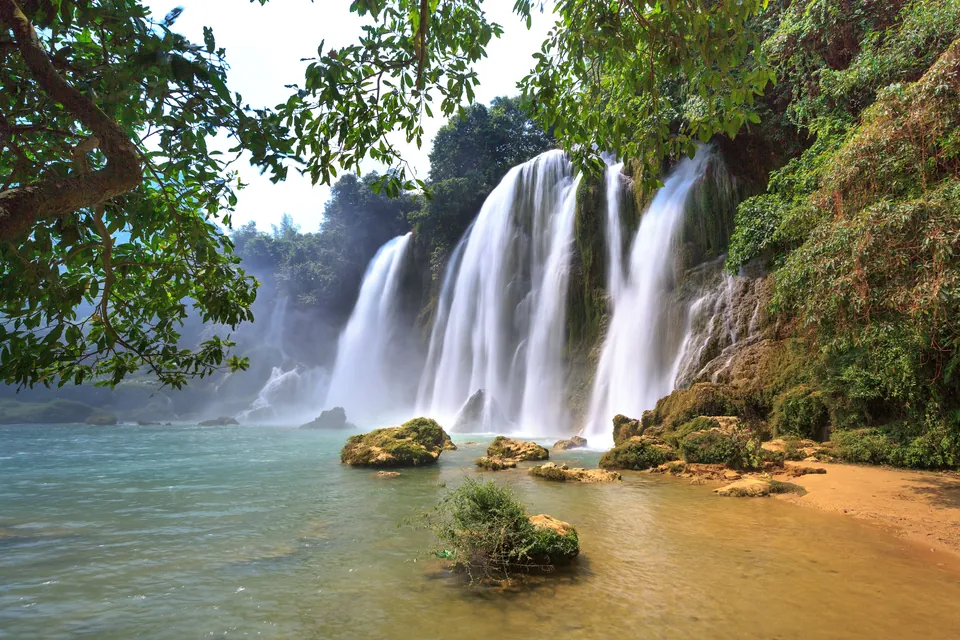
Ban Gioc: movement across a surface
UNESCO places Ban Gioc within the karst landscape of Non nuoc Cao Bang, alongside surface rivers, underground rivers and caves. From an authorised viewpoint, separate three layers: moving water, rock steps and the landscape behind them. A photograph records their appearance at one moment. It does not establish the flow on your travel date, water depth or permission to enter the water. This is an observation exercise, not a route beyond permitted areas.
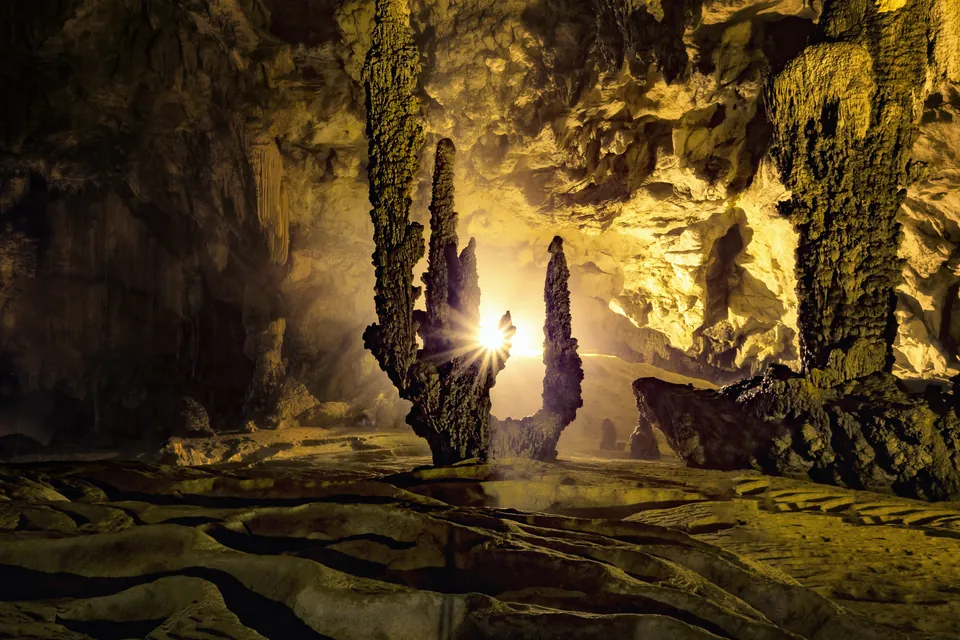

Nguom Ngao: look for accumulated forms
The geopark source describes limestone originating in an ancient sea and dripstone forms in Nguom Ngao. A simple key helps: stalactites hang from ceilings, stalagmites grow from floors, and joined forms can make columns. The US National Park Service explains the general process by which mineral-bearing water loses CO₂ and deposits calcite. This is a scientific reference, not a laboratory diagnosis of every formation in the photograph. Do not touch formations, break fragments or leave the authorised path for a closer view.
Keep three geological clocks separate
The age of the limestone, the development of the cave and the growth of its decorations are different stories. An ancient marine origin does not make every stalagmite as old as its host rock. A familiar-looking shape can be memorable without proving an origin or growth rate. Ask a guide to identify a feature and its interpretive source; do not estimate its age from its size.
Choose an observation question before an itinerary
| Choice | What to consider |
|---|---|
| Ban Gioc | Ban Gioc: choose it for moving water and an outdoor composition; verify weather, route conditions and permitted viewpoints. |
| Nguom Ngao | Nguom Ngao: choose it for time with underground forms; ask about steps, surfaces and the section currently open to visitors. |
| Both | Both: combine them only with enough transfer and observation time. Do not assume a cave is a safe fallback whenever heavy rain arrives. |
Take home a way of looking
Afterwards, write two sentences: what was visibly happening at the waterfall, and what suggested accumulation inside the cave? Separate direct observation from scientific interpretation. Confirm visiting conditions with the responsible operator before travelling; geological accounts and archival photographs do not replace current operational notices.
Ask VietnamGuide AI
Ask VietnamGuide AISources
Explore more
- Choose a Cham-tower outing around Quy Nhon: Twin Towers, Banh It or Canh Tien?
Compare an urban pair, a hilltop ensemble and a tower connected with Do Ban; choose an architectural question rather than collecting all three.
- Three layers of Can Tho heritage: Binh Thuy house, communal house and Ong Pagoda
Choose between family architecture, village memory and a community religious setting; these three Can Tho sites are not interchangeable monuments.
- Nha Trang through towers, pagoda and cathedral: choose an architecture outing
Compare Ponagar, Long Son Pagoda and the Mountain Cathedral by architectural interest, living belief and walking conditions to confirm.