Travel guide
When to visit Chau Doc: weather, ceremonies and breathing room
There is no single best date for every Chau Doc visit. Choose first between joining a major pilgrimage, exploring in a quieter period, or adding a wetland outing. Seasonal descriptions help with planning; the forecast and current event notices decide what is sensible on the day.
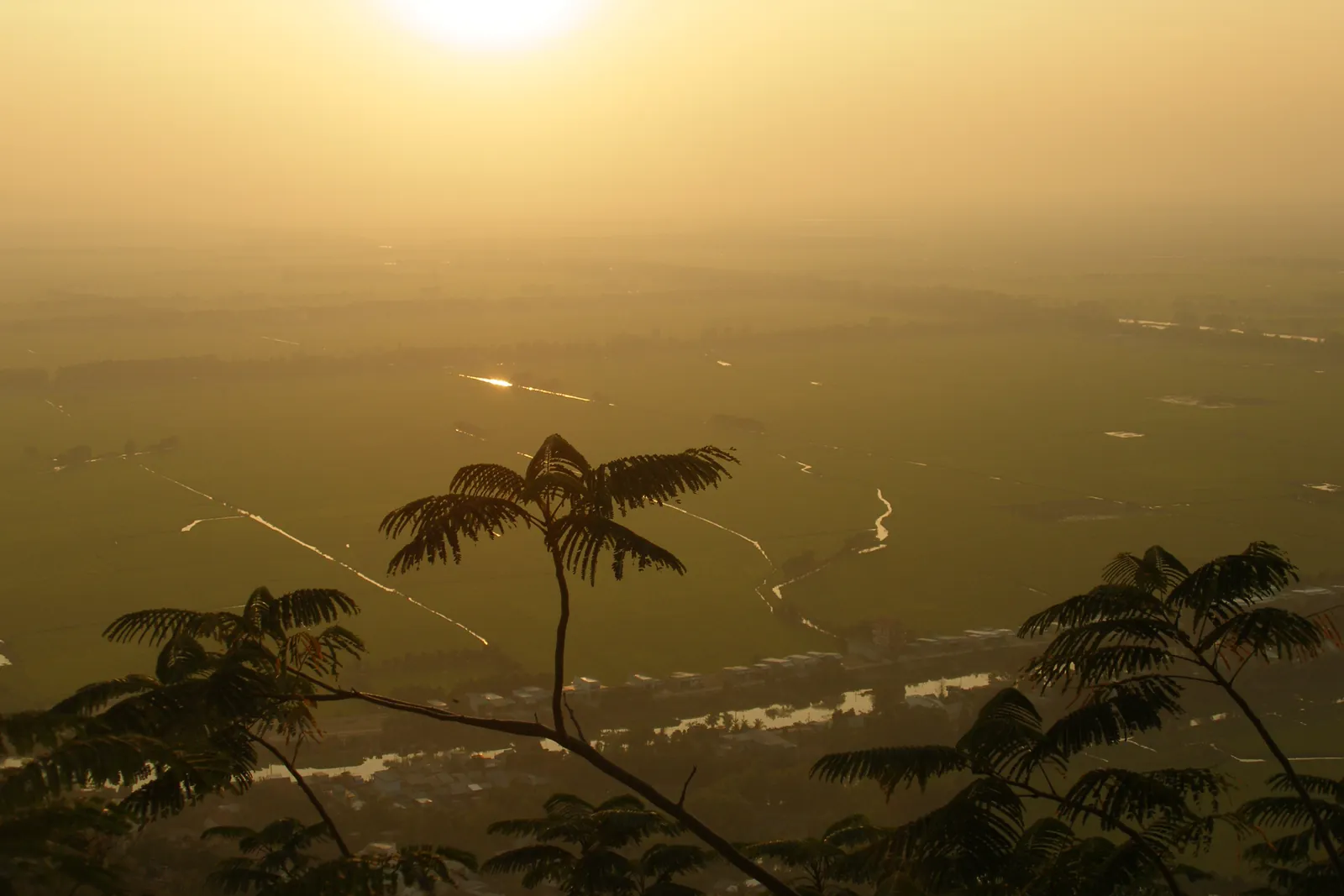
Evening light over the landscape seen from Núi Sam — Illustrative Chau Doc context photo, not a verified image of the service, dish or transport discussed. ·
© Vyacheslav Argenberg / Wikimedia Commons; CC BY 4.0; resized and converted to WebP · CC BY 4.0 · Resized and converted to WebP

Match the date to the purpose
For the Ba Chua Xu festival, plan around the organiser’s current programme rather than a fixed Gregorian anniversary. UNESCO describes the traditional observance on days 22–27 of the fourth lunar month; public opening events and individual rituals need their own confirmation.
If your priority is an unhurried shrine and market visit, consider dates outside major ceremonies and public holidays. This is a way to reduce exposure to peak demand, not a guarantee of empty courtyards or cheap rooms.
Use seasons as context, not a promise
Vietnam’s official tourism portal describes Chau Doc as hot and humid, with a rainy season broadly from May to November. A month label cannot tell you whether a particular hill approach or river outing will be comfortable. Check the local forecast again close to departure.
The portal highlights the flood-season landscape around Tra Su, especially September–November. Treat that as a landscape preference, not a guarantee of water level, green cover or boat operation. A forest excursion and a temple visit have different weather sensitivities.
Build a cooler daily rhythm
Put the most exposed walking earlier or later when conditions permit, and reserve the middle of the day for a proper meal and rest. Keep drinking water available and reduce the route if the group is uncomfortable; do not try to compensate by rushing.
A covered religious building is not an all-weather excursion by itself. The journey, courtyard and entrance may still be exposed or slippery. Families and older travellers should choose a realistic shelter and return plan, not simply replace one hill with another.
Choose whether crowds are part of the experience
Festival participation can be meaningful when seeing living ritual is the goal. Book a base and pickup arrangement that let you leave without depending on the last possible connection. Ask about current road controls and guest access to the ceremony you hope to observe.
For a mixed-interest group, separate a short cultural visit from late-night ritual attendance. Anyone who prefers rest should have an agreed return option. Do not assume every visitor can enter every ritual area or photograph the ceremony.
Decide again before departure
Check the organiser’s notice, weather alerts, transport confirmation and accommodation conditions together. If a wetland or summit component is unsuitable, keep a smaller cultural-and-food programme only where access and travel remain safe.
Keep flexible time rather than a packed list. A postponed viewpoint is less disruptive when the day has room for it; a major storm or closure can justify postponing the outing instead of searching for another exposed substitute.
Ask VietnamGuide AI
Ask VietnamGuide AISources
Explore more
- Mieu Ba Chua Xu: a thoughtful first visit
Prepare for a respectful visit to the Ba Chua Xu shrine at Sam Mountain, including offerings, photography and crowded periods.
- One day in Chau Doc: a focused cultural itinerary without rushing
Plan a realistic day already in Chau Doc: choose a Sam Mountain foothill visit and a river-area stop, with arrival, weather and mobility alternatives.