Travel guide
Hon Tai: a forested island and wildlife observation without promises
Hon Tai is interesting because several habitats meet within a small island landscape: a wooded interior, a sandy shore and the marine environment beyond. Looking at those connections is more revealing than choosing a trip for a promised monkey photograph. The national park’s descriptions mention birds, reptiles and mammals, but a species list is not an appointment with wildlife. Plan to understand the island, with any animal encounter as a bonus rather than the measure of success.
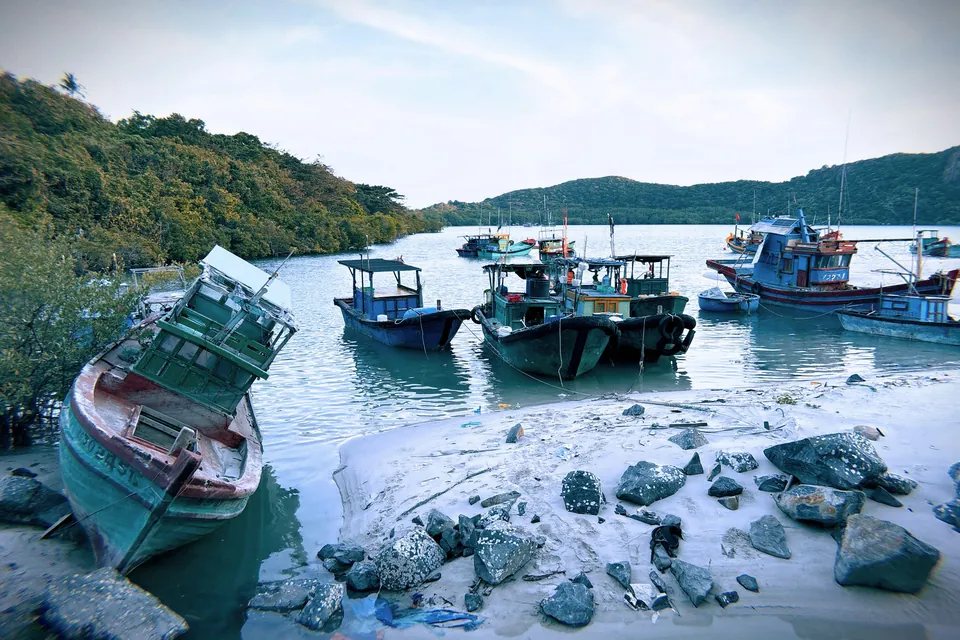
Fishing boats in a bay — Côn Đảo. Regional reference photo from Con Dao; it does not document the specific site, dish, room or service discussed.
Long (lTiga) Nguyen · Unsplash License · Resized and converted to WebP
Notice the change from shore to forest
From the permitted landing area, ask the guide to explain how the exposed shoreline differs from the shaded forest behind it. Look at vegetation structure, resting places and movement without leaving the approved visitor route. A bird call or a brief shape in the canopy may be easier to interpret with local knowledge than with a hurried attempt to name every species. Avoid repeating an old promotional list as a current census: the animals present, their behaviour and what visitors can observe will differ between outings.
Observe without creating the encounter
Keep food inside a closed bag and never use it to draw an animal toward the group. Feeding changes the encounter from observation into a disturbance and can encourage animals to approach subsequent visitors. Let the guide set the distance and choose when to move on. A longer lens or a cropped image is preferable to following an animal into vegetation. Keep children beside the group, speak quietly and do not surround a resting animal. If nothing appears, continue reading the habitat instead of asking the guide to make wildlife perform.
Separate forest, reef and turtle activities
A visit to Hon Tai may be described alongside coral viewing or conservation work, but ask which activities are actually permitted and included on your date. Shore interpretation, supervised snorkelling and a registered turtle programme require different arrangements. A sandy beach used by turtles remains habitat even during a daytime stop with no visible nest activity. Do not assume there will be hatchlings, nesting females or a chance to touch any animal. Marine visibility and sea conditions also change; attractive reef photographs are examples, not a description of the water awaiting your boat.
Choose a trip with time to look
Ask the park or coordinating organiser how much time the proposed circuit leaves on Hon Tai itself. A multi-island itinerary may suit scenery, while someone interested in forest interpretation may prefer fewer stops. Confirm the landing, boarding requirements, return plan and facilities, and explain any limited walking ability before paying. Bring reusable drinking water and take rubbish back to the main island. The strongest memory may be the contrast between a quiet forest edge and an open shore, not a checklist of species or the number of photographs taken.
Ask VietnamGuide AI
Ask VietnamGuide AISources
- 1. www.condaopark.com.vn/vn/dich-vu/9/hon-tai.html
Source checked:
- 2. www.condaopark.com.vn/en/protection-regilations.html
Source checked:
Explore more
- Dam Trau Beach: a relaxed shore visit near Con Dao Airport
Plan Dam Trau for its sandy bay, shade and airport-side setting, with realistic expectations about aircraft, facilities and changing sea conditions.
- Bai Nhat Beach: read the tide and enjoy Con Dao’s southern coast
Visit Bai Nhat for a changing ribbon of sand, a mountain-backed seascape and an unrushed coastal stop, with tide and return plans checked locally.
- An Hai Beach: an easy coastal pause beside Con Son town
Explore An Hai’s town-side sand, broad bay views and everyday waterfront atmosphere without mistaking the beach for An Hai Lake or a guaranteed swimming area.