Travel guide
Ong Dung Beach: choose the forest approach before the coastal reward
Ong Dung is best approached as a forest-and-coast outing rather than an ordinary drive-up beach stop. The national park describes a walking connection involving So Ray and Ong Dung, but a published route description is not confirmation that every segment is open on your chosen day. Start by asking the park which approach is currently appropriate. Your main decision is not how quickly to reach the shore: it is how much forest walking you want, what the ground is like and how you will return.
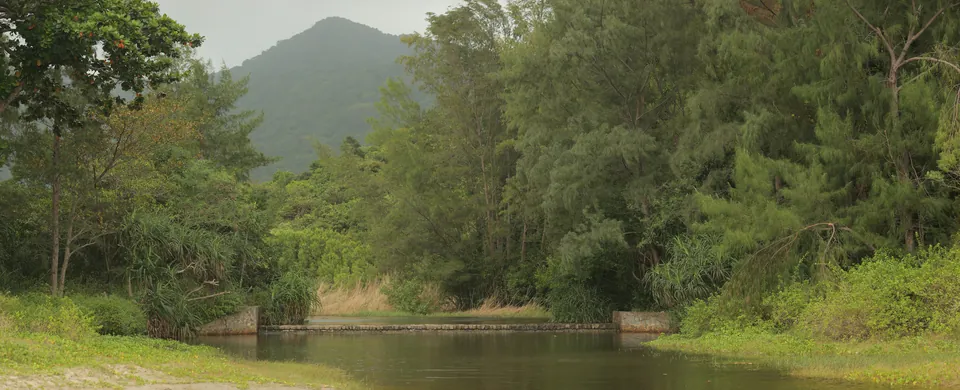
Forest reservoir, specific lake identity unverified — Vườn quốc gia Côn Đảo. Regional reference photo from Con Dao; it does not document the specific site, dish, room or service discussed.
[Tycho], shansov.net · CC BY-SA 3.0 · Resized and converted to WebP

Choose the whole route, not just the endpoint
Tell the park or your organiser that Ong Dung is your intended coastal destination and ask whether the proposed walk includes So Ray. These names describe different parts of an outing and should not be treated as interchangeable. Request a simple explanation of the start, finish, ascent or descent, expected surface and any required guide or permission. State the slowest participant's needs honestly. A shorter approved option, if offered, may make more sense than accepting a longer loop solely because an online account calls it easy.
Prepare for walking before thinking about beachwear
Wear footwear selected for a forest path rather than carrying only beach sandals. Ask what rain has done to the route and carry enough water for the agreed outing and a delay. Pack what you bring so that both hands can remain available when walking. Tell the organiser about children or anyone who finds uneven steps difficult. Published walking times describe someone else's pace; they are less useful than knowing where the group can pause, turn back or shorten the journey under current conditions.
Enjoy the change from canopy to coast
At the shore, pause to notice how woodland gives way to the marine landscape. Look from a stable place and let your guide identify which areas visitors may use. A rocky coastal setting offers textures, shade and changing water colours without requiring anyone to climb onto wave-washed surfaces. Keep food secured and never entice wildlife closer with a snack. If a marine activity is proposed, ask separately about supervision and conditions: the fact that you have reached the beach does not establish that snorkelling is appropriate that day.
Agree the return before you set off
Confirm the route back, the meeting arrangement and what happens if weather or walking conditions change. Carry out packaging and other waste, and leave plants, shells and rocks in place. You can add a different town activity later, but avoid a tight onward appointment that encourages the group to rush the forest section. A successful Ong Dung visit is one whose approach and return match your abilities, with the coast providing a reward rather than an excuse to overlook the trail.
Ask VietnamGuide AI
Ask VietnamGuide AISources
Explore more
- Dam Trau Beach: a relaxed shore visit near Con Dao Airport
Plan Dam Trau for its sandy bay, shade and airport-side setting, with realistic expectations about aircraft, facilities and changing sea conditions.
- Bai Nhat Beach: read the tide and enjoy Con Dao’s southern coast
Visit Bai Nhat for a changing ribbon of sand, a mountain-backed seascape and an unrushed coastal stop, with tide and return plans checked locally.
- An Hai Beach: an easy coastal pause beside Con Son town
Explore An Hai’s town-side sand, broad bay views and everyday waterfront atmosphere without mistaking the beach for An Hai Lake or a guaranteed swimming area.