Travel guide
Tau Be Cape: photograph the rocky coastline from a secure viewpoint
Tau Be is recognised for the sculptural relationship between upright rocks and the sea along the Co Ong coastal corridor. The local tourism portal describes the rocky formation, but a scenic description is not a site safety assessment. Plan a visit around an established permitted viewpoint and the conditions you find that day. The reward is the contrast of angular stone, open water and distant coastline, which can be seen and photographed without descending to the water or treating an attractive hollow among the rocks as a swimming pool.
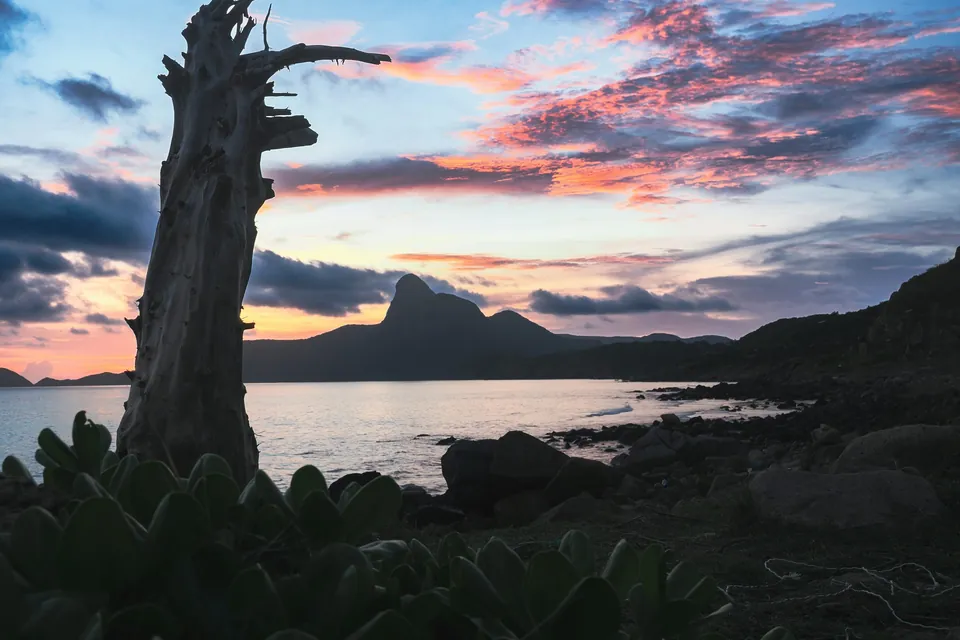
Sunset over a rocky coast — Côn Đảo. Regional reference photo from Con Dao; it does not document the specific site, dish, room or service discussed.
Trương Tuyết Ly · Unsplash License · Resized and converted to WebP
Decide where the visit begins and ends
Discuss a suitable stopping place with a local driver before departure. A road-side map marker does not establish a place to park, turn or walk, so be ready to skip the stop if it cannot be made properly. Agree the pickup position and avoid asking the driver to wait on a blind bend while passengers search for a photograph. Once out of the vehicle, keep to the area indicated for visitors and assess whether everyone in the party is comfortable with the available ground.
Use the shape of the rocks in your composition
Look for the way the rock outlines frame the blue or grey sea. A stable standing position can give a clear sense of scale without putting someone on a narrow ledge. Change focal length or camera orientation instead of changing to precarious ground. Keep a margin around other visitors and avoid blocking their return path. If the best-known online image requires a viewpoint that is closed, slippery or unclear, choose your own photograph rather than assuming the original photographer found a route suitable for everyone.
Treat water features as scenery
A phrase such as natural pool can describe an appearance rather than an inspected bathing place. Waves, wet stone and water level can change the situation quickly. Observe from a secure position and follow local signs and guidance; do not use photographs as instructions for climbing or entering water. Ask a qualified organiser separately if you want an appropriate marine activity elsewhere. This leaves the cape free to be what it does well: a place to notice coastal form and the movement of the sea.
Build flexibility into the coastal drive
Morning light may be appealing, but cloud, rain or visibility can alter the view. Confirm transport and timing directly instead of making a sunrise image the condition of a successful day. Bring water, protect your equipment and collect even small pieces of packaging before leaving. If conditions are unhelpful, shorten the pause and continue to a more comfortable destination. A modest, well-managed stop at Tau Be is easier to enjoy than an ambitious photo plan that pressures the group to stay on unsuitable ground.
Ask VietnamGuide AI
Ask VietnamGuide AISources
Explore more
- Dam Trau Beach: a relaxed shore visit near Con Dao Airport
Plan Dam Trau for its sandy bay, shade and airport-side setting, with realistic expectations about aircraft, facilities and changing sea conditions.
- Bai Nhat Beach: read the tide and enjoy Con Dao’s southern coast
Visit Bai Nhat for a changing ribbon of sand, a mountain-backed seascape and an unrushed coastal stop, with tide and return plans checked locally.
- An Hai Beach: an easy coastal pause beside Con Son town
Explore An Hai’s town-side sand, broad bay views and everyday waterfront atmosphere without mistaking the beach for An Hai Lake or a guaranteed swimming area.