Travel guide
FITO Museum: reading the history of Vietnamese medicine
FITO offers a different museum question from the city’s political-history collections: how have people represented, prepared and remembered traditional Vietnamese medicine? National and Ho Chi Minh City tourism sources describe a museum of historical medical objects and a reconstructed apothecary. The useful starting point is cultural history. A displayed herb, root or instrument helps explain a practice or a collecting tradition; its presence does not establish that a treatment is effective or suitable for a visitor.
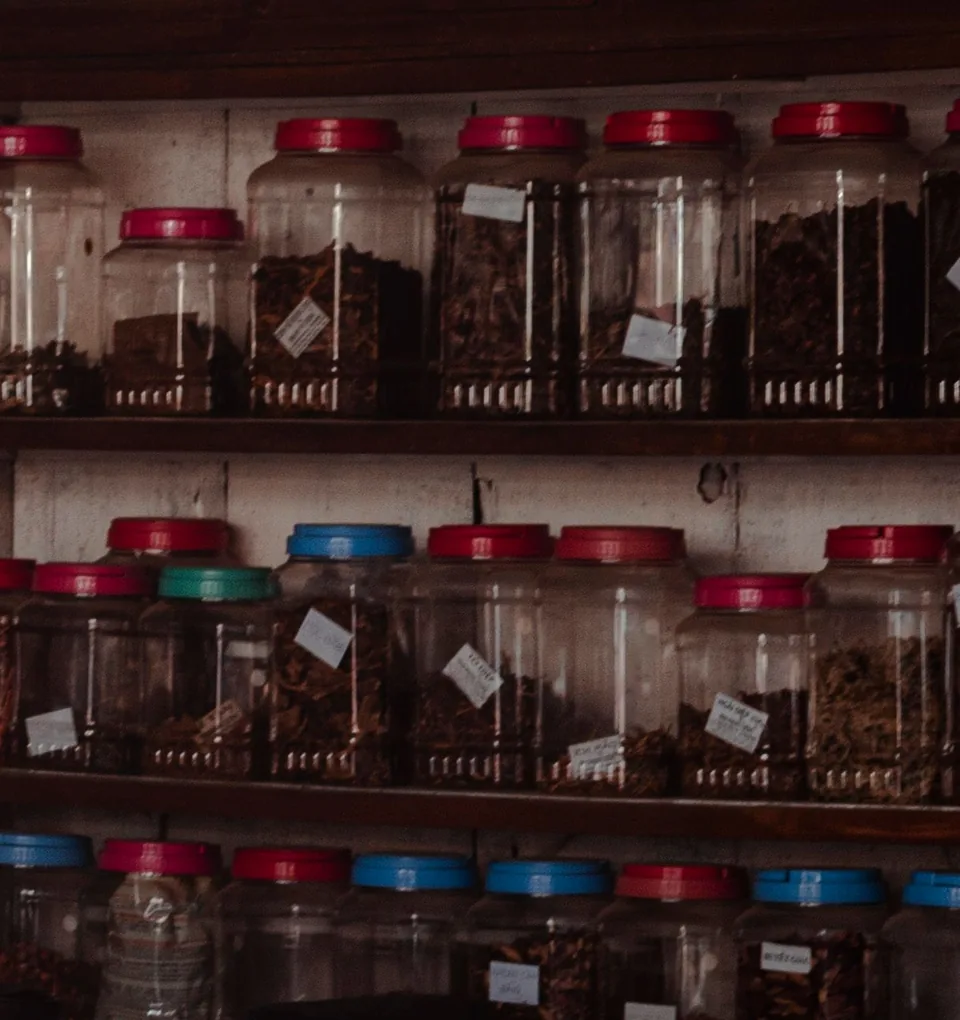
Herbal-material jars in a Sa Dec shop; illustration, not FITO Museum or its collection
DUYTRG TRUONG · Pexels License · Resized and converted to WebP
An apothecary setting rather than a clinical consultation
The national tourism description highlights herbs, roots and an apothecary reconstruction. Read that setting as an interpretation of how medicinal materials were organised and presented. The city tourism account also describes a traditional wooden structure. Together, these elements connect the objects to a material environment rather than leaving them as an isolated list of remedies. A reconstruction is a museum device: it should not be confused with an untouched historic shop or evidence that a medical service is being offered there today.
Objects that open several cultural questions
The city source identifies historical medical objects, woodcuts and lime pots. These are different kinds of evidence, worth observing separately: an object’s form, an image’s representation and a container’s place in everyday life do not tell identical stories. Names such as Tuệ Tĩnh and Hải Thượng Lãn Ông appear in the collection’s cultural interpretation. Use those names to follow the history being presented, without inventing an attribution for an unlabelled object or assuming every display belongs to the same period.
A museum visit with a clearly defined purpose
This guide suits readers interested in material culture, historical knowledge and the relationship between a reconstructed setting and its collection. It complements a general city-history itinerary rather than replacing one. Read exhibit labels for the distinction between a historical account and a health claim, and take treatment questions to a qualified professional. The cited tourism descriptions establish the museum’s cultural identity; they do not confirm present opening arrangements, ticket conditions or access to every display. No current operating detail is promised here.
Ask VietnamGuide AI
Ask VietnamGuide AISources
Explore more
- Saigon railway station: match your train, ticket and identity
Plan a departure from Ga Sài Gòn by separating station identity, ticket details and dated railway identification guidance.
- Can Gio mangroves: understand the reserve before choosing a visit
Understand Can Gio’s UNESCO biosphere identity, connected coastal habitats and the difference between a reserve-wide landscape and a managed Vam Sat visit.
- Tran Hung Dao Temple: a memorial beyond the riverfront statue
Explore the Trần Hưng Đạo temple on Võ Thị Sáu through its memorial layout, bronze figure and interpretation of the historical commander.