Travel guide
Hanh Thong Tay Church: Byzantine character and parish history
Hạnh Thông Tây Church offers a different lens on Ho Chi Minh City’s Catholic architecture. The Archdiocese of Saigon describes its Byzantine character, contrasting it with churches associated with Gothic or Romanesque forms. For travelers choosing among religious-heritage stops, that is a useful reason to investigate this particular church rather than treating every church façade as the same city experience. The documented street address is 53/7 Quang Trung.
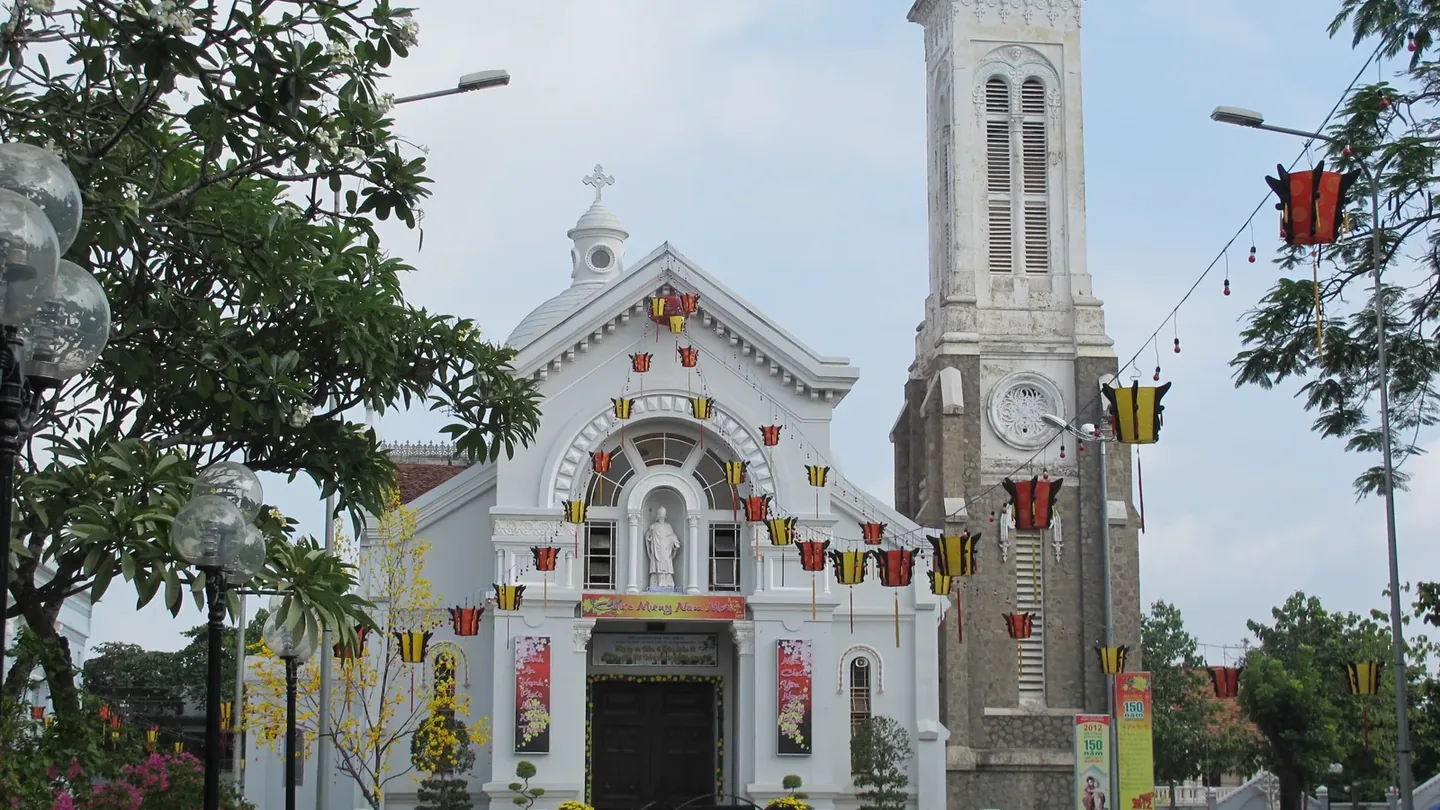
Facade and bell tower of Hanh Thong Tay Church, Ho Chi Minh City ·
trungydang · CC BY 3.0 · Resized and converted to WebP

What the architectural description does—and does not—establish
The Byzantine description comes from the archdiocese’s own account of the parish. It gives visitors a supported starting point for considering the building’s overall visual character. It does not justify inventing a list of materials, dates or architectural details not established in the source. If comparing churches, begin with the different design traditions named in the account, then observe what is actually visible and permitted during your visit. An architectural comparison can be rewarding without turning every decorative feature into an unsupported historical claim.
A parish founded in 1861 is not a building dated 1861
The account dates the foundation of Hạnh Thông Tây parish to 1861. That is the origin of the parish community, not evidence that the present church building was completed in that year. The distinction matters when interpreting a heritage site with a continuing religious life. Saint Joseph is identified as the principal patron, with Saint Denis as a secondary patron linked to benefactor Lê Phát An. These dedications and the benefactor’s connection help place the building within a community story, rather than presenting it only as an isolated architectural object.
Recognize a living parish, not a static exhibit
The archdiocesan account also discusses a later auxiliary worship building responding to the community’s needs. It is useful evidence that the parish’s spaces developed for worship, not simply for sightseeing. It does not mean all buildings share identical visitor access. The source was published in November 2020; this guide uses its stable historical and architectural context, not its former personnel, attendance figures or service timetable as current information. Ask the parish about present visiting arrangements if interior viewing is important. During worship, keep clear of the congregation’s activities and ask before photographing people. Add this specific architectural interest to a broader Ho Chi Minh City itinerary without assuming that every parish follows the same visitor routine.
Ask VietnamGuide AI
Ask VietnamGuide AISources
- 1. tgpsaigon.net/bai-viet/giao-xu-hanh-thong-tay-2020-64609
Source checked:
Explore more
- Saigon railway station: match your train, ticket and identity
Plan a departure from Ga Sài Gòn by separating station identity, ticket details and dated railway identification guidance.
- Can Gio mangroves: understand the reserve before choosing a visit
Understand Can Gio’s UNESCO biosphere identity, connected coastal habitats and the difference between a reserve-wide landscape and a managed Vam Sat visit.
- Tran Hung Dao Temple: a memorial beyond the riverfront statue
Explore the Trần Hưng Đạo temple on Võ Thị Sáu through its memorial layout, bronze figure and interpretation of the historical commander.