Travel guide
On Lang Assembly Hall: Quan Am, Fujian rooflines and Cholon detail
Ôn Lăng Assembly Hall and Chùa Quan Âm are names used for the same Cholon religious site. Recognising that alias avoids planning two visits to one place. It also helps distinguish this hall from Tuệ Thành, associated with the separate Thien Hau Pagoda. Cholon contains multiple community and religious buildings; similar-looking decoration or an English translation is not enough to establish that two names refer to the same one.
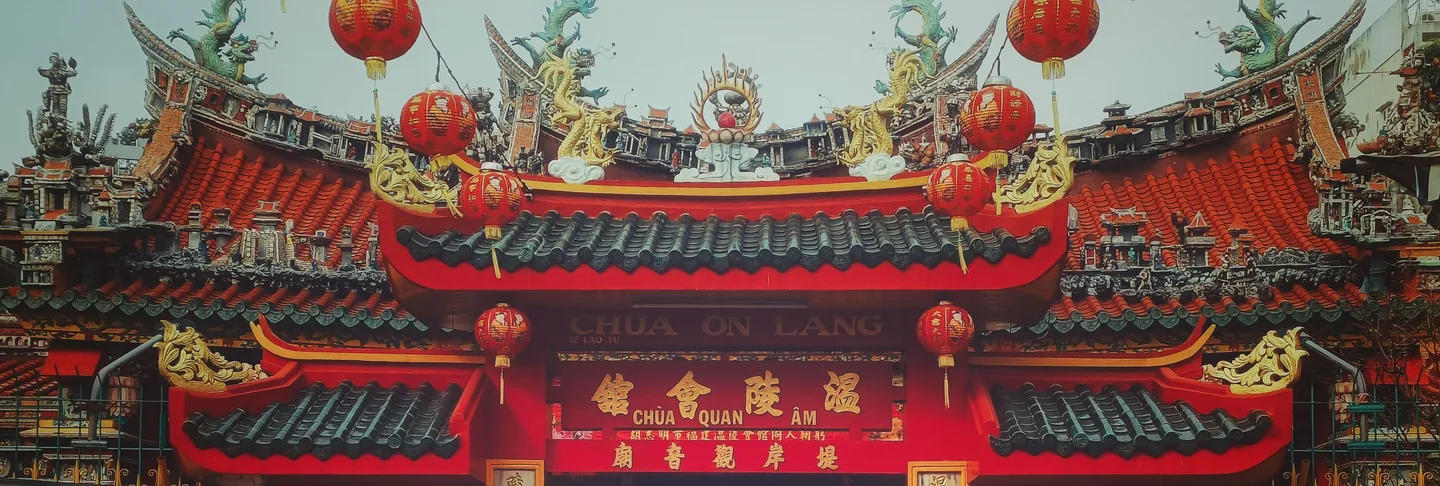
Roof details and name boards of On Lang Pagoda in Cholon
Phát Trương · Pexels License · Resized and converted to WebP
Understand the Fujian connection
The city tourism authority associates Ôn Lăng with the Fujian community and describes Fujian architectural influences. This gives a more precise focus than calling it simply a Chinese temple. Use the community connection to frame questions about the building and its decoration, but do not turn a regional influence into a claim that every feature is exclusive to Fujian or that all Cholon assembly halls share one history. A visitor can compare buildings without treating their traditions as interchangeable.
Look from roofline to smaller details
The tourism descriptions identify curved roof edges, coloured ceramic architectural models, red lanterns and carving. Begin with the roof silhouette, then look for the relationship between ceramic elements and the larger building. Where closer viewing is permitted, compare carved details with the roof decoration rather than relying only on a wide photograph. Read any available labels before naming a scene or figure; this guide does not assign a deity to an image, recount an unverified legend or promise that a specific decorative object is currently visible.
Keep architecture and religious life together
An assembly hall can be interesting as architecture while also being a place people use for religious life. Leave space for those activities, ask before photographing people and follow instructions about the areas open to visitors. These are respectful visiting suggestions, not a newly invented dress code or permission to enter a worship space. If arranging transport, use both Ôn Lăng and Chùa Quan Âm and verify the exact destination instead of choosing any Cholon temple. Stable identity and architectural context were checked in October 2026; current entry arrangements and operational details remain to be confirmed.
Ask VietnamGuide AI
Ask VietnamGuide AISources
- 1. visithcmc.vn/vi/sac-mau-di-san-thanh-pho/
Source checked:
- 2. visithcmc.vn/vi/ghe-tham-nhung-dia-diem-noi-tieng-o-cho-lon/
Source checked:
Explore more
- Saigon railway station: match your train, ticket and identity
Plan a departure from Ga Sài Gòn by separating station identity, ticket details and dated railway identification guidance.
- Can Gio mangroves: understand the reserve before choosing a visit
Understand Can Gio’s UNESCO biosphere identity, connected coastal habitats and the difference between a reserve-wide landscape and a managed Vam Sat visit.
- Tran Hung Dao Temple: a memorial beyond the riverfront statue
Explore the Trần Hưng Đạo temple on Võ Thị Sáu through its memorial layout, bronze figure and interpretation of the historical commander.