Travel guide
Saigon Central Mosque: Dong Du identity and living worship
Saigon Central Mosque adds a particular strand to understanding the city’s religious architecture: a mosque linked to South Indian Muslim traders and still described as a place of worship. Begin with the correct identity, then read the building’s exterior and community history together. A recognizable landmark is not automatically an attraction with unrestricted visitor entry.
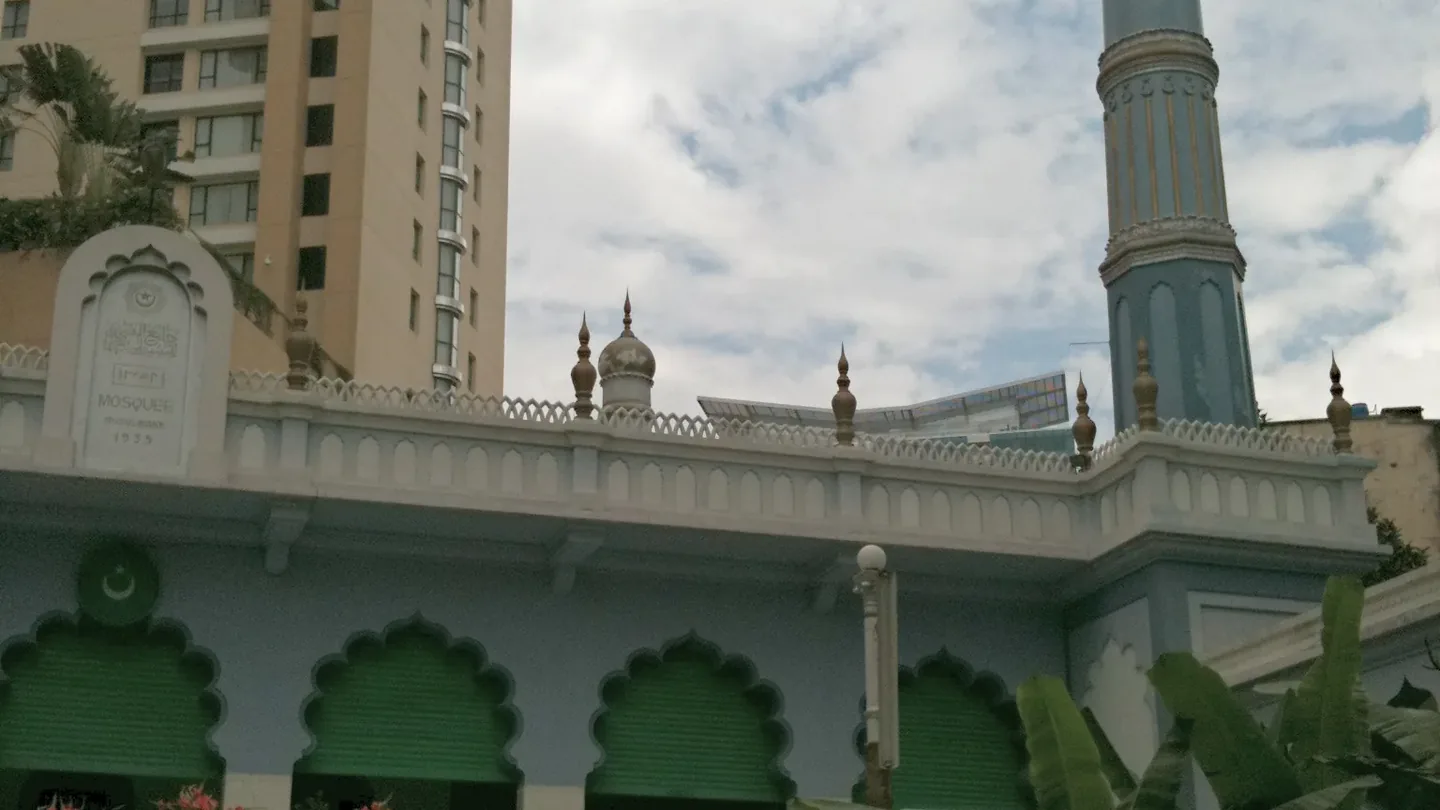
Saigon Central Mosque on Dong Du Street, Ho Chi Minh City ·
Dragfyre · CC BY-SA 3.0 · Resized and converted to WebP

Three names, one address to distinguish
A Voice of Vietnam report published on 25 March 2026 identifies Saigon Central Mosque as also known as Jamia Al-Musulman Mosque or Đông Du Mosque, at 66 Đông Du Street. Those alternative names help connect different map or written references to the same site. Do not confuse it with the separately identified Jamiul Muslimin Mosque on Nguyễn Văn Trỗi Street simply because the names look similar. When making a plan, retain both the street address and the exact mosque name rather than using “Saigon mosque” as if it identified only one institution.
Trade history and a distinctive façade
The report dates construction to 1935 and connects it to South Indian Muslim traders. That is a specific history of a community in the city, rather than evidence that every local Muslim has the same background. It describes a white and pale-green façade with four slender minarets. These are useful architectural markers to recognize without inventing the meaning of every decorative detail. The combination of trader origins and a distinct building also gives the mosque a different story from the city’s Buddhist pagodas, Catholic churches or a general halal-food itinerary.
A living religious place, not a guaranteed interior visit
Voice of Vietnam describes the mosque as a worship place for local and visiting Muslims. Keep that function central when deciding what you want from the visit: religious practice and looking at architecture are different needs. For any non-worship visit, ask the site about suitable arrangements and any photography before assuming entry. The source does not establish a prayer timetable, admission policy, access to particular rooms or permission to photograph people. Nor does a nearby food business become certified halal because of its proximity to the mosque. The report was read on 17 October 2026; this guide uses its named-site history and architectural identity, not a promise of current visitor services.
Ask VietnamGuide AI
Ask VietnamGuide AISources
Explore more
- Saigon railway station: match your train, ticket and identity
Plan a departure from Ga Sài Gòn by separating station identity, ticket details and dated railway identification guidance.
- Can Gio mangroves: understand the reserve before choosing a visit
Understand Can Gio’s UNESCO biosphere identity, connected coastal habitats and the difference between a reserve-wide landscape and a managed Vam Sat visit.
- Tran Hung Dao Temple: a memorial beyond the riverfront statue
Explore the Trần Hưng Đạo temple on Võ Thị Sáu through its memorial layout, bronze figure and interpretation of the historical commander.