Travel guide
Viet Nam Quoc Tu: Buddhist civic role and the Da Bao Tower
Việt Nam Quốc Tự is best understood as a Buddhist administrative, cultural and religious centre, not simply a tower to add to a skyline checklist. The Đa Bảo Tower belongs to this larger setting. Considering the pagoda and tower together gives a more coherent visit than treating them as unrelated attractions, and helps explain why an institutional religious place may contain spaces whose purpose is not tourism.
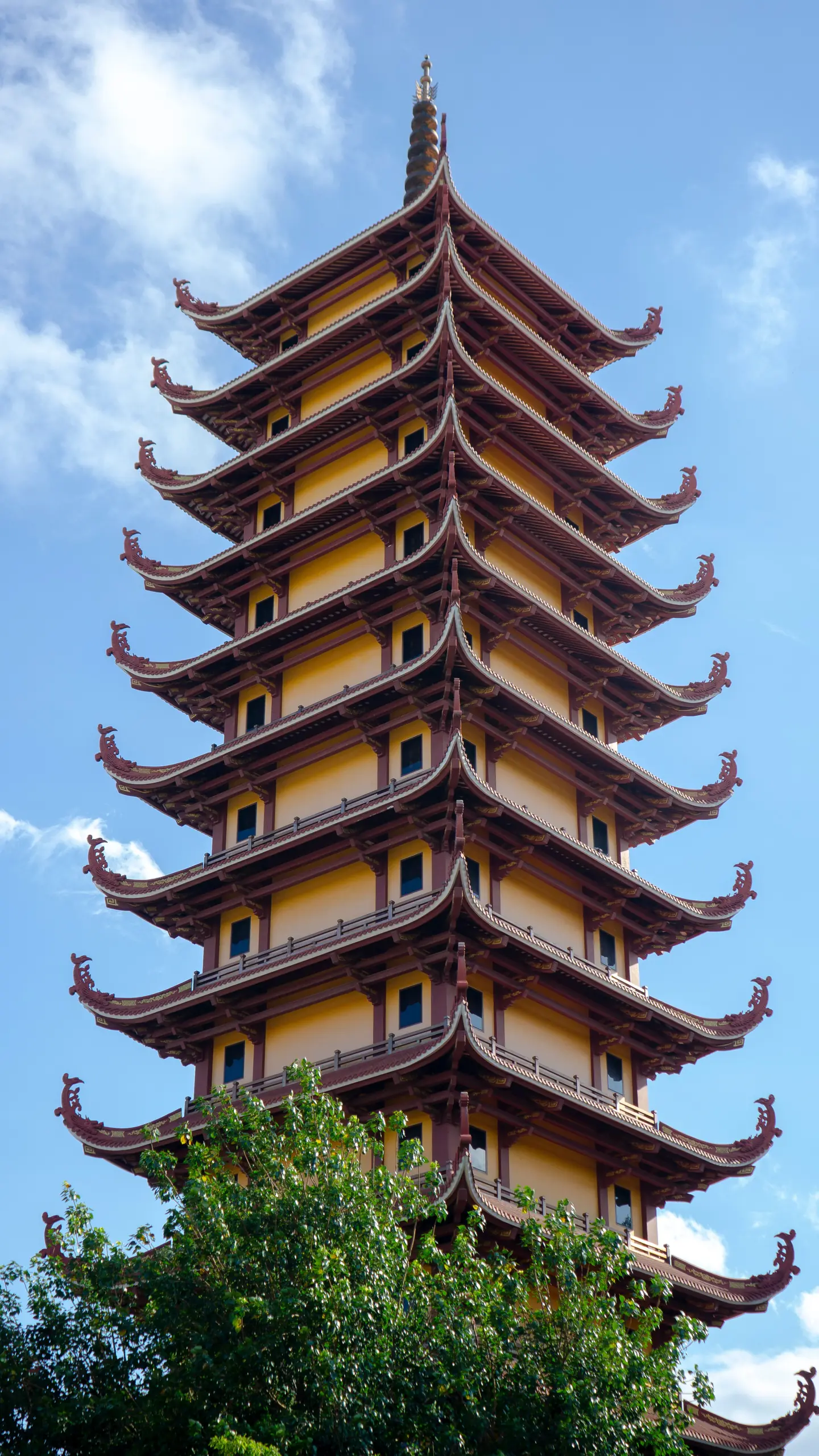
Tower of Viet Nam Quoc Tu Pagoda, Ho Chi Minh City
Thang Do · Pexels License · Resized and converted to WebP
A tower with a commemorative purpose
Giác Ngộ, the newspaper of the city’s Buddhist Sangha, records that construction of Đa Bảo Tower began on 3 August 2015. It describes a 13-storey, 63-metre tower commemorating the Buddhist nonviolent movement of 1963. The numbers describe the structure; they do not establish that all floors can be visited or that the tower is an observation attraction. The commemorative context is a stronger starting point for understanding it than height alone. Keep the twentieth-century movement distinct from the much later tower construction.
Notice the connection with bronze craftsmanship
The same Buddhist account identifies a solid-bronze pinnacle made by artisans from Ý Yên in Nam Định. That attribution offers a specific craft connection within the building’s story. It does not mean every decorative element was produced by the same workshop, nor does it require visitors to access the pinnacle closely. From whatever areas are permitted, the useful question is how the tower’s architecture and craft serve its commemorative and religious purpose, rather than how far up it is possible to go.
Read the 2025 ceremony as a dated religious account
A report published on 11 May 2025 records a ceremony placing what the Buddhist community venerates as the heart relic of Thích Quảng Đức in the tower. This is a sourced account of religious belief and a particular ceremony, not a scientific verification of relic status. Nor does a past placement ceremony prove today’s display conditions, location accessible to visitors or public viewing schedule. Ask attendants about present arrangements and distinguish worship areas from administrative spaces. Follow instructions during ceremonies and request permission before photographing participants. No current fees, opening hours or tower-climbing rights are established here. The published city history walk can supply wider context while this stop remains focused on Buddhist institutions, remembrance and craft.
Ask VietnamGuide AI
Ask VietnamGuide AISources
Explore more
- Saigon railway station: match your train, ticket and identity
Plan a departure from Ga Sài Gòn by separating station identity, ticket details and dated railway identification guidance.
- Can Gio mangroves: understand the reserve before choosing a visit
Understand Can Gio’s UNESCO biosphere identity, connected coastal habitats and the difference between a reserve-wide landscape and a managed Vam Sat visit.
- Tran Hung Dao Temple: a memorial beyond the riverfront statue
Explore the Trần Hưng Đạo temple on Võ Thị Sáu through its memorial layout, bronze figure and interpretation of the historical commander.