Travel guide
Hue at three scales: royal home, ancestors and the cosmos
Dien Tho brings royal domestic life closer, The Mieu frames dynastic memory, and Nam Giao opens onto rites of Heaven and Earth. Let function guide your visit.
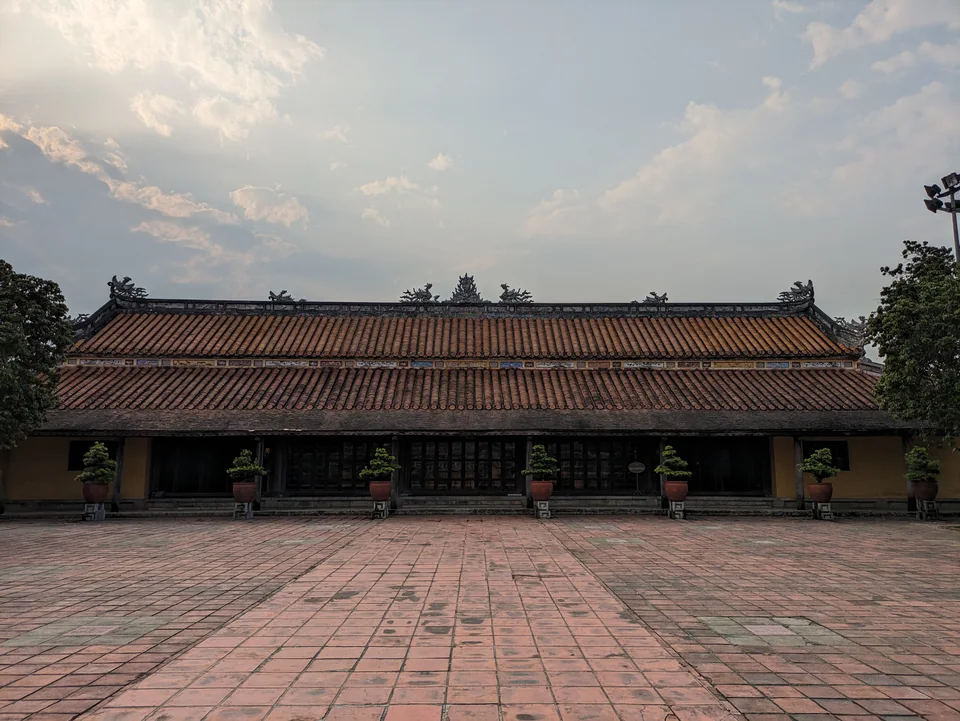

Dien Tho and Truong Sanh: another side of royal life
Dien Tho developed as a residence for queen mothers, with construction beginning in 1803. Its buildings were added to and adapted through different reigns, so the ensemble should not be read as one untouched design from one moment. A recent Vietnam News Agency photo report highlights its variety of halls, pavilions and other structures. Look at the relationship between a principal building and the courtyards and smaller spaces around it. This is a useful change of scale after Thai Hoa: royal status expressed through an inhabited precinct rather than a court assembled before the throne.
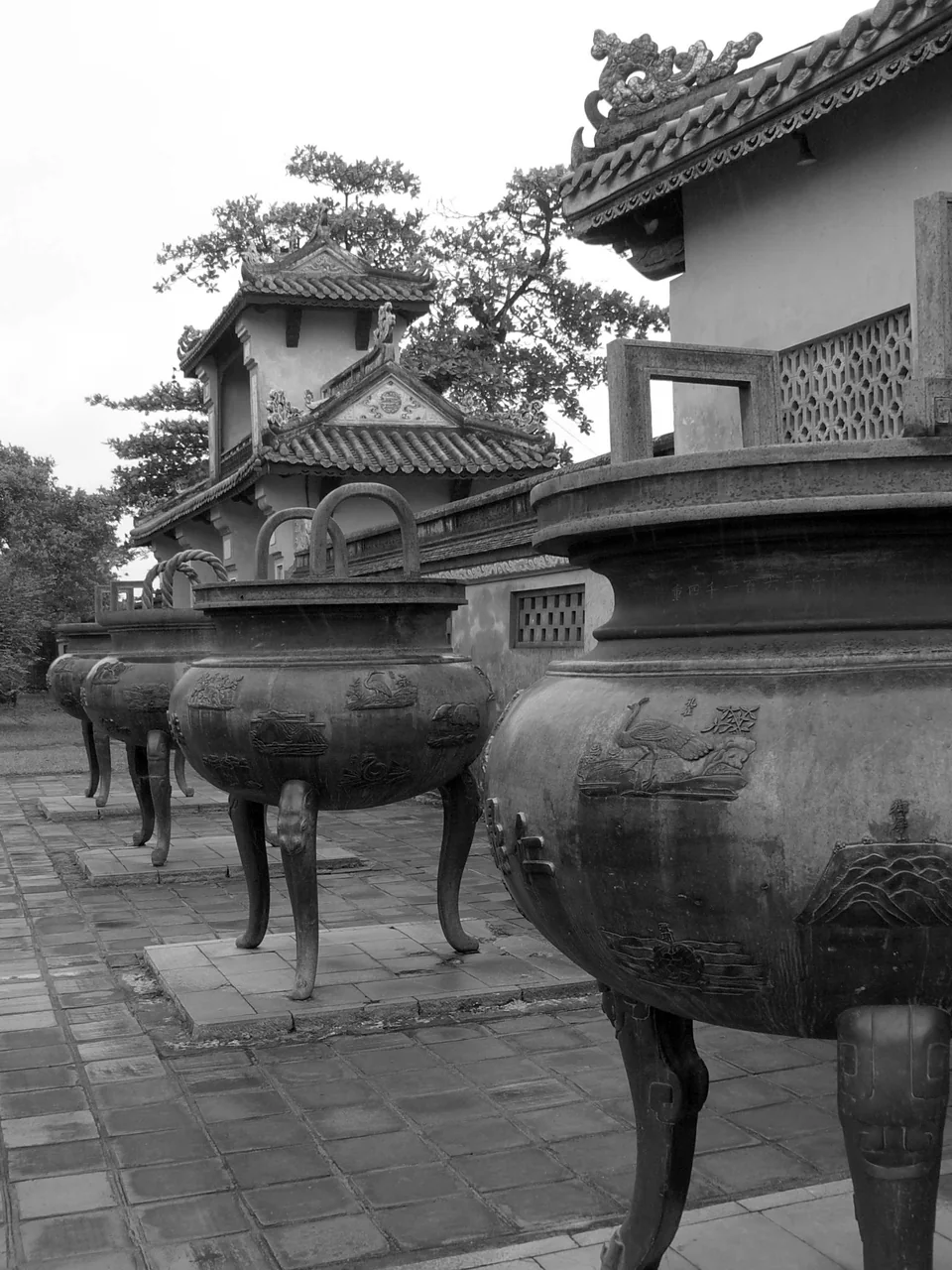

The Mieu and the Nine Dynastic Urns: Nguyen memory in bronze
The Mieu, also called The To Mieu, is an ancestral temple in the southwestern part of the Imperial City. Its role differs from Thai Hoa’s formal audience space and from the royal residences. The Nine Dynastic Urns stand in the associated court near Hien Lam Cac, the multi-storey commemorative pavilion. Read the ensemble before isolating an urn for a photograph. Temple, pavilion and bronze vessels combine remembrance of the dynasty with an architectural setting for reverence. This historical purpose does not mean every shrine interior is open to visitors; follow the route and instructions given at the site.
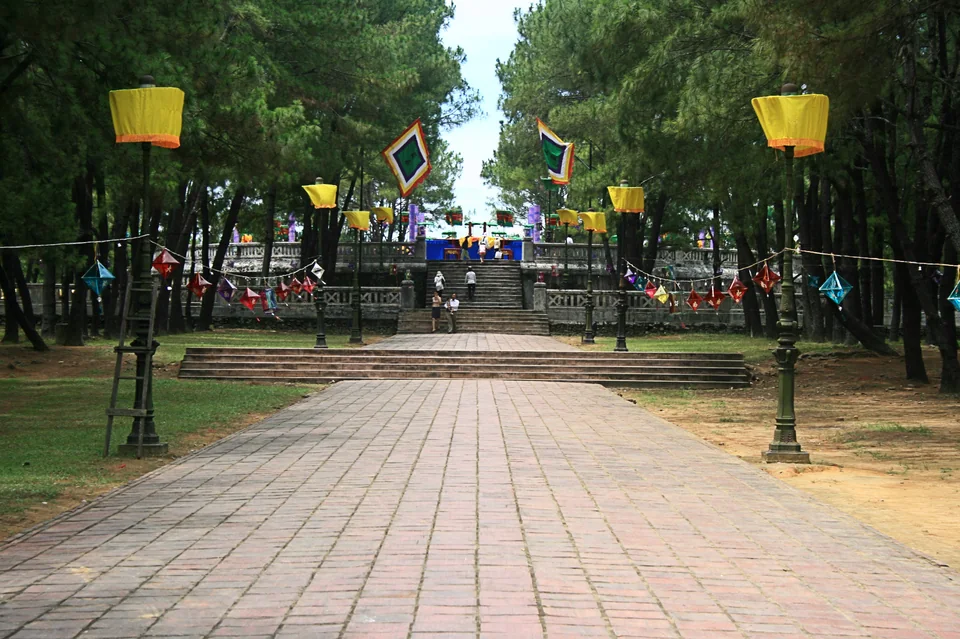

Nam Giao Esplanade: read the space of imperial ritual
Construction of the surviving esplanade began under Emperor Gia Long in 1806, with the first ceremony here in 1807. These dates place it in the early Nguyen dynasty, not in the earlier history of the Nguyen lords. The setting was used for the court’s rites of Heaven and Earth; it was not a royal tomb or an everyday residential palace. Keep that function in mind when the open ground seems less immediately elaborate than other monuments. The important architecture includes platforms, boundaries and routes, as well as anything that rises above them.
Choose the experience that fits
| Choice | What to consider |
|---|---|
| Dien Tho and Truong Sanh: another side of royal life | At each compound, notice how a threshold frames the next court and how rooflines, planting and open ground change the view. Ask which building and period a guide is describing before attaching a story to it. Residential architecture can suggest privacy and family hierarchy without revealing what an individual woman did on a particular afternoon. Choose a route that connects the two compounds using the areas currently open, and allow time for looking rather than a rapid circuit of doors. Together they make the royal household visible as a world larger than the emperor’s throne. |
| The Mieu and the Nine Dynastic Urns: Nguyen memory in bronze | In 2024, the bas-reliefs on the Nine Bronze Urns were inscribed on the UNESCO Memory of the World Asia-Pacific Regional Register. That documentary recognition is different from the Complex of Hue Monuments’ World Heritage inscription in 1993. Neither label makes the urns ordinary museum props: their location remains part of the experience. Give this compound its own pause within an Imperial City visit, after the main ceremonial axis if that fits the open route. You leave with a more concrete sense of how the Nguyen court represented both ancestry and the wider world. |
| Nam Giao Esplanade: read the space of imperial ritual | Nam Giao suits visitors curious about how political authority and cosmology shaped architecture. It can complement a palace visit precisely because it offers a different function and scale. Request a current visitor route and confirmation of access for your date; a historical description does not establish which levels you may enter. Do not assume that a ceremony or reenactment accompanies an ordinary visit, or copy an old festival announcement into your plans. A simple plan or a guide’s explanation can be more valuable than waiting for a performance: the reward is learning to read the landscape itself as an instrument of ritual. |
Ask VietnamGuide AI
Ask VietnamGuide AISources
- 1. khamphahue.com.vn/Du-lich/Ban-%C4%91o-so/WC-cong-cong/pid/1584/cid/28
Source checked:
- 2. khamphahue.com.vn/desktopmodules/DNNTinBai/PrintTinBai.aspx
Source checked:
- 3. www.vietnamplus.vn/cung-dien-tho-noi-tap-hop-dien-hinh-cac-phong-cach-kien-truc-thoi-nguyen-post1109974.amp
Source checked:
- 4. dsvh.gov.vn/di-tich-lich-su-va-kien-truc-nghe-thuat-quan-the-kien-truc-co-do-hue-2944
Source checked:
- 5. artsandculture.google.com/story/the-nine-dynastic-urns-quang-binh-tourism-department/vAUh_i4YibICLw
Source checked:
- 6. www.unesco.org/en/articles/unescos-memory-world-mow-regional-register-inscribes-20-new-items-recognition-human-innovation-and
Source checked:
- 7. whc.unesco.org/en/list/678/
Source checked:
- 8. vietnamtourism.vn/index.php/tourism/items/452/5
Source checked:
Explore more
- Hue across two bridges: city rhythms and village shelter
See Truong Tien’s steel spans from the riverbank, then discover Thanh Toan’s house-above-a-bridge design. Two scales reveal different ways of sharing space beside water.
- Hoi An through ceramics: sea trade and a courtyard dragon
A vessel opens a story of maritime trade; a ceramic dragon draws you into a communal courtyard. Pair these perspectives with the present-day market.
- Rice in three forms: sheets, strands and a crisp base
Follow rice batter into noodle sheets, compare soup and dry servings, then discover grilled rice paper. This Can Tho–Saigon food theme spans two places, not one walking route.