Travel guide
Mai Chau homestay or lodge: choose the stay behind the label
A good Mai Chau stay begins with a more useful question than whether a homestay is better than a lodge: what would you like an ordinary evening and morning to feel like? A family dinner, your own quiet room and a view over paddies are different priorities, and one address may not deliver all three. Read the room and its setting together before choosing the name on the booking page.

Locate the place you will actually wake up
The national tourism guide identifies Lac and Pom Coong as important White Thai homestay villages. Those names give a starting point for village walking, but Mai Chau is also used in the branding of properties away from the central valley, including the lake area. Ask for a map pin and a description of the walk from the room to the lanes you want to explore. A hillside panorama and a flat path through fields are not interchangeable experiences. If you want to walk to dinner without arranging another vehicle, check that specific option. A beautiful image cannot tell you where the accommodation sits in your day.
Choose a sleeping arrangement, not a category word
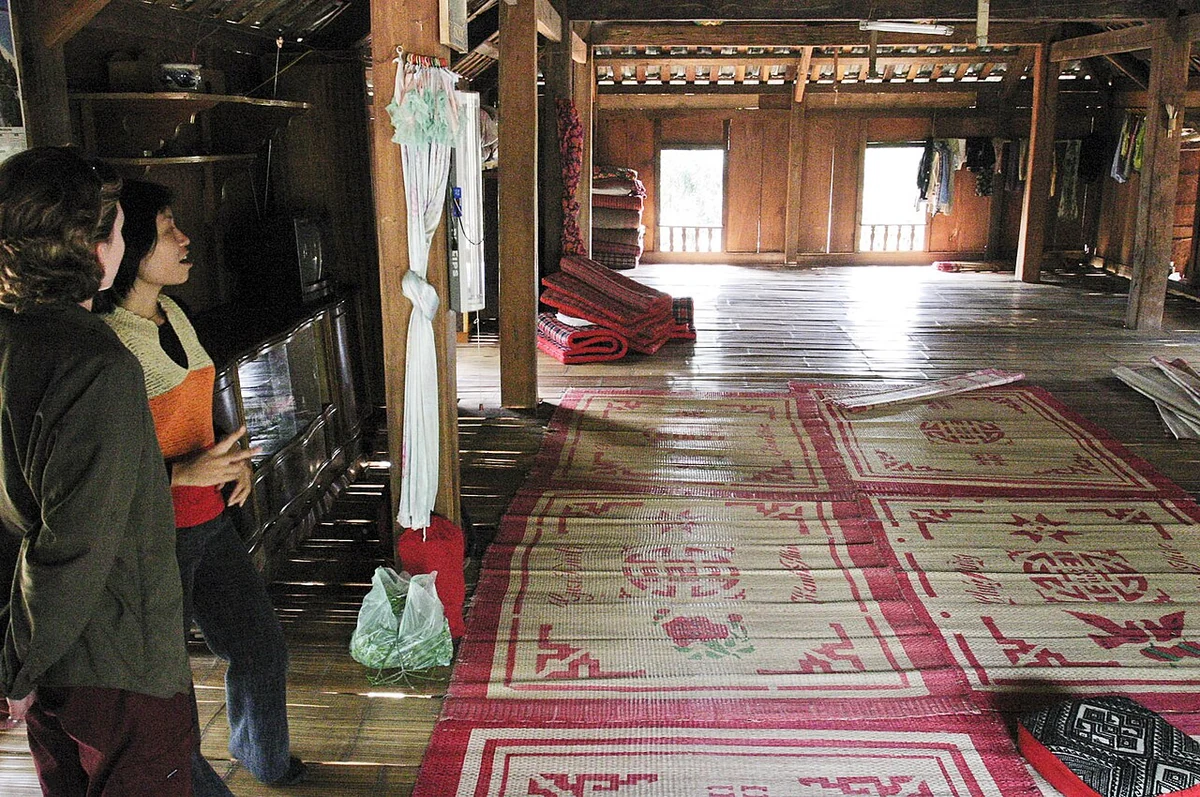
A traditional stilt-house stay may involve a shared sleeping floor, while another business calling itself a homestay offers private rooms. A lodge may use stilt-inspired architecture without being a family home. None of these labels is a complete room specification. Ask whether your sleeping space is shared, whether walls reach the ceiling, where the bathroom is and how stairs are used. Clarify whether a quote is for one bed, one room or the whole space, and how children or an extra guest are counted. For light sleepers, ask about neighbouring groups and likely evening sound instead of assuming that a countryside address guarantees silence.
Look for the kind of hosting you value
A meal with a host can connect the stay to local life in a way that a room photograph cannot. Meadow Mai Chau, for example, describes itself as a White Thai family operation involving several generations and explains the host’s own cooking and dance background. That is one business’s account, not a promise made by every homestay. Ask who will be present, what language you can comfortably use and whether dinner needs advance notice. You can enjoy an organised performance while understanding that it is a paid visitor activity, not a glimpse into every household’s nightly routine. Respectful curiosity is more useful than asking a family to prove how authentic it is.
Compare the whole evening-to-departure experience
Read the total bill alongside practical details: room occupancy, breakfast, other meals, any activity you actually want and the transfer from your arrival stop. A cheaper bed can become less convenient if the vehicle leaves you far from the village and the final ride was not included. Tell the host your actual arrival and departure plan before paying, particularly for late arrivals or an onward journey. If stairs or a shared washroom are unsuitable, ask for clear photographs or choose another room rather than hoping the label will solve it. The best-value stay is the one that supports your own pace, lets you sleep comfortably and makes the next morning easy to begin.
Ask VietnamGuide AI
Ask VietnamGuide AISources
- 1. vietnam.travel/node/197
Source checked:
- 2. meadowmaichauhomestay.com/guidebook/
Source checked:
- 3. bakhanvillage.com/
Source checked:
Explore more
- Hang Kia–Pa Co: a Hmong highland side trip beyond Mai Chau
Separate Hang Kia–Pa Co from the Thai villages of Mai Chau: plan the uphill journey, living crafts, market timing and realistic expectations for cloud views.
- When to visit Mai Chau: choose a season, then check the fields
Plan Mai Chau around weather and the rice-growing cycle without treating a month, golden-field photograph or harvest date as a guarantee.
- Mai Chau in two days: a gentle village stay with time to breathe
A realistic two-day Mai Chau plan centred on village lanes, a comfortable room, hosted meals and a short second-morning outing.