Travel guide
Pô Sah Inư towers: Cham architecture and a respectful visit
The Pô Sah Inư complex near Phan Thiết is a Cham religious and architectural site, not merely a scenic collection of old bricks. National tourism information identifies its Hoa Lai architectural character and continuing cultural significance. Visit with time to look closely and with respect for the people for whom the place remains meaningful.
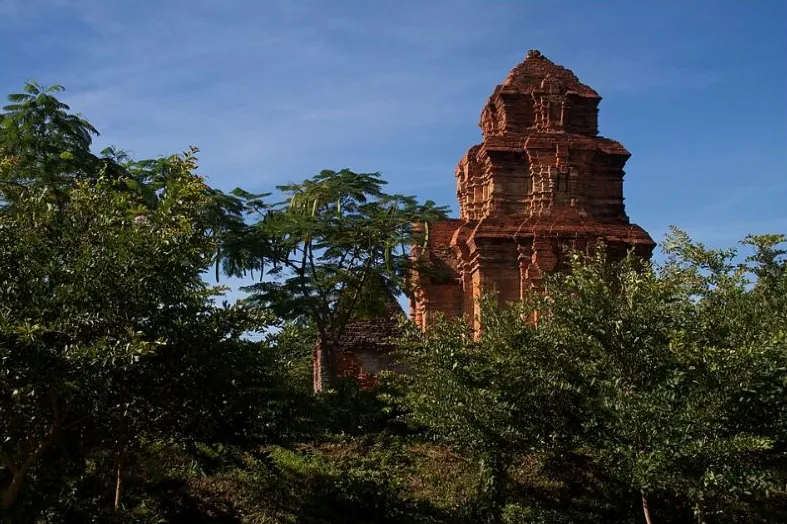
Reference photo: Pô Sah Inư, Phan Thiết — Cham tower architecture ·
Jean-Marie Hullot · CC BY 3.0 · Resized and converted to WebP

Look at the architecture without touching
Begin with the overall arrangement before focusing on decorative details. Notice the brick surfaces, tower proportions and openings from the designated visitor area. Photographing these features does not require leaning on the walls, rubbing a carving or entering a closed doorway. If you want to understand how the buildings were made, use interpretation supplied by the site or a qualified guide rather than treating an attractive story about invisible mortar as a complete technical explanation.
Distinguish heritage from legend
Names associated with the towers and stories of rulers can appear in different spellings and versions. Ask which information concerns the early architecture and which concerns later traditions connected with Pô Sah Inư. A guide who explains the difference offers more than a list of dramatic dates. Avoid turning the visit into a search for a single exact number to repeat online, especially when a label or translation makes the chronology unclear.
Make space for religious practice
The towers are connected with living Cham cultural and religious activities. Dress appropriately for a sacred place, keep voices considerate and follow any request about shoes or entry. During a ceremony, observe from the space offered to visitors instead of stepping between participants for a photograph. Do not assume that every festival is a daily performance or that a published festival image proves an event will take place during your particular stay.
Fit the visit into a city-and-coast route
Check current admission, access arrangements and interpretation language before travelling if those details are important to your group. Ask about the approach and any uneven ground rather than assuming a heritage visit is entirely step-free. This stop can add cultural context to a Phan Thiết and Mũi Né journey without being hurried between beach photographs. Leave room afterwards to reflect on the site, and do not treat neighbouring properties or restricted structures as part of the public route.
Ask VietnamGuide AI
Ask VietnamGuide AISources
Explore more
- Bàu Trắng: visiting the white dunes and lakes
Plan a Bàu Trắng outing around the white dunes, lakeside scenery, exposed walking and optional vehicle activities without assuming a package includes everything.
- Mũi Né Red Sand Dunes: a focused sunset visit
Visit Mũi Né’s Red Sand Dunes for a manageable sunset outing, with realistic walking expectations, clear pickup arrangements and space away from active activities.
- Fairy Stream in Mũi Né: a practical walking visit
Prepare for the Fairy Stream’s shallow-water route, soft formations and changing conditions; confirm the open path and footwear arrangements locally.