Travel guide
Food in Phong Nha: regional flavours and everyday meals
Eating well in Phong Nha can mean a simple breakfast before a cave visit, a leisurely meal at a homestay or a local dish you have not tried elsewhere. Build your food plans around the place you are actually staying. A restaurant across the river or countryside may require a separate transfer, especially after a long day outside.
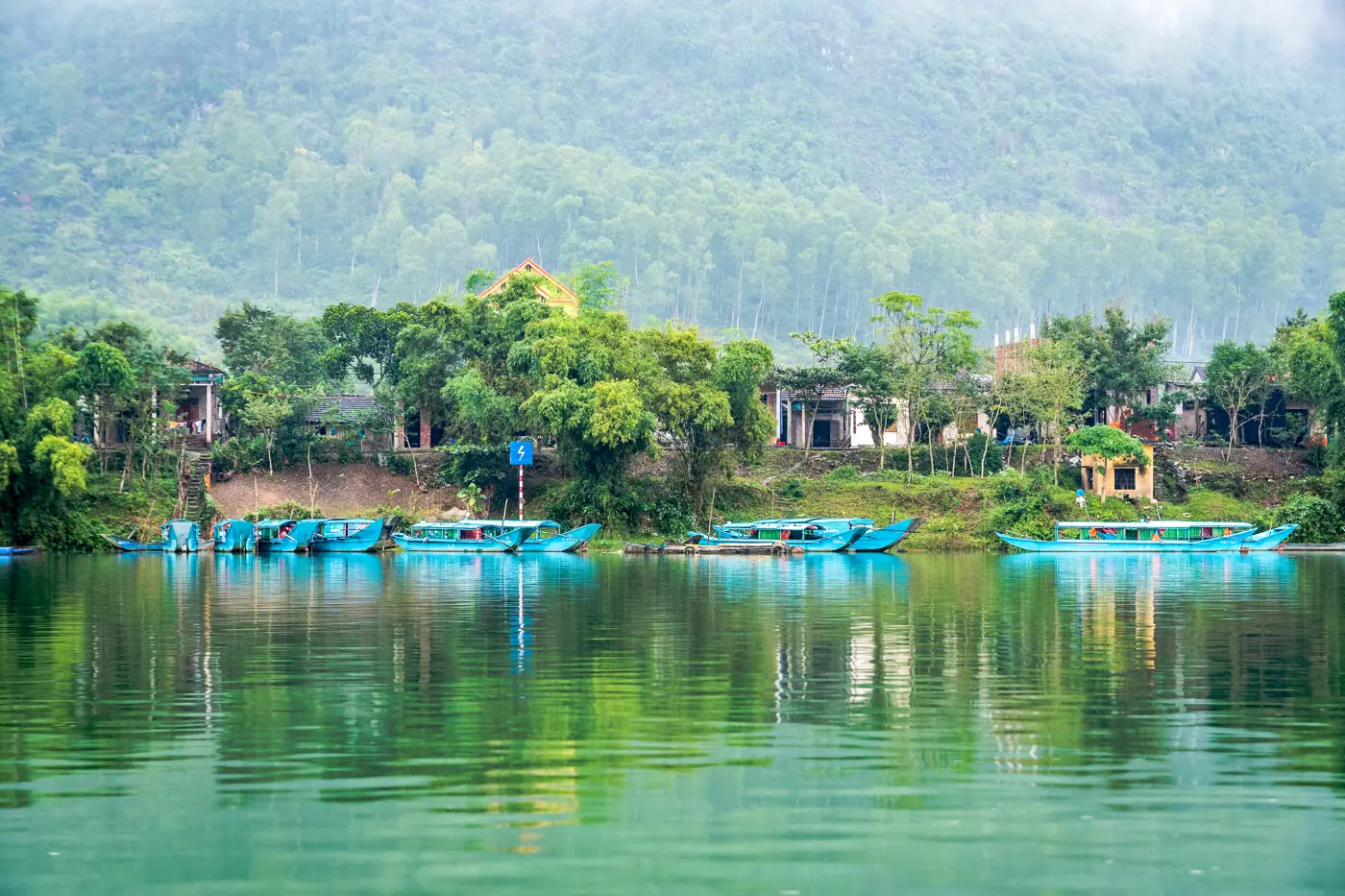
Regional context photo: Phong Nha — river and riverside scenery ·
Preparetavalise.com · CC BY-SA 4.0 · Resized and converted to WebP

Start with regional names
The national tourism database lists chao canh, banh loc made with cassava starch and khoai deo among the region’s food specialties. Use those names as starting points for a conversation, not as a promise that every restaurant serves them. Ask what is available today and what a dish contains. Recipes and accompaniments vary, so a familiar name is not enough to establish whether a meal fits your preferences.
Choose a comfortable rhythm
For a sightseeing day, arrange breakfast around your real pickup time and keep room for lunch instead of adding too many food stops. Ask your host whether dinner needs advance notice, particularly in a small family-run place. A short menu can be a useful opportunity to ask what the kitchen is preparing fresh, but it does not by itself prove quality. Confirm the final price and portion expectations before ordering a shared meal.
Read ingredients, not assumptions
A vegetable-looking dish may contain meat stock, fish sauce, shrimp or egg. Explain ingredients you avoid rather than relying only on an English label, and use a clear written translation when needed. For a serious allergy, discuss cross-contact and whether the kitchen can realistically meet the requirement; a friendly agreement is not a guarantee. Do not assume that a regional specialty will be suitable just because it is steamed or made from rice or starch.
Make dinner part of the visit
If a host offers a family meal, ask how it is arranged and whether other guests join. Treat it as hospitality with an agreed charge, not a performance that can be demanded at any hour. Take photographs of food without disrupting service and ask before including the people preparing it. Buy packaged specialties only after checking ingredients, storage needs and your onward journey, and leave the restaurant with accurate memories rather than invented claims about the region’s best dish.
Ask VietnamGuide AI
Ask VietnamGuide AISources
- 1. csdl.vietnamtourism.gov.vn/dest/
Source checked:
- 2. vietnam.travel/things-to-do/complete-guide-phong-nha
Source checked:
- 3. www.fda.gov/food/nutrition-food-labeling-and-critical-foods/food-allergies
Source checked:
Explore more
- Vegetarian and dietary needs in Phong Nha: plan every meal
Arrange vegetarian, vegan or restricted-diet meals in Phong Nha town and on organised cave trips with clear ingredient questions.
- Where to stay in Phong Nha: river views or a practical base
Compare Phong Nha town stays, riverside rooms and rural homestays by transport, meals and real room details rather than scenery alone.
- Overnight cave camps in Phong Nha: comfort without assumptions
Find out how sleeping, washing, toilets and dry clothing work on your actual Phong Nha cave expedition before choosing an overnight trip.