Travel guide
Pu Luong slow travel: choose a countryside stay that fits your walking
Pu Luong rewards attention more than a long sightseeing list. A terrace changes as cloud crosses the valley; a water channel explains how a hillside becomes farmland; the evening meal gives a village a different rhythm from its viewpoints. To enjoy that slower journey, choose where you sleep and how you move together. A beautiful room does not automatically offer an easy walk from the road.
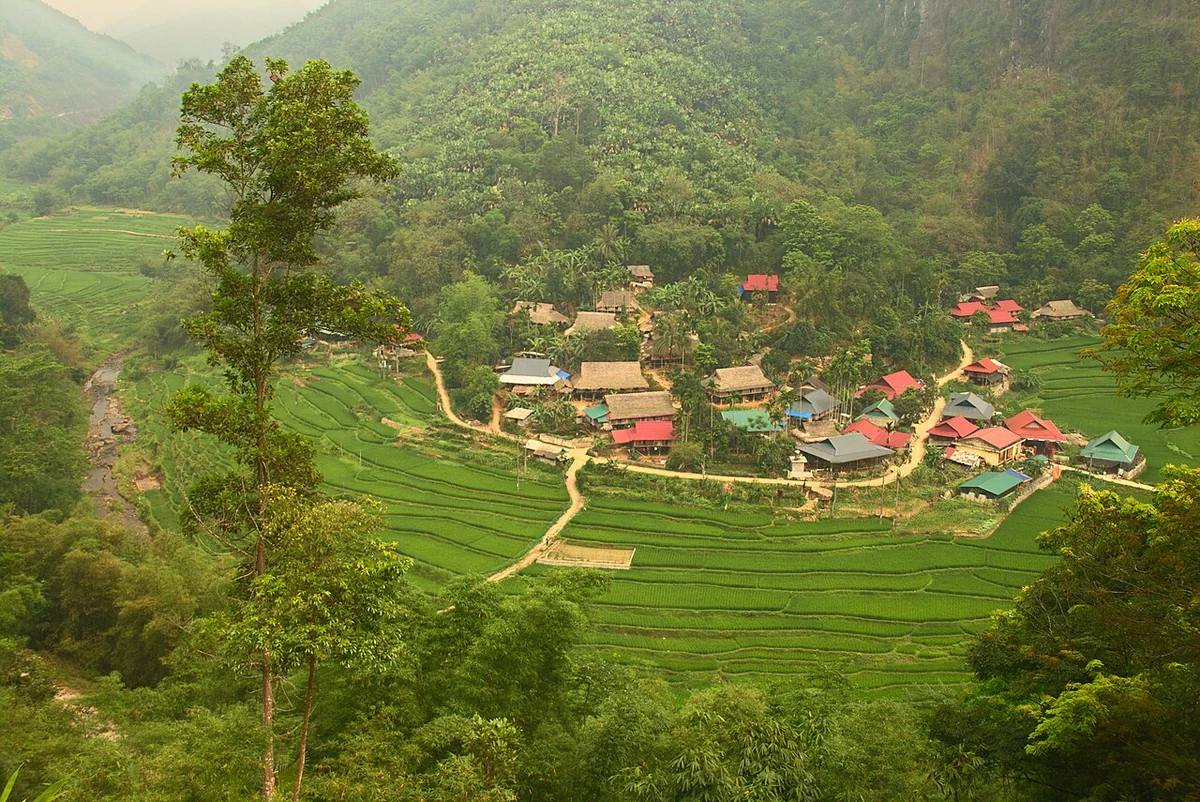

Read the landscape before choosing a base
Think of Pu Luong as a collection of inhabited valleys and hillsides within a nature-reserve landscape, rather than a resort town with every attraction on one flat street. Ban Don is associated with terraced slopes and a substantial concentration of accommodation. Kho Muong has a more enclosed valley setting; Hieu is closely connected with a stream and waterfall landscape. Those differences matter more than a vague promise of being central. Ask a prospective host to locate the actual house, the vehicle stopping point and an ordinary walking route on the same map. A distant panorama can be enjoyed from a balcony, whereas reaching the fields below may require a descent and a climb back.
Match the room to your daily rhythm
A stilt-house stay can make the building itself part of the experience: raised living spaces, shared household sounds and a different relationship with the ground. Yet accommodation advertised as a homestay ranges from family houses to purpose-built lodging. Establish whether the room is private, which bathroom is included, how many steps separate it from meals, and what happens to luggage after the car stops. If you want to read, sketch or watch the valley for a whole afternoon, choose somewhere with a comfortable sheltered place to sit. A pool or wide-angle photograph cannot answer questions about noise, shade or the return climb after lunch.
Choose one walk with a useful turning point
Begin with a walk that starts at your own door and has an agreed place to turn back: a lane junction, a permitted field-side viewpoint or a host-arranged village visit. Ask about surfaces and height change, not simply the number of kilometres. Rice bunds are working boundaries and irrigation structures; use the route your host identifies rather than treating every narrow ridge as a public trail. Add a longer guided outing only after seeing how the group handles local terrain. Kho Muong village can be discussed separately from its Bat Cave: a September 2026 provincial report described a request to stop taking tourists into the cave because of falling rocks, so cave entry should not be a routine extra.
Make time with hosts part of the journey
A slow stay works best when meals, conversation and small outings have room to develop without turning household life into a performance. Ask whether your hosts want to explain rice work, weaving or a local dish, and agree any activity or charge before it begins. Buy a craft for its workmanship and the maker’s story rather than assuming every textile was woven in the house selling it. Rice colour varies with the field and cultivation stage, so a recent photograph from your exact village is more useful than a region-wide promise of golden terraces. Leave one unallocated half-day: it may become the clearest view of the trip, or simply a very good afternoon under a roof listening to rain.
Ask VietnamGuide AI
Ask VietnamGuide AISources
Explore more
- Ban Don village: a hillside base among Pu Luong’s rice terraces
Understand Ban Don’s terraced slopes, accommodation locations and village lanes before choosing a stay or a gentle walk in Pu Luong.
- Kho Muong village: plan the valley visit, not just the cave
Explore the setting of Kho Muong’s Thai village and rice fields, with practical advice on arrival, uphill returns and the separate restrictions at Bat Cave.
- Kho Muong Bat Cave: understand the landscape and the access restriction
Read the September 2026 warning about falling rocks at Kho Muong Bat Cave, distinguish old tour advertising from permission, and plan a village alternative.