Travel guide
Long Khanh Pagoda: a quiet interval within Quy Nhon
Long Khánh offers a cultural pause within Quy Nhon without the travel required by the region’s hilltop religious sites. The national tourism authority identifies the pagoda at 141 Trần Cao Vân Street and traces its foundation to the eighteenth century. Use that history as a beginning rather than expecting every visible structure to belong to one original building period. This is a living Buddhist place where architecture, devotional objects and the conduct of worshippers matter together, making a quiet and attentive visit more rewarding than a hurried photography stop.
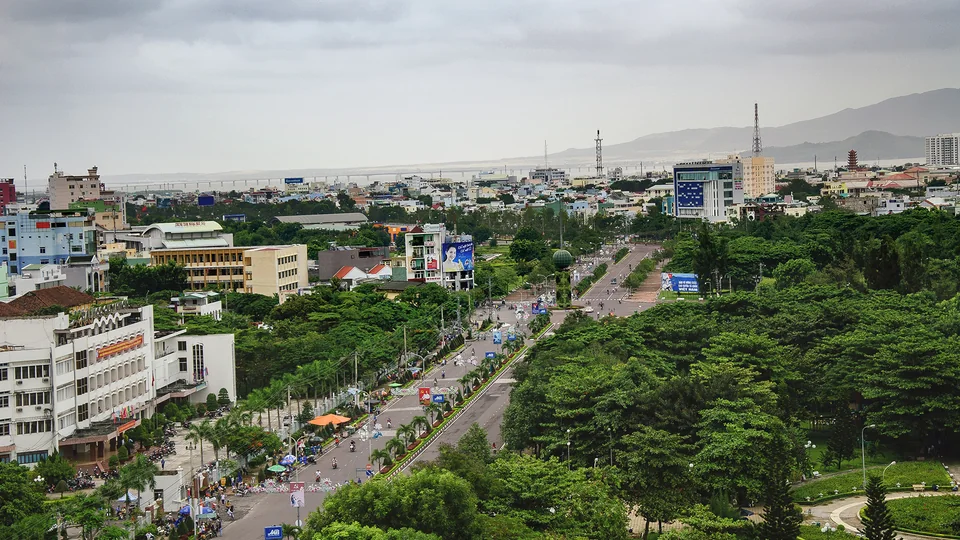
City view in an archival photograph from 2013 — Quy Nhơn. Regional context photograph from Quy Nhon–Binh Dinh. ·
Vũ Tuấn Quy Nhơn · CC BY 2.0 · Resized and converted to WebP

Enter at the pace of the place
Before moving toward a hall, pause in the visitor-accessible area and notice how the street gives way to the temple grounds. Let people entering to worship pass freely. The courtyard and the arrangement of religious buildings provide a useful first view, allowing you to understand the direction of movement before looking at specific details. A moment of observation also makes local instructions easier to follow. You do not need to join a ritual to appreciate the space; standing unobtrusively is a perfectly meaningful way to begin.
Look from courtyard to hall
The national destination description identifies an Amitabha Buddha in the front courtyard and a bronze Shakyamuni Buddha in the main hall. These are useful points of orientation, while access to any interior must follow the instructions in place when you visit. Compare the scale and setting of an outdoor image with the more contained composition of a hall. Notice rooflines, framing elements and the transition between open and sheltered space, rather than viewing devotional images simply as isolated objects to be photographed.
Let historic objects raise questions
Official interpretation records a bell cast in 1805 and an inscribed seal associated with the pagoda from 1813. Their presence in the historical account gives the temple another layer beyond its most visible architecture. Ask whether these objects are currently displayed or explained; do not assume that a visitor can approach, handle or ring a bell. If you are interested in chronology, the different dates can start a conversation about how a religious institution acquires objects and changes over time while retaining its identity.
Keep the city visit simple
Confirm the visiting arrangements and choose a time that does not intrude on an organised religious activity. Dress modestly, lower your voice and follow guidance about shoes and photography. Ask before photographing people, and keep doorways and worship spaces clear. Because this is an urban stop, it can fit beside a museum visit or a relaxed meal without needing a full excursion day. Leave a little unplanned time afterward: the value of Long Khanh is partly the change of pace it offers within an otherwise active city itinerary.
Ask VietnamGuide AI
Ask VietnamGuide AISources
- 1. vietnamtourism.vn/index.php/tourism/items/2057
Source checked:
Explore more
- Ky Co Beach: give the coast time to reveal its colours
Discover Ky Co as a beach of pale sand and mountain edges, with a relaxed shore visit and a realistic choice between boat and road arrangements.
- Eo Gio: follow the wind and the curve of the rocks
Explore Eo Gio as a rocky coastal viewpoint, with a measured walk on open paths and time to watch the meeting of mountains and waves.
- Hon Kho: choose an island day from Nhon Hai
Plan a thoughtful Hon Kho boat outing from Nhon Hai, balancing the rocky island scenery, optional water activities and a clear return arrangement.