Travel guide
Quang Trung Museum: a day with Tay Son history
A visit to Quang Trung Museum changes the direction of a Quy Nhon holiday, taking you inland to the Tây Sơn area and into a major chapter of Vietnamese history. This is a day excursion, not a museum beside the urban beach. The national tourism database places the museum at Kiên Mỹ, near the Kôn River, and describes a collection devoted to the Tây Sơn movement and Emperor Quang Trung–Nguyễn Huệ. Begin with that clear focus and the grounds become easier to read as a connected cultural setting.
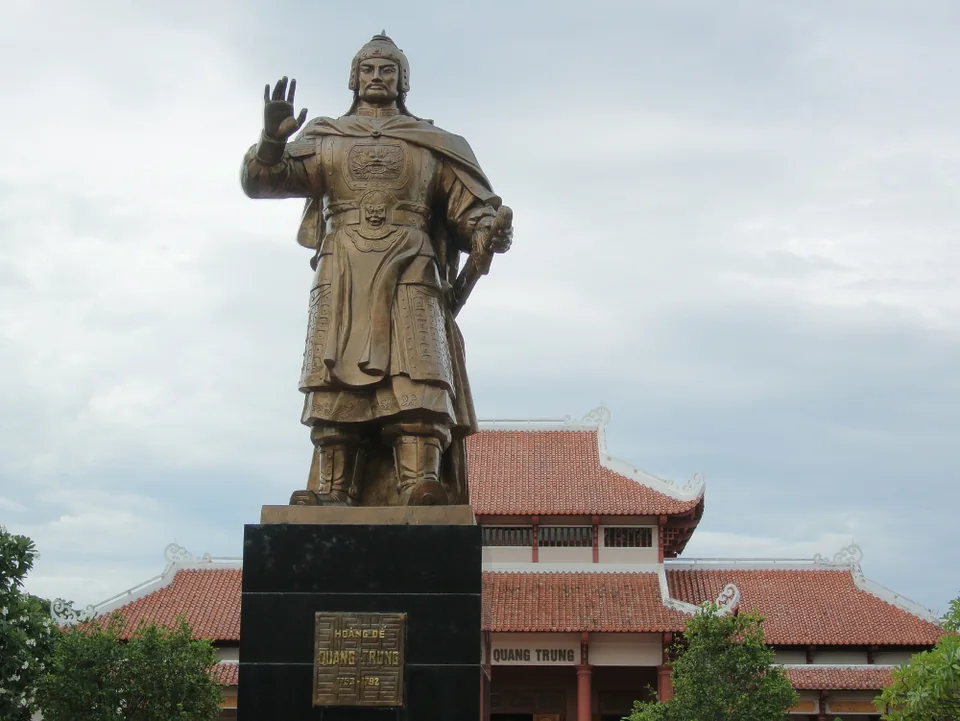
Quang Trung statue at the museum — Bảo tàng Quang Trung, Tây Sơn, Bình Định. ·
Tonbi ko · CC BY-SA 3.0 · Resized and converted to WebP

Follow the story in order
Use the exhibition sequence to establish a timeline before concentrating on individual objects. The official database describes a chronological presentation from the movement’s beginnings in 1771 through the Tây Sơn dynasty. Rather than trying to memorise every name, identify the main people, the places involved and the changes that link one stage to the next. Take a moment with maps or captions available during your visit. A few well-understood connections will stay with you longer than a rapid walk past every display case.
Separate exhibition and remembrance
The museum’s broader setting includes the memorial temple to the three Tây Sơn brothers and a monument to Emperor Quang Trung. These spaces invite a different pace from an exhibition room. Look at the relationship between courtyards, buildings and commemorative elements, while recognising that acts of remembrance belong to a living cultural practice. If people are paying respects, leave them room and avoid turning their observance into your photograph. The contrast between historical explanation and memorial expression is an important part of understanding the site.
Ask about music and martial heritage
Official interpretation includes a venue for Tây Sơn martial music within the complex. That establishes a cultural connection, not a promise of a performance at the moment you arrive. If a demonstration is offered for your date, ask the museum about its timing, booking arrangements and explanation before building the day around it. Listen for how the presentation relates to the history you have just encountered. If no programme is available, the exhibition and memorial spaces still provide the substance of the visit.
Make the inland journey comfortable
Arrange transport from Quy Nhon and back, with a realistic allowance for the drive, museum time and lunch. Ask about the areas open on your chosen day and whether interpretation or a guide is available in a language you understand. Walk the grounds at a pace suited to your group, take breaks and dress respectfully for the memorial areas. A nearby architectural stop can be considered if time permits, but leave enough room for the museum’s narrative instead of reducing it to a quick pause between attractions.
Ask VietnamGuide AI
Ask VietnamGuide AISources
- 1. csdl.vietnamtourism.gov.vn/vcgt/
Source checked:
Explore more
- Ky Co Beach: give the coast time to reveal its colours
Discover Ky Co as a beach of pale sand and mountain edges, with a relaxed shore visit and a realistic choice between boat and road arrangements.
- Eo Gio: follow the wind and the curve of the rocks
Explore Eo Gio as a rocky coastal viewpoint, with a measured walk on open paths and time to watch the meeting of mountains and waves.
- Hon Kho: choose an island day from Nhon Hai
Plan a thoughtful Hon Kho boat outing from Nhon Hai, balancing the rocky island scenery, optional water activities and a clear return arrangement.