Travel guide
Thi Nai Lagoon: water, working shores and a wider view of Quy Nhon
Thi Nai gives Quy Nhon a second kind of waterfront. Beyond the open beach lies a broad lagoon, edged by mangroves and the Phuong Mai peninsula. Come for the relationship between land and water: boats, low green margins and distant hills make a landscape worth looking at slowly. This is a working environment, and a rewarding visit begins by noticing how people use it.
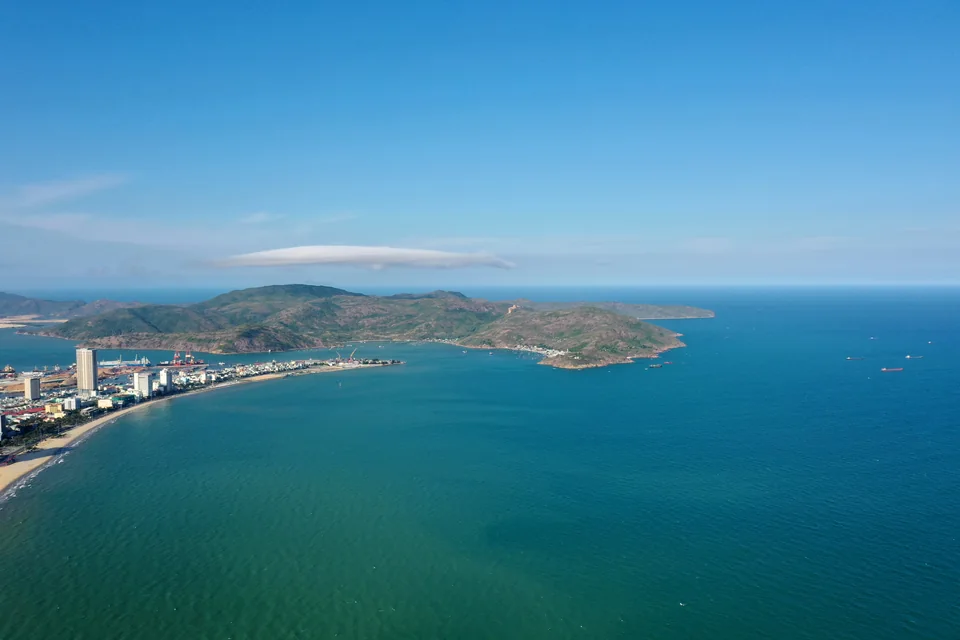
Coastal landscape — Hải Giang, Quy Nhơn. Regional context photograph from Quy Nhon–Binh Dinh. ·
Khachoangmmo · CC BY-SA 4.0 · Resized and converted to WebP

Read the landscape in layers
Start at a lawful shore access point with enough room to stand clear of boats and traffic. First take in the widest view, then look for the different bands within it: reflective water, darker vegetation, the peninsula and the sky. The national tourism database identifies Phuong Mai along the lagoon’s eastern side. That simple orientation makes a map much more interesting, because the strip of land separates the sheltered lagoon from the open sea. Cloud and breeze can change the picture without any change of viewpoint.
Notice a working waterfront
The appeal is in ordinary details as much as scenery. From a place where visitors are welcome, watch the shape of a boat’s bow, the spacing of fishing equipment and the way small channels interrupt the green edge. Ask before taking close photographs of people or entering a landing place. Nets, moorings and aquaculture structures belong to someone’s livelihood. A conversation with a willing local host can explain more than a hurried search for a perfect photograph, especially when you ask what changes with the water level.
Choose the lagoon, or choose Con Chim
A shore visit and a Con Chim excursion offer different scales of experience. The former lets you pause during a peninsula outing; the latter needs a separate arrangement with a legitimate local provider for transport and permitted landing. Mangroves are a valuable part of the lagoon’s ecology, rather than a backdrop to be entered wherever convenient. Birds may appear, but a satisfying outing should also include water, vegetation and the human geography. Thi Nai Bridge is a crossing and another subject entirely, not a reason to stop on the roadway.
Build a gentle visit around one stop
Plan one confirmed shore stop, a drink or meal nearby if available, and an unhurried return. Tell your driver the actual destination rather than simply asking for the lagoon, which covers a large area. For a boat outing, agree on the embarkation point, life jackets, route and return before paying, and let conditions determine whether it operates. Bring drinking water and protection from sun or rain. Leave the shore as you found it; the best souvenir is a clearer sense of Quy Nhon’s landscape.
Ask VietnamGuide AI
Ask VietnamGuide AISources
- 1. csdl.vietnamtourism.gov.vn/dest/
Source checked:
Explore more
- Ky Co Beach: give the coast time to reveal its colours
Discover Ky Co as a beach of pale sand and mountain edges, with a relaxed shore visit and a realistic choice between boat and road arrangements.
- Eo Gio: follow the wind and the curve of the rocks
Explore Eo Gio as a rocky coastal viewpoint, with a measured walk on open paths and time to watch the meeting of mountains and waves.
- Hon Kho: choose an island day from Nhon Hai
Plan a thoughtful Hon Kho boat outing from Nhon Hai, balancing the rocky island scenery, optional water activities and a clear return arrangement.