Travel guide
Binh Dinh martial arts: watching a living heritage
Binh Dinh’s martial heritage becomes more interesting when you stop looking only for spectacular kicks. Watch how a practitioner prepares, changes direction and finishes a sequence, and you begin to notice discipline as well as energy. For a visitor based in Quy Nhon, a properly arranged demonstration or an interpreted museum visit can open a door into this living regional culture without turning it into a compulsory tourist show.
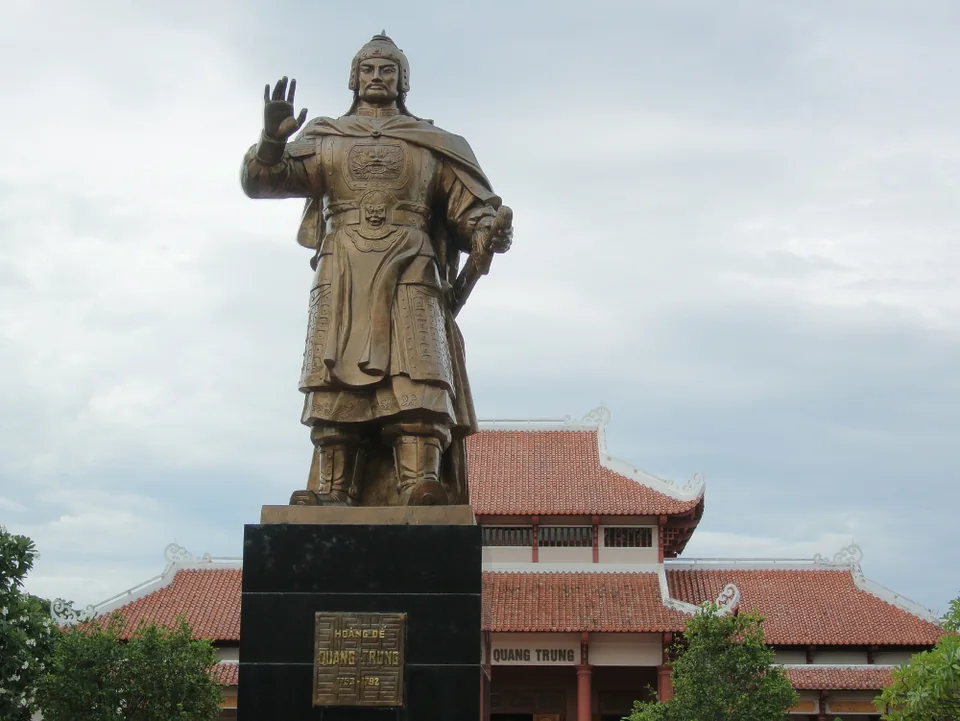
Quang Trung statue at the museum — Bảo tàng Quang Trung, Tây Sơn, Bình Định. Regional context photograph from Quy Nhon–Binh Dinh. ·
Tonbi ko · CC BY-SA 3.0 · Resized and converted to WebP

Understand a tradition with many voices
The Ministry of Culture’s account emphasizes the diversity of Binh Dinh’s martial lineages, each carrying its own characteristics. It also describes physical conditioning, unarmed forms, weapons practice and mental cultivation as broad components. This is a useful starting point for watching: a short display represents one teacher, school or programme, not the whole tradition. Ask which lineage is being presented and what the sequence is called. A clear answer can make even a restrained movement more memorable than an unexplained series of dramatic poses.
Look for rhythm and intention
During a demonstration, follow the relationship between stillness and movement. Notice the way the feet settle, how the body turns and when a sequence pauses. If weapons are used, remain in the designated audience area and treat them as training equipment requiring controlled space. You are observing a cultural practice, not collecting techniques to copy immediately. Children may find it easier to remember a sequence by its changes of pace. An explanation before or after the display helps distinguish a formal exercise from a choreographed performance.
Connect the experience with Tay Son
The Quang Trung Museum in the Tay Son area offers a historical setting for learning about the region, and the Ministry’s feature records a martial display there during a commemorative occasion. That evidence should not be read as a daily timetable. If you plan a trip from Quy Nhon, ask the museum or a legitimate organiser whether a programme is available on your date, who presents it and whether interpretation is included. Leave time for the museum’s historical content so that the visit has value even without a demonstration.
Visit as a considerate guest
A working school has pupils and a teaching routine; it is not automatically open for drop-in spectators. Arrange any visit in advance, agree the cost and duration, and ask before photographing children or recording instruction. Wear ordinary respectful clothing and avoid stepping into the practice area unless invited. If a teacher offers a beginner activity, discuss its format and your own limits without expecting combat training. Support the people transmitting the tradition through an agreed visit, and let the teacher’s explanation shape the experience rather than a demand for a particular stunt.
Ask VietnamGuide AI
Ask VietnamGuide AISources
- 1. bvhttdl.gov.vn/Pages/chi-tiet.aspx
Source checked:
Explore more
- Ky Co Beach: give the coast time to reveal its colours
Discover Ky Co as a beach of pale sand and mountain edges, with a relaxed shore visit and a realistic choice between boat and road arrangements.
- Eo Gio: follow the wind and the curve of the rocks
Explore Eo Gio as a rocky coastal viewpoint, with a measured walk on open paths and time to watch the meeting of mountains and waves.
- Hon Kho: choose an island day from Nhon Hai
Plan a thoughtful Hon Kho boat outing from Nhon Hai, balancing the rocky island scenery, optional water activities and a clear return arrangement.