Travel guide
Twin Towers: Cham architecture within Quy Nhon
The Twin Towers, or Tháp Đôi, offer a particularly rewarding introduction to the Cham heritage of the historic Bình Định region. Their setting is part of the appeal: two ancient brick structures rise within present-day Quy Nhon, allowing a cultural visit without an inland excursion. Begin by standing back to see the pair together, then move closer to study how the surfaces turn light and shadow into pattern. The visit works best as an exercise in looking, with time to notice differences rather than simply collect a photograph.
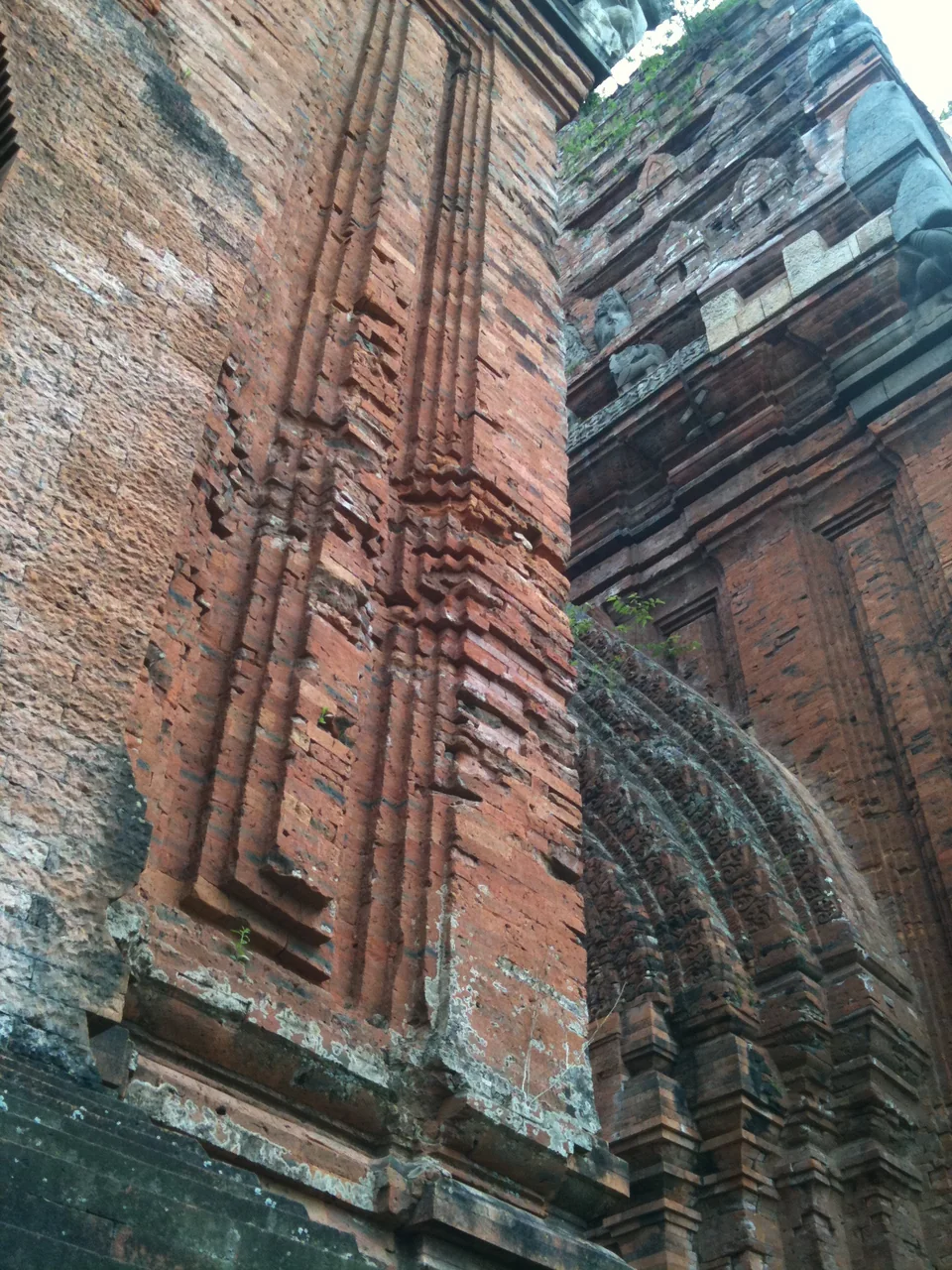
Architectural detail of Cham towers — Tháp Đôi, Quy Nhơn. ·
Dragfyre · CC BY-SA 3.0 · Resized and converted to WebP

Begin with the paired silhouette
From a permitted position in the grounds, take in the two towers as a single composition. Compare their proportions and the way each upper section narrows above its substantial body. The national tourism authority identifies the site as a Cham monument with Hindu artistic influences. That context gives the brick forms a purpose beyond their striking appearance: these are remains of a sacred architectural tradition. Let the outline settle in your mind before seeking individual carvings; it will help you understand where decoration sits within the larger structure.
Read brickwork and ornament
Approach along the visitor route and look from the lower walls toward the higher carved areas. Repeating forms, recessed surfaces and projecting details become easier to distinguish when viewed from more than one angle. The tourism authority describes animal imagery among the decoration, including elephants and lions. Treat that description as a starting point for observation, rather than a checklist every visitor must complete. Weathering and viewing distance can hide a motif. A photograph taken without touching the masonry is useful for examining a detail later.
Give the city setting its place
The contrast between the towers and the surrounding urban life makes this site different from a hilltop sanctuary. Pause again at the edge of the visitor grounds and consider how an ancient monument survives within a working modern city. If you also intend to visit the provincial museum, this is a good place to begin asking questions about Cham sculpture, religious imagery and the relationship between a building and the objects once associated with it. A guide can help distinguish a documented interpretation from an attractive but unsupported story.
Build a gentle cultural stop
Choose a part of the day when you can look slowly and take a water break afterward. Confirm the current entrance arrangements when planning your visit, particularly if you need step-free movement or are joining a group. Stay on permitted paths, keep hands and climbing feet off historic brickwork, and follow any instructions about entering the structures. Allow time for a final view of both towers before leaving. A nearby meal or a museum visit can extend the cultural thread without turning this compact urban stop into a rushed circuit of distant monuments.
Ask VietnamGuide AI
Ask VietnamGuide AISources
- 1. vietnam.travel/node/1453
Source checked:
Explore more
- Ky Co Beach: give the coast time to reveal its colours
Discover Ky Co as a beach of pale sand and mountain edges, with a relaxed shore visit and a realistic choice between boat and road arrangements.
- Eo Gio: follow the wind and the curve of the rocks
Explore Eo Gio as a rocky coastal viewpoint, with a measured walk on open paths and time to watch the meeting of mountains and waves.
- Hon Kho: choose an island day from Nhon Hai
Plan a thoughtful Hon Kho boat outing from Nhon Hai, balancing the rocky island scenery, optional water activities and a clear return arrangement.