Travel guide
Following dragons: Hoi An’s courtyard and Tay Ninh’s columns
A ceramic courtyard dragon and dragon details at the Holy See invite close attention to material and position. Seek each place’s explanation to understand ornament within its own setting.
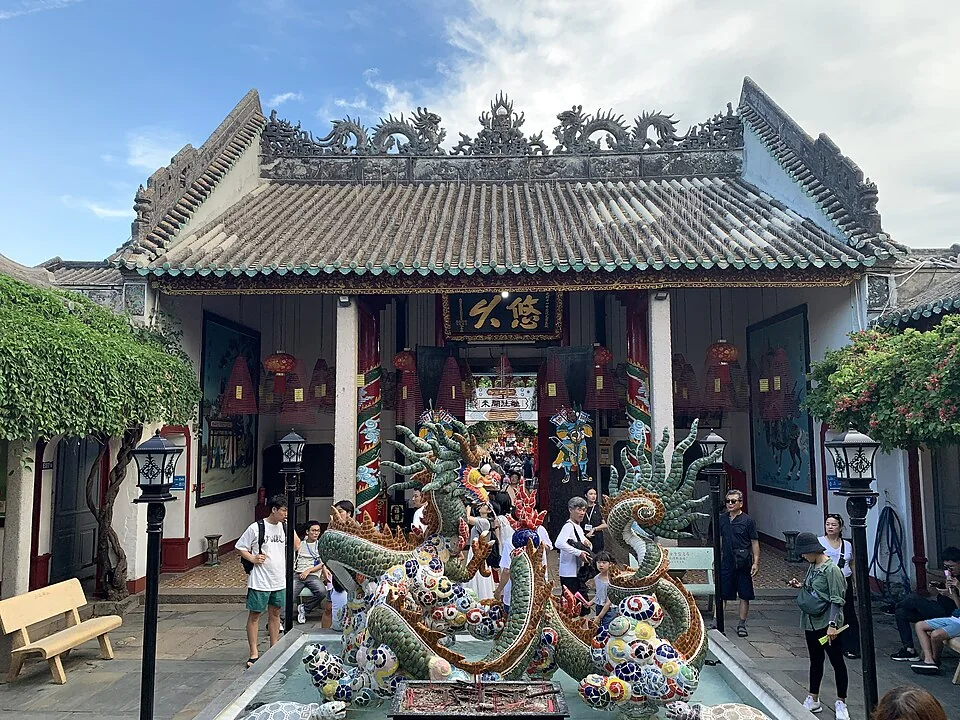

Cantonese Assembly Hall: ceramics and community heritage in Hoi An
The local heritage authority identifies a ceramic dragon fountain among the hall’s notable features. Treat that as a starting point for observation: look at how colour and surface texture bring the figure into the courtyard. You do not need to assign a meaning to every fragment. Ask which details are original, repaired or newly interpreted rather than assuming the entire visible surface comes from one period. Photograph from a permitted position and leave room for people passing through.
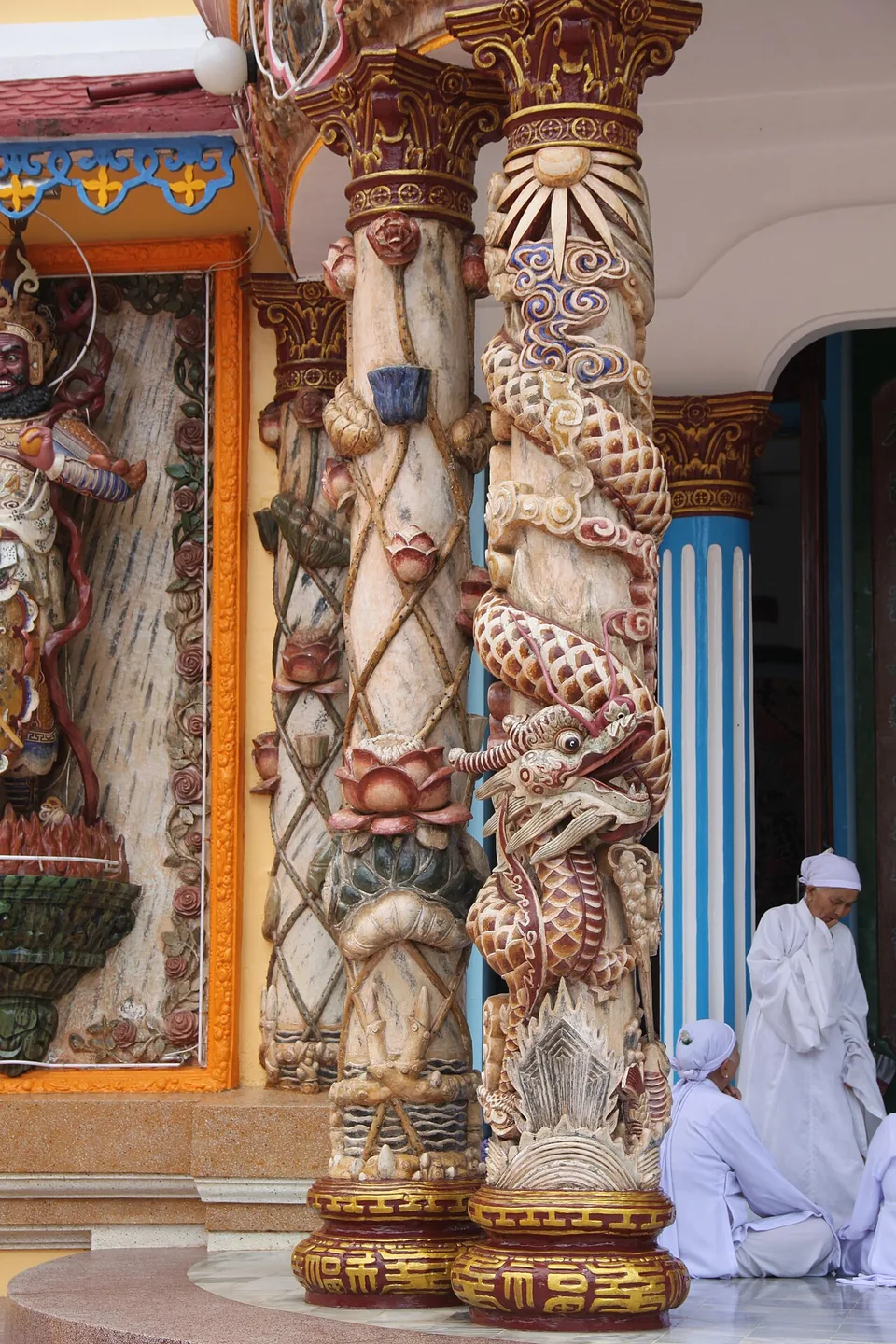

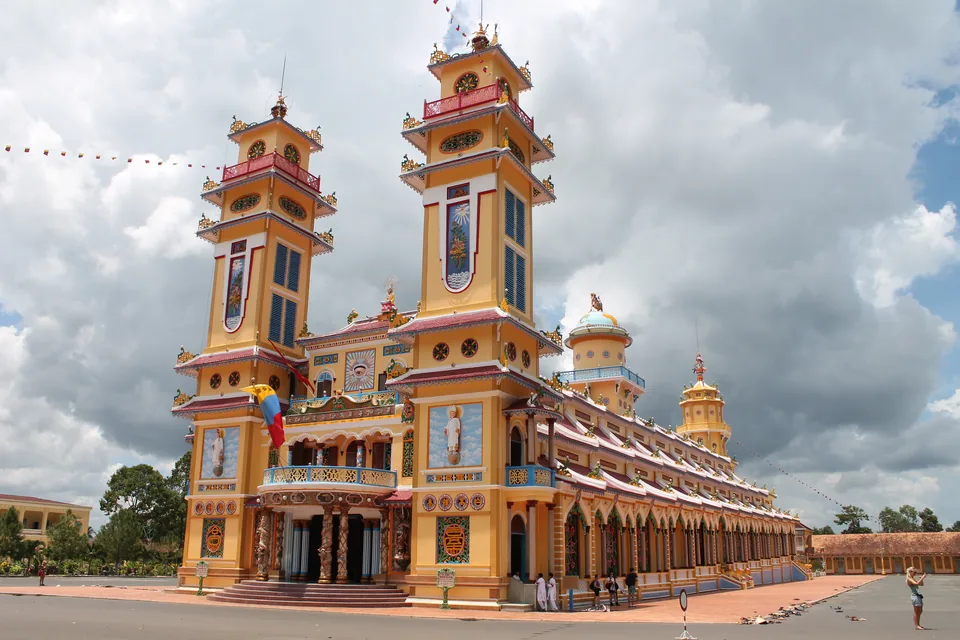

Visiting the Cao Dai Holy See: architecture and respectful access
The building’s towers, colour and symbolic details reward an unhurried visit. Read available explanations or ask an authorised guide instead of guessing that every decorative feature represents the same tradition. The official provincial account dates construction from 1933 to completion in 1955; avoid combining this with unsupported claims about other buildings in the complex.
Choose the experience that fits
| Choice | What to consider |
|---|---|
| Cantonese Assembly Hall: ceramics and community heritage in Hoi An | For a short visit, choose the dragon and one architectural question rather than rushing through a list of photo targets. Confirm present admission, open areas and any worship taking place directly with the site; an older heritage description is not a current operating notice. Keep voices low near devotional spaces and ask before photographing people or ceremonies. Combine this stop with your existing Old Town walk, allowing a break instead of assuming that all halls offer the same experience. If step-free access matters, ask about the actual route, thresholds and seating before arrival. A photograph of a level courtyard cannot confirm the whole journey through the building. Explain the traveller’s needs clearly and choose a shorter permitted route if the available arrangement does not suit them. |
| Visiting the Cao Dai Holy See: architecture and respectful access | Keep the visit flexible if access is temporarily restricted: the permitted exterior may still provide an architectural introduction. A child or tired companion can rest outside with another adult rather than interrupt the service. Combine the Holy See with nearby plans only after checking the actual transfer, and keep it distinct from Buddhist sites such as Go Ken pagoda. |
Ask VietnamGuide AI
Ask VietnamGuide AISources
- 1. www.hoianworldheritage.org.vn/en/news/Monument/Quang-Trieu-Cantonese-Assembly-Hall-15.hwh
Source checked:
- 2. hoianheritage.net/vi/trao-doi-chuyen-nganh/chuyen-de-nghien-cuu-trao-doi/kien-truc-co-cac-hoi-quan-cua-nguoi-hoa-o-hoi-an-quang-nam-735.html
Source checked:
- 3. dulich.tayninh.gov.vn/tin-tuc/toa-thanh-cao-dai-tay-ninh-1293
Source checked:
Explore more
- Hoi An through ceramics: sea trade and a courtyard dragon
A vessel opens a story of maritime trade; a ceramic dragon draws you into a communal courtyard. Pair these perspectives with the present-day market.
- Hoi An between home and assembly hall: follow the light inside
Tan Ky introduces household space; the Cantonese Hall opens onto communal courtyards. Follow thresholds, daylight and gathering places to discover two ways of organising life in a trading town.
- Visit pottery villages to watch and try: Bat Trang or Thanh Ha?
Watching a maker and taking part offer different pleasures. Choose what you want to learn about clay and shaping, then confirm supervision, your activity and any piece to take home.