Travel guide
Ako Dhong: a living Ede village within Buon Ma Thuot
Ako Dhong is interesting because the city and the village are present together. Longhouse forms, gardens, everyday homes and visitor businesses share an urban setting. Rather than searching for a place untouched by change, look at how residents choose to keep, adapt and explain their cultural inheritance while continuing ordinary lives.
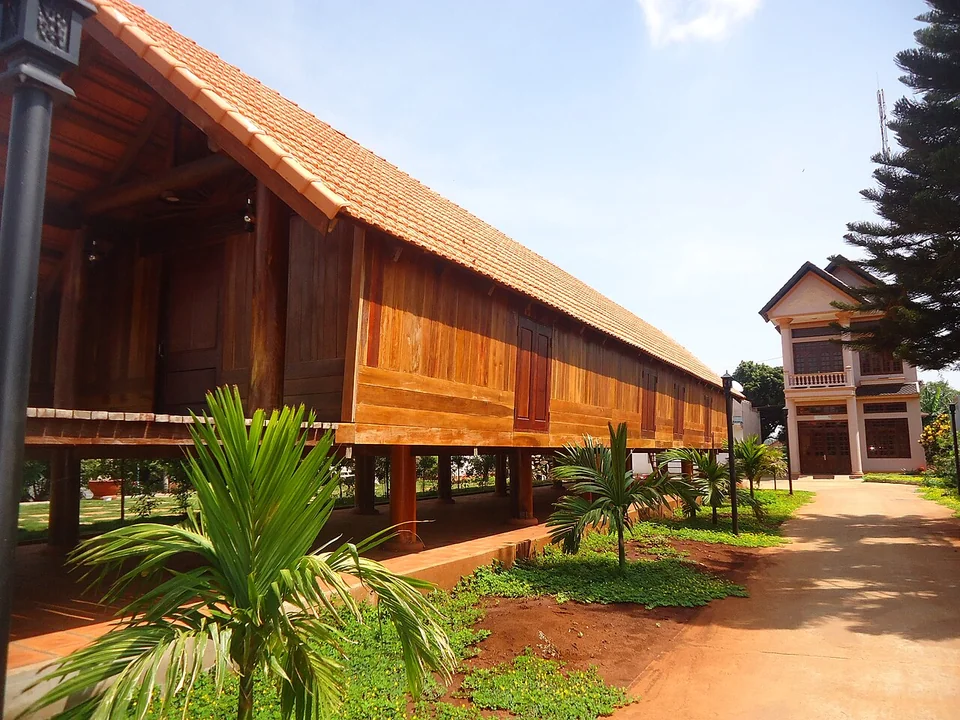

Notice the village inside the city
Begin with a slow look along the public approach: how do entrances, garden space and the length of a house differ from the street you arrived on? The contrast is a useful introduction to Ede architecture without requiring you to enter every building. Community-tourism reporting documents both preserved longhouses and houses restored or built for hospitality. Those categories can sit beside each other. A newer building need not be dismissed as meaningless, but its age and use should not be invented from appearance. Ask which house belongs to a household, which welcomes customers and what the resident wants visitors to understand about it.
Make an exterior walk attentive
Choose a short circuit that your host or local guide considers appropriate, then walk at a pace that leaves room to notice people using the lane. Avoid making a doorway the background for a long group photo when somebody needs to enter. A raised floor or carved stair is a reason to ask a question, not permission to climb. If a resident explains an architectural detail, listen to that account before comparing it with what you read elsewhere. Different families may maintain, repair or use their buildings differently, and a single visible feature cannot tell the whole story of a community.
Arrange one encounter with substance
For a deeper visit, agree on a specific conversation or activity rather than requesting an undefined cultural show. You might ask a willing host about living in a longhouse, changing work or a craft they actually practise. A cafe can be a comfortable place to begin, but an ordinary drink order does not buy unlimited translation, a private-house tour or a performance. Explain your group size and interests ahead of time, and ask what the host can offer on that day. Allow the person to decide which rooms, objects and stories they wish to share. Leaving a boundary intact is part of a successful visit.
Understand tourism as part of contemporary life
Resident-run restaurants, cafes and accommodation can create income that supports the people maintaining cultural spaces. Their presence does not automatically turn the village into a stage set. Look at who provides the service and where your payment goes instead of measuring authenticity by the absence of a menu or a modern roof. If textiles or other goods are offered, ask about the maker and the process rather than assuming everything on a shelf was produced inside that house. Choose a purchase because you understand it and can use it. A polite refusal to buy is preferable to bargaining over an object you never intended to keep.
Give the visit a gentle place in the day
Ako Dhong fits naturally with a city-based programme, especially after museum context, but leave enough space for an unhurried meeting. Confirm your drop-off and return point so that vehicles do not create unnecessary congestion in residential space. Ask about steps, seating and toilets if those affect your group. Before photographing people or recording a performance, ask permission and agree whether sharing the recording is acceptable. Do not promise a public online audience on somebody else’s behalf. The strongest memory is often a small explanation that makes a house or a daily practice intelligible, not a posed image collected without a conversation.
Ask VietnamGuide AI
Ask VietnamGuide AISources
- 1. nongthon.vietnamtourism.gov.vn/dak-lak-buon-ako-dhong-phat-trien-du-lich-cong-dong/
Source checked:
- 2. bvhttdl.gov.vn/Pages/chi-tiet.aspx
Source checked:
Explore more
- Dak Lak Museum: the best first questions for a highland journey
Use Dak Lak Museum in Buon Ma Thuot to connect biodiversity, community life and history before visiting villages, coffee gardens or forest landscapes.
- Ede longhouses: understand a home before crossing its threshold
Read Ede longhouse architecture in Dak Lak through its raised floor, stairs, shared space and family life, with a respectful distinction between viewing and entering.
- A Dak Lak coffee farm visit: follow the work behind the cup
Plan an arranged coffee farm visit near Buon Ma Thuot, from flowering and ripe cherries to processing, with questions that connect scenery to growers’ work.