Travel guide
Chua Hang in Chau Doc: decide whether the stepped visit suits you
Chùa Hang is worth considering for its hillside setting and religious atmosphere, but the approach matters as much as the view. Choose it when your group is comfortable with steps and can turn back without pressure. A photograph of the upper courtyard is not evidence of an easy entrance.
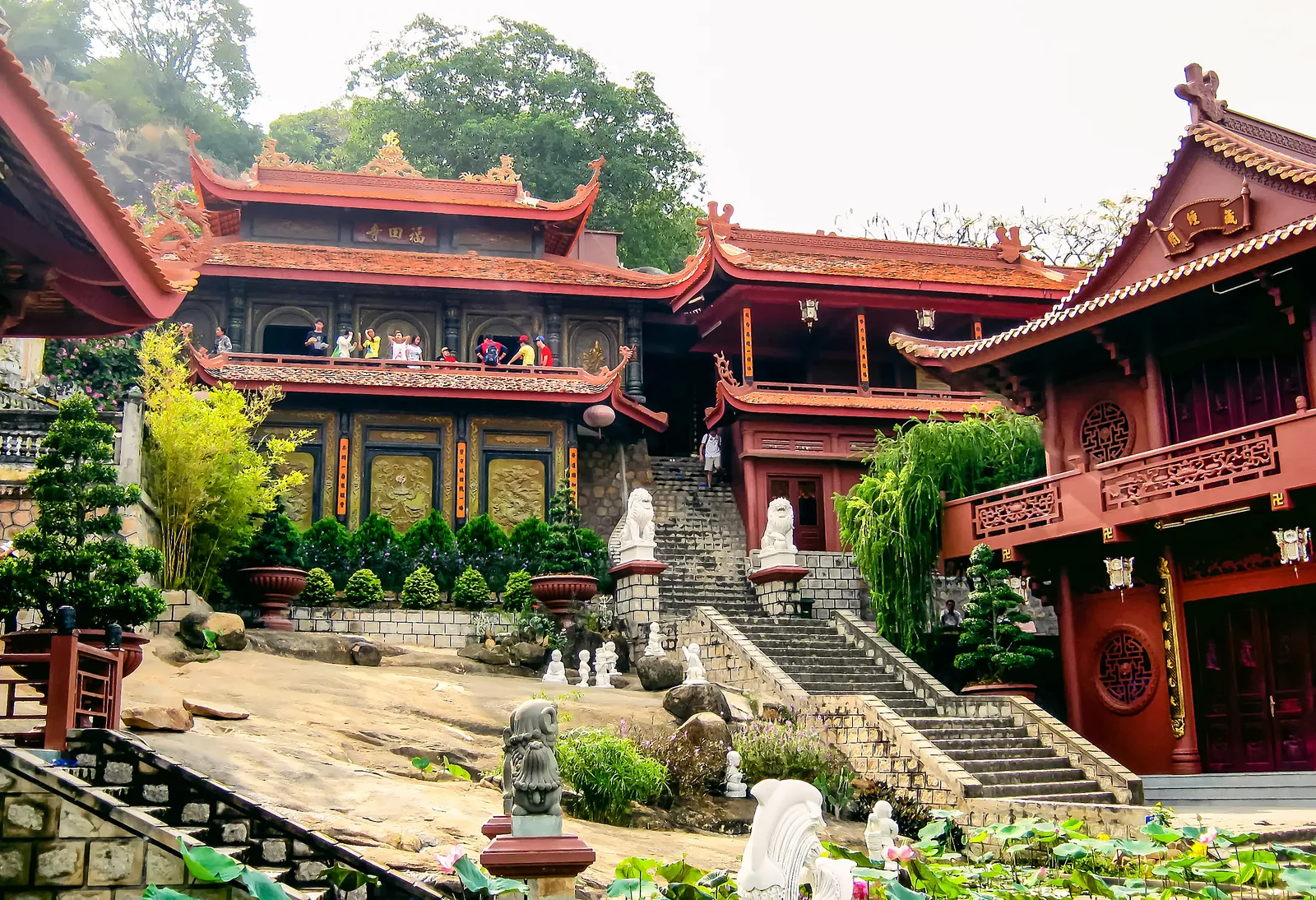
Buildings and steps of Chùa Hang on the slope of Núi Sam — Archive photograph; it does not establish current access or operating conditions. ·
Bùi Thụy Đào Nguyên / Wikimedia Commons; CC BY-SA 3.0; resized and converted to WebP · CC BY-SA 3.0 · Resized and converted to WebP

Identify the right Chua Hang
Search for Chùa Hang or Phước Điền tự at Sam Mountain in the Châu Đốc tourism area, now within Vĩnh Tế ward. Many Vietnamese places share the name Chùa Hang, so keep the full pin and show it to your driver. This is a separate stop on the mountain slope, not an interior chamber of Tay An Pagoda or Miếu Bà. Confirm where a vehicle can actually stop before planning the rest of the day.
Judge the climb by your group
The official An Giang historical dossier describes a stepped route from the mountain foot. It does not establish a universally accessible route or a dependable step count for every entrance. Ask about the route currently used by visitors, handrails, resting opportunities and the return descent. Someone who can manage a few hotel stairs may still find repeated outdoor steps difficult in heat. Let the least confident traveller influence the decision before buying a larger excursion.
Prepare for the descent as well
Choose stable footwear, carry drinking water and keep your hands free enough to use a handrail where provided. Set a comfortable stopping point rather than promising that everyone must reach the top. Wet steps, strong heat or a tired child are reasons to shorten the visit, not reasons to hurry. During severe weather or an access restriction, leave the hillside activity out; another exposed stairway is not a useful substitute.
Understand the pagoda and its stories
Phước Điền tự is an active Buddhist site, not simply a scenic cave attraction. Local accounts include the story of green and white snakes; treat that as a legend associated with the place, not a verified wildlife encounter or historical event. Observe the buildings and landscape from permitted areas. Do not leave marked or authorised routes to seek a cave mentioned in a story, and do not assume every enclosed space is open to visitors.
Agree on a dignified alternative
A split visit can work if one adult accompanies those climbing and another stays with anyone who prefers a lower-effort outing. Agree on a specific reunion point and communication method; never leave a child or someone needing assistance waiting alone. Another option is to omit Chùa Hang and spend longer at a foothill site after checking its own entrance conditions. Foothill does not automatically mean step-free, but it avoids committing the whole group to this hillside route.
Leave room in the itinerary
Place Chùa Hang on a day with a rest interval, not after an exhausting series of temple stops. Confirm current visiting arrangements, suitable clothing and photography rules with the venue or host. Keep the return pickup flexible enough for a slower descent. If your priority is quiet cultural interpretation, one unhurried pagoda visit can be more rewarding than completing a list of shrines while everyone watches the clock.
Ask VietnamGuide AI
Ask VietnamGuide AISources
Explore more
- Chau Doc Market: choosing mam and food gifts carefully
Buy fermented fish and local food gifts at Chau Doc Market with a clear ingredient, packaging and transport checklist. Distinguish culinary tradition from storage or customs guarantees.
- Chau Doc travel budget: a worksheet without stale prices
Calculate a Chau Doc trip using current quotes, confirmed hotel nights and clear group-versus-person units; compare savings without inventing a price band.