Travel guide
Con Dao oyster porridge: enjoy cháo hàu as a proper island meal
Cháo hàu offers another way to taste the sea in Con Dao: oysters folded into soft rice porridge rather than presented as a large grilled seafood platter. A good introduction is a freshly prepared bowl eaten slowly enough to notice the rice, the oyster and the seasoning separately. The dish appears in local food accounts, but recipes vary between kitchens. Treat the Vietnamese name as a starting point for a conversation, not a promise that every bowl has an identical recipe or serving size.
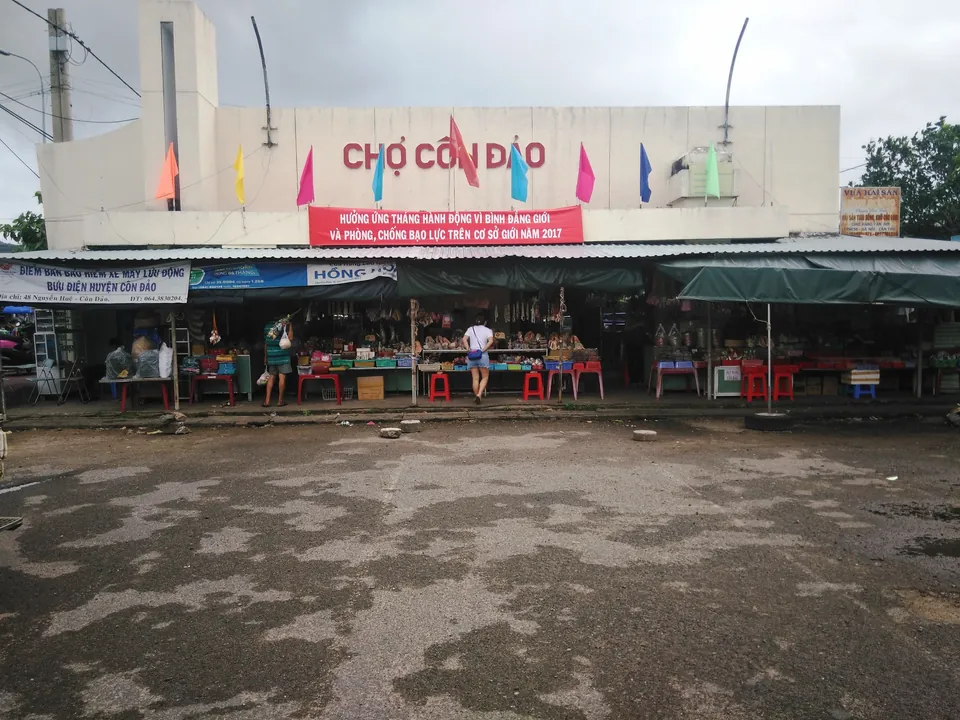
Market entrance — Chợ Côn Đảo. Regional reference photo from Con Dao; it does not document the specific site, dish, room or service discussed. ·
Phương Huy · Public domain · Resized and converted to WebP

Understand the bowl before ordering
Rice gives cháo its soft, spoonable body; some versions combine ordinary rice with glutinous rice for a thicker texture. A local description has oysters seasoned and briefly sautéed before they join the cooked porridge. That is one recorded method, not a rule for every cook. Ask whether your bowl is made to order or served from a prepared pot, and whether the oyster portion and rice portion can be explained. This helps distinguish a light snack from the meal you actually need.
Let the seasoning reveal itself
Taste the porridge before adding more pepper, chilli or sauces. Its texture and oyster flavour can be easier to appreciate when the first spoonful is simple. Ask which herbs, fried toppings and condiments normally accompany that kitchen's version, and request anything unfamiliar on the side where possible. Do not assume a photograph lists every ingredient in the stock. If an ingredient matters to your diet, ask directly instead of interpreting a bowl's pale colour as evidence of a plain water-based preparation.
Order a portion that suits the day
A bowl after a short waterfront walk has different requirements from a hurried meal before an island excursion. Check the portion size, price per bowl and likely preparation time before sitting down if you have a booked departure. Consider beginning with one normal serving rather than asking for extra oysters automatically. The menu term cháo hải sản describes a broader seafood porridge and may include other ingredients; it should not be substituted for cháo hàu without an explanation of what will arrive.
Keep the experience transparent
Choose cooked oysters rather than assuming that freshness removes the need to understand preparation. Explain shellfish allergies or other dietary restrictions before ordering; this article does not establish that any particular kitchen can accommodate them. Keep practical claims modest: a dated food guide cannot confirm today's opening hours, ingredient supply or prices. Ask your accommodation for a currently operating option and confirm details with the cook. Enjoy the dish for its taste and place in island food culture, without turning promotional nutrition language into a medical benefit.
Ask VietnamGuide AI
Ask VietnamGuide AISources
Explore more
- Dam Trau Beach: a relaxed shore visit near Con Dao Airport
Plan Dam Trau for its sandy bay, shade and airport-side setting, with realistic expectations about aircraft, facilities and changing sea conditions.
- Bai Nhat Beach: read the tide and enjoy Con Dao’s southern coast
Visit Bai Nhat for a changing ribbon of sand, a mountain-backed seascape and an unrushed coastal stop, with tide and return plans checked locally.
- An Hai Beach: an easy coastal pause beside Con Son town
Explore An Hai’s town-side sand, broad bay views and everyday waterfront atmosphere without mistaking the beach for An Hai Lake or a guaranteed swimming area.