Travel guide
Tong Ju village: follow an Ede textile from thread to meaning
A textile becomes more interesting when the person who makes it is part of the story. At Tong Ju, also written Tơng Jŭ or Tơng Ju, community-tourism reporting links Ede village life with weaving and other local skills. A worthwhile visit follows the maker’s explanation rather than reducing the village to a souvenir shelf.
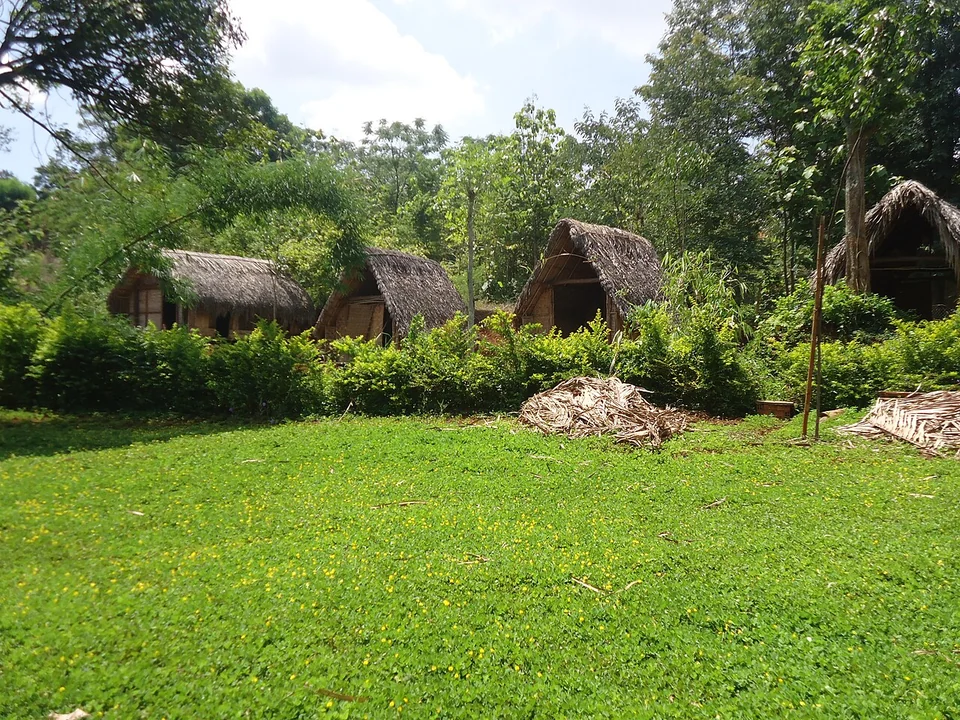

Understand the village setting
Tong Ju belongs to the Ea Kao area, connecting a village visit with a different side of Buon Ma Thuot’s surroundings. National tourism reporting describes longhouses, community life and weaving among its cultural resources. Use that context to plan a focused encounter rather than expecting a craft demonstration at every doorstep. Ask your host where the weaving is taking place and whether the person you will meet is a maker, seller or organiser. Each can explain a different part of the work. A short introduction to the actual household or workshop gives the cloth a human setting before you look at prices.
Look at how the cloth is constructed
Begin with the textile itself: look at the relation between its main field, borders and repeating details, then ask the maker which parts require the most attention. Rather than assigning a meaning to every motif from a quick internet search, invite the person to explain a pattern they choose. Ask about the thread, the stages completed locally and how a finished piece is intended to be worn or used. If you compare two items, examine their construction as well as their colours. Similar appearance does not prove identical materials, technique or the same amount of work, and a price difference may have a practical explanation.
Watch work without taking over
A loom can make a complex process visible, but a visitor’s hand can also disturb it. Ask before approaching closely, touching thread or sitting at equipment. If the maker offers a demonstration, let them set its length and pace instead of asking for repeated movements solely for video. A supervised try may be possible by arrangement, but it is not a guaranteed walk-in activity. Choose a few useful questions and leave space for the person to answer in their own sequence. If translation is needed, allow the interpreter time; interrupting every action with a new request can make the work impossible to follow.
Buy a piece you can explain
Ask who made the item you are considering, how long the relevant work took and whether its materials need particular care. A small piece whose origin you understand can be more meaningful than a large bag of unexplained souvenirs. Do not assume every object offered in a village was woven in the house where it is sold; sellers may also represent other makers or stock different kinds of goods. Compare the actual item rather than arguing from the price of a superficially similar market product. Agree the payment clearly, keep any care instructions and think about whether the textile will be useful in your own home.
Connect the visit with the surrounding landscape
Leave enough time for conversation and, if appropriate, a short host-recommended walk through public space. The nearby Ea Kao landscape can provide a separate scenic pause, but do not let an extra stop compress a promised meeting. Confirm transport and the return location in advance, especially if the driver is not waiting. Photograph makers or personal workspaces only with permission, and ask whether an image may be shared publicly. Community tourism works best when visitors understand the people and skills behind the experience. The useful souvenir is both a textile and the ability to describe the work it represents without inventing its story.
Ask VietnamGuide AI
Ask VietnamGuide AISources
Explore more
- Ede longhouses: understand a home before crossing its threshold
Read Ede longhouse architecture in Dak Lak through its raised floor, stairs, shared space and family life, with a respectful distinction between viewing and entering.
- Hear the Central Highlands gongs: music within a living culture
Understand gong culture in Dak Lak as community heritage, then arrange a respectful hosted listening experience with clear expectations about context and recording.
- Ako Dhong: a living Ede village within Buon Ma Thuot
Explore Ako Dhong through longhouse exteriors, resident-run hospitality and a respectful hosted encounter, without mistaking family space for a public attraction.