Travel guide
Beyond Hoi An's old town: gardens, clay or carpentry for one outing?
Vegetables become food, clay becomes a vessel, and timber becomes a house frame. Three villages around Hoi An offer three ways to understand the old town. With one outing, choose the process that interests you: ingredients at Tra Que, material and objects at Thanh Ha, or timber and makers at Kim Bong. There is no obligation to collect all three stops.

Tra Que: from a garden bed to what you eat
National tourism describes vegetable, herb and garden work at Tra Que. Choose it to notice the work behind ingredients, rather than only a green photograph. Looking at beds is different from joining farming or cooking: agree the activity, guide and permitted areas first. The village name does not certify every plot or prove identical growing methods. Your takeaway may be understanding a herb and its use, not a purchased object.
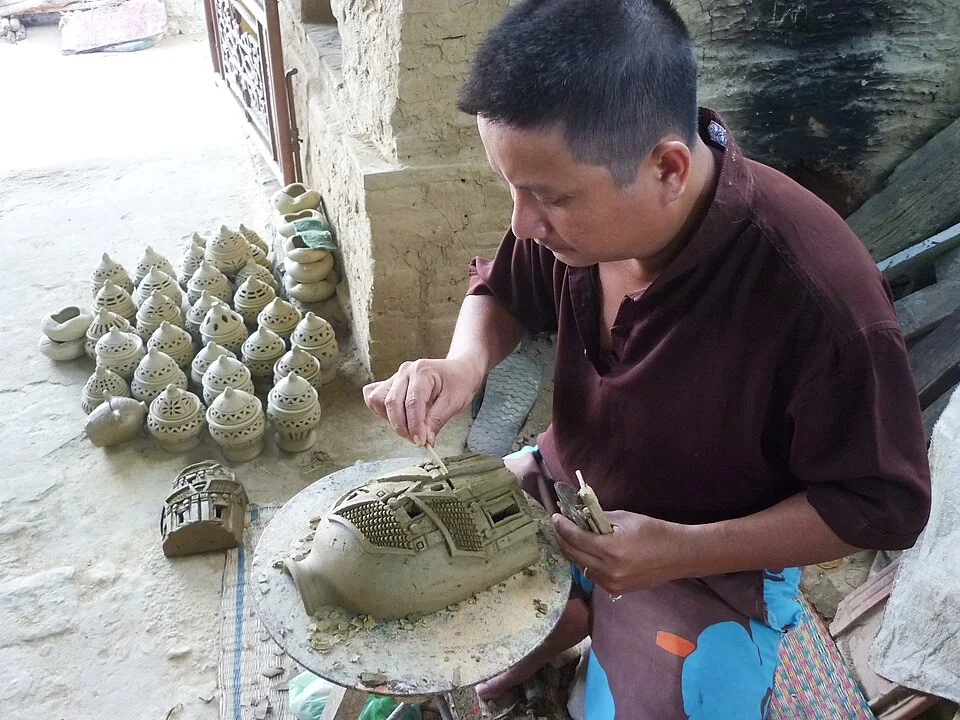

Thanh Ha: from wet clay to something you can carry
Choose Thanh Ha to follow shaping and ask how clay becomes a useful object. Local heritage sources describe the pottery tradition, demonstrations and participation, not an identical daily programme. If making something, ask whether it is fired, what waiting is needed and how collection works. A wet clay piece is not durable pottery ready for a suitcase. For a souvenir, choose a finished item and ask its provenance rather than assuming your own work can leave immediately.
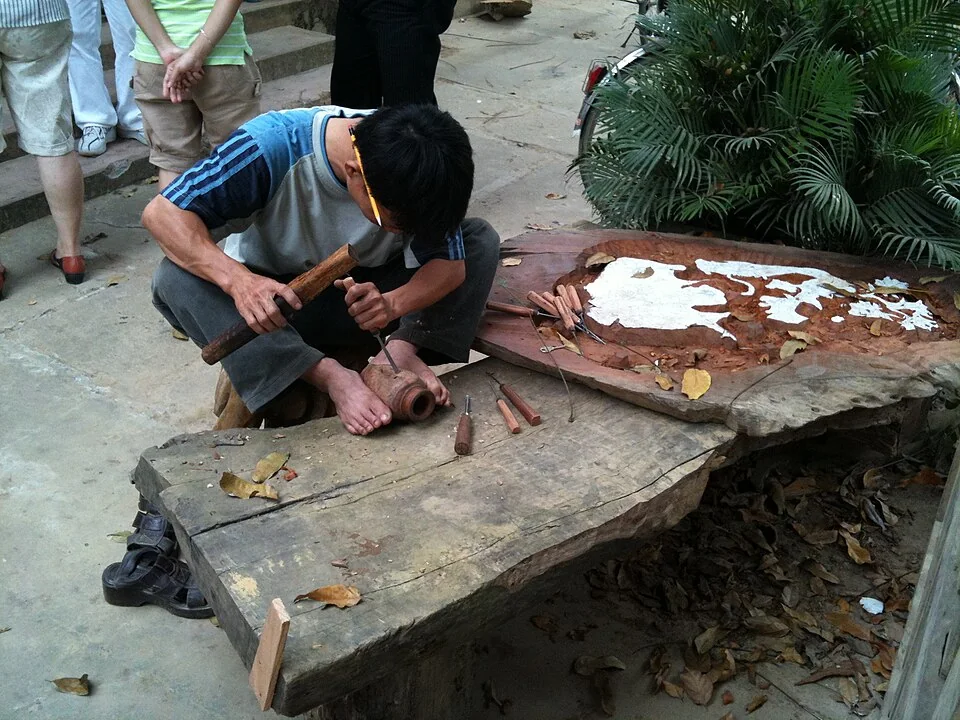

Kim Bong: connect timber details with their makers
Heritage sources describe construction, household furniture, decorative work and boatbuilding within Kim Bong carpentry. Connect timber noticed in the old town with the people making it. Ask what a particular workshop is working on; not every yard displays all four fields. Observation is not permission to handle tools: private commissions, machines and sharp edges need boundaries. For a purchase, check size, material and transport; a large wooden object does not travel like a small pot.
Confirm the learning goal and the actual outcome
For food ingredients choose Tra Que; for clay becoming an object, Thanh Ha; for timber structures and makers, Kim Bong. Then establish whether you will watch, make or buy, what is included and when an object can be collected. A photograph of craft activity is not a workshop booking. Check current access, prices and hours separately; this is not a verified boat route or a timed three-village circuit. With children, agree participation limits before entering beds, kilns or machine areas.
Ask VietnamGuide AI
Ask VietnamGuide AISources
- 1. vietnam.travel/things-to-do/tra-que-vegetable-village-hoi-an-ultimate-%E2%80%9Cgreen%E2%80%9D-trip
Source checked:
- 2. www.hoianworldheritage.org.vn/en/news/Prestigous-quanlity-service-in-Hoi-An/Visiting-Thanh-Ha-Pottery-Village-228.hwh
Source checked:
- 3. hoianworldheritage.org.vn/en/news/Traditional-occupational-Village/Kim-Bong-Capentry-Village-60.hwh
Source checked:
Explore more
- One Hoi An museum: trade ceramics, folk knowledge or archaeology?
Choose the Museum of Trade Ceramics, Folk Culture Museum or Sa Huynh Culture Museum by the question you want answered, not simply the map label.
- One Hoi An old house: Tan Ky's light, Phung Hung's frontage or Duc An's books?
Choose a house by how you want to read it: courtyard and structure, trade meeting domestic life, or books and the movement of ideas.
- One Hoi An assembly hall: maritime stories, ceramic dragons or carved timber?
Compare Phuc Kien, Quang Trieu and Trieu Chau through a specific observation and community context, without ranking beliefs.