Travel guide
Kim Bong and Chaozhou Hall: woodworking or reading its use?
Choose a maker’s process or ornament’s role in a building; shared material does not establish shared makers.
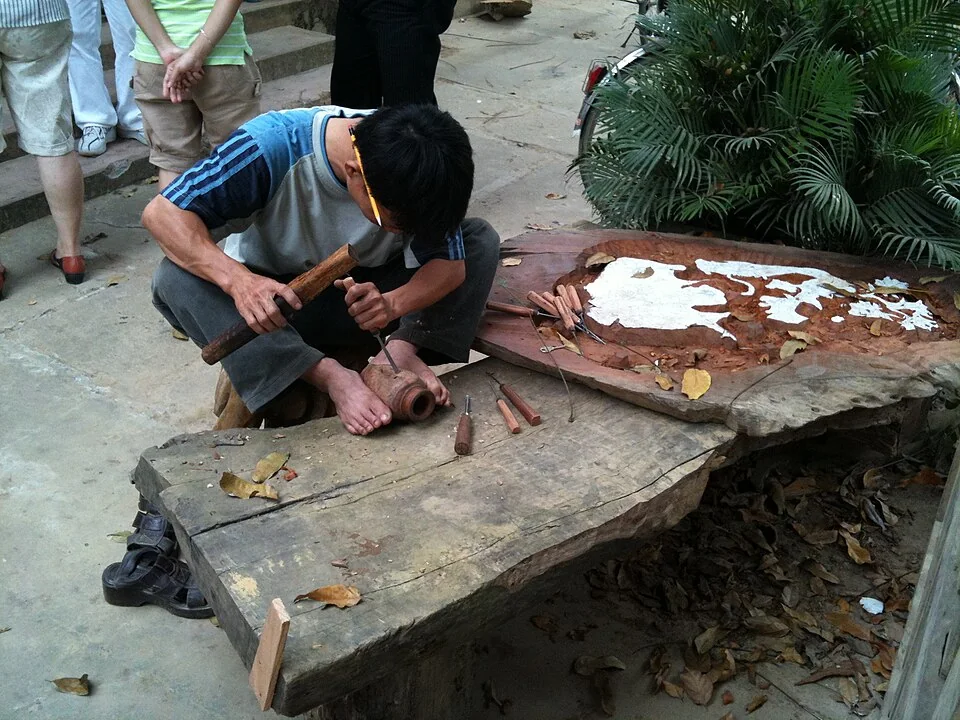

Kim Bồng carpentry village: see the craft behind Hội An’s timber
Hội An’s heritage centre describes four main branches of Kim Bồng carpentry: construction, household furniture, fine-art woodwork and boatbuilding. Its research connects the craft with the trading port and the repair of Hội An’s architectural heritage. These connections make the village relevant after you have noticed wooden frames and carved details in the Ancient Town.
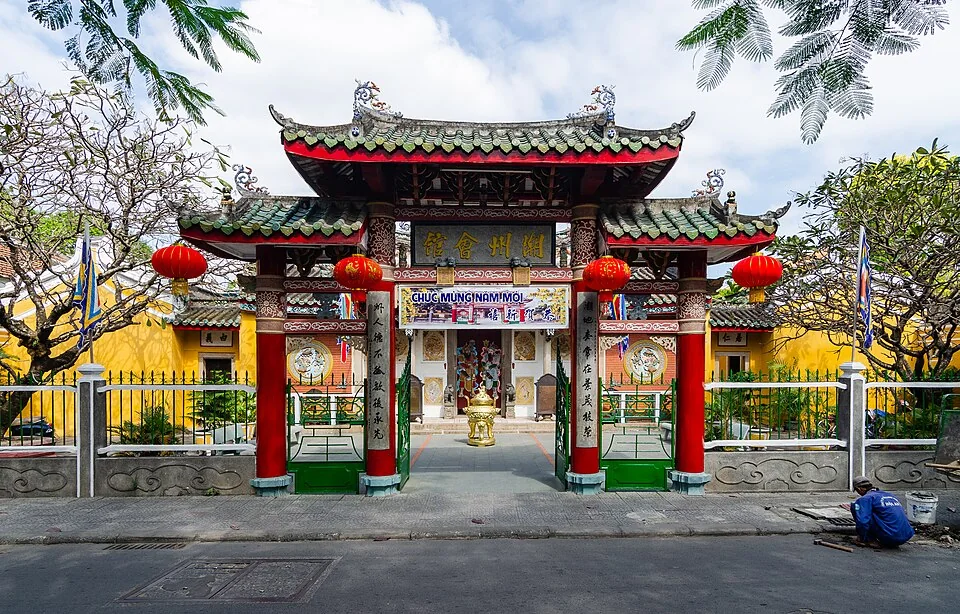

Chaozhou Assembly Hall: carved timber and a maritime community
The local heritage description highlights carved timber and raised decoration assembled from ceramic pieces. Begin by separating material from meaning: where is the surface wood, and where is it ceramic? Notice how the decoration relates to the supporting frame rather than photographing it as a collection of detached objects. If a figure or scene is unfamiliar, ask for an identified explanation instead of inventing a legend. Do not touch fragile surfaces or use a nearby altar as a support for your camera.
Choose the experience that fits
| Choice | What to consider |
|---|---|
| Kim Bồng carpentry village: see the craft behind Hội An’s timber | Before buying, ask who made the object, what material is stated and how it will be packed. Do not assume a wooden purchase can enter your home country without checks: consult its official customs and biosecurity guidance. Confirm today’s admission, workshop arrangements and return transport directly, leaving time for conversation rather than collecting several villages in one rushed outing. |
| Chaozhou Assembly Hall: carved timber and a maritime community | Choose one timber detail and one ceramic detail, then leave time to hear an explanation. If you have already visited another hall, compare what is actually different rather than seeking an identical photo route. Current access, admission arrangements and ceremonies require confirmation with the site. Historical descriptions of gatherings do not guarantee a visitor event today. Keep clear of worshippers, ask permission for photographs of people and accept any closed areas. A visit paired with an unhurried Old Town walk can be useful even without entering every room. For anyone with limited mobility, ask about thresholds and the actual viewing route; an attractive exterior photograph does not establish interior accessibility. |
Ask VietnamGuide AI
Ask VietnamGuide AISources
- 1. hoianheritage.net/vi/trao-doi-chuyen-nganh/chuyen-de-nghien-cuu-trao-doi/Nghe-moc-Kim-Bong-438.html
Source checked:
- 2. hoianworldheritage.org.vn/en/news/Traditional-occupational-Village/Kim-Bong-Capentry-Village-60.hwh
Source checked:
- 3. www.hoianworldheritage.org.vn/en/news/Monument/Trieu-Chau-Assembly-Hall-331.hwh
Source checked:
- 4. www.hoianworldheritage.org.vn/vi/news/Diem-di-tich/Hoi-quan-Trieu-Chau-16.hwh
Source checked:
Explore more
- Outdoors in Hoi An: garden learning, palms or beach rest?
Choose one priority before adding stops; do not turn garden, palm landscape and coast into a checklist race.
- Hanoi: one bowl, one plate or a shared platter?
Choose how to share before choosing a venue: pho, banh cuon and bun dau make different meals.
- One Hanoi history question, three kinds of evidence
Separate education, dynastic power and modern memory; choose what to understand rather than placing every site in one period.