Travel guide
Courtyard, water and sanctuary: how space changes a Hue visit
Start with a question rather than collecting every stop: Courtyard, water and sanctuary: how space changes a Hue visit. The perspectives below help choose what to understand; their reading order is not a continuous route or a promise of one ticket. Separate what is visible from what needs explanation. Similar shapes do not prove the same material, age or formation; compare one detail before returning to the wider view.
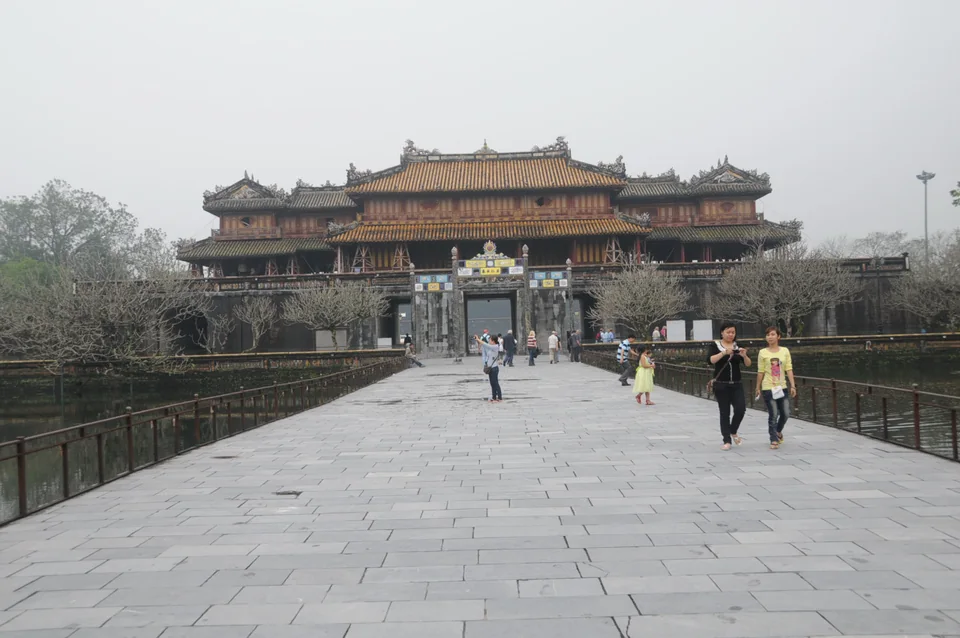

Ngo Mon and Thai Hoa Palace: read Hue’s ceremonial axis
Ngo Mon is the main southern gate of the Imperial City, not simply a doorway into the whole outer Citadel. Its name refers to its southern orientation rather than a rule that it opened at noon. Look at the contrast between the substantial masonry platform and the timber Ngu Phung, or Five Phoenix, pavilion above it. The gate passages once separated the emperor’s movement from that of attendants. The pavilion made the threshold a place of public royal appearance as well as passage. In 1945, Bao Dai’s abdication ceremony took place here, adding a different ending to its imperial story.
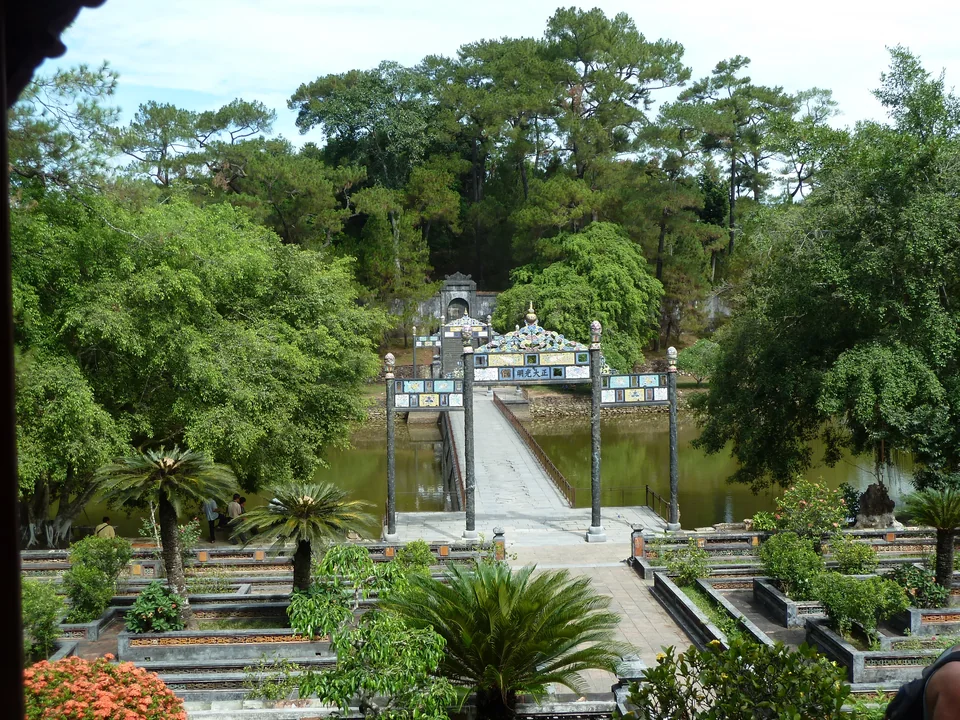

Minh Mang Tomb: architecture between lakes and hills
The principal buildings follow a ceremonial axis with paired elements on either side. Beyond the entrance area, the court’s stone officials, elephants and horses establish a formal register; the stele pavilion adds a written account of the emperor’s life by his successor, Thieu Tri. Sung An temple belongs to the worship area, reminding you that a royal tomb includes ritual buildings as well as a burial place. Look along the centre, then glance sideways: the arrangement becomes clearer when you compare the main line with its balanced flanking structures.
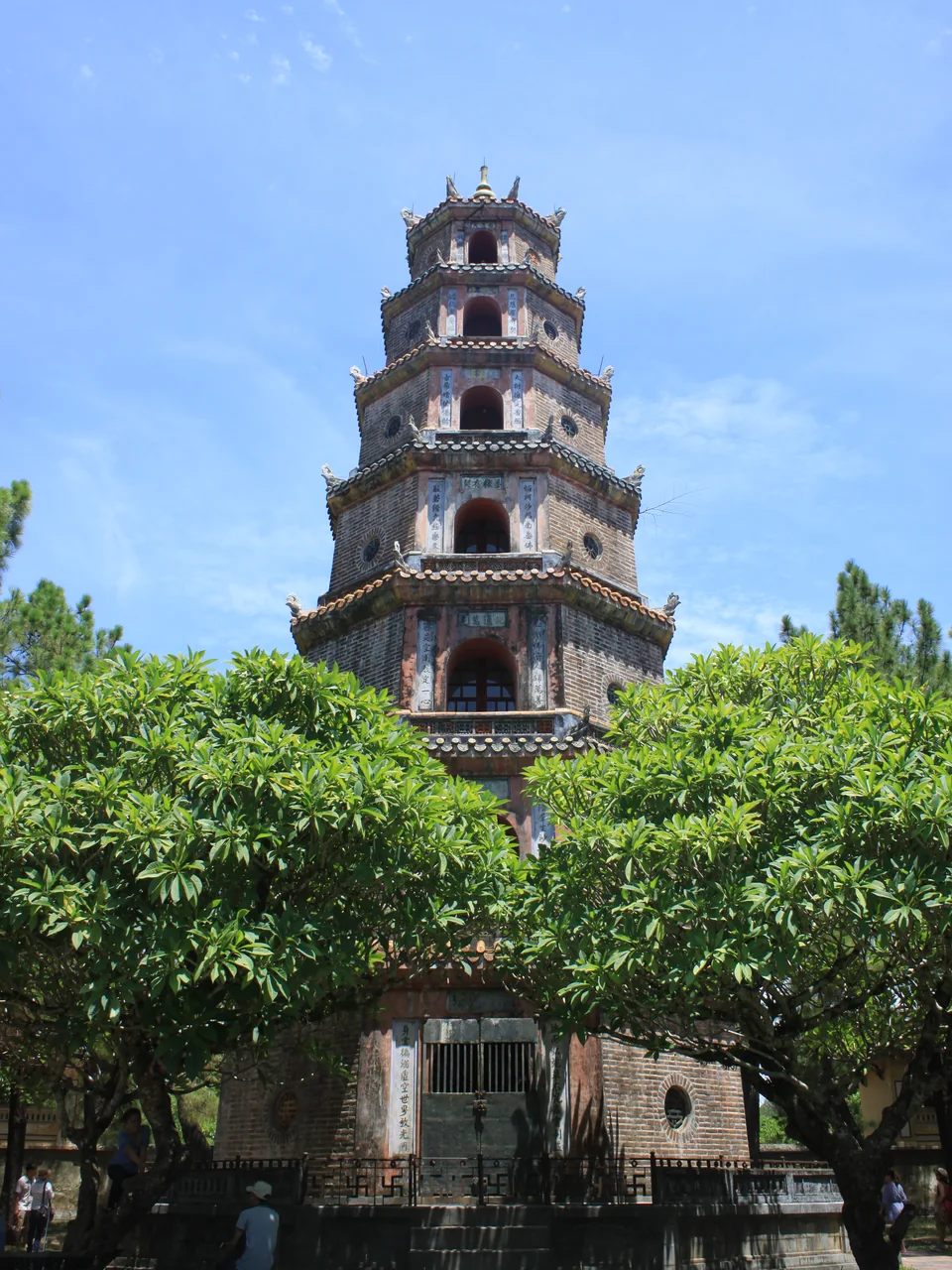

Thien Mu Pagoda: Phuoc Duyen Tower and the river setting
Phuoc Duyen is a seven-storey tower commissioned by Emperor Thieu Tri in the 1840s. It belongs to a much longer temple history associated with the earlier Nguyen lords, not simply the Nguyen dynasty that began in 1802. That distinction makes the tower a useful starting point rather than the whole story. Compare its strong vertical outline with the lower roofs behind it. Ask a guide to separate the dates of the pagoda, tower and later interventions, so different generations of building do not collapse into a single founding moment.
Choose the experience that fits
| Choice | What to consider |
|---|---|
| Ngo Mon and Thai Hoa Palace: read Hue’s ceremonial axis | Use this question to decide: Courtyard, water and sanctuary: how space changes a Hue visit. Thai Hoa’s linked roof volumes, yellow glazed tiles and lacquered, gilded timber give the ceremonial axis its architectural focus. Dragon imagery and the alternation of poetry and painted decoration ask for a closer look after the broad view. Its name invokes great harmony, linking a place of authority to an ideal of order. Compare details you can actually see with a site explanation; a historic description does not establish current interior access. Plan the gate and hall as one connected visit, with enough time to look back along the axis. Their relationship is more revealing than either isolated facade. |
| Minh Mang Tomb: architecture between lakes and hills | Construction began during Minh Mang’s lifetime and was completed under Thieu Tri in 1843. That history helps separate the emperor’s planning from his successor’s work. A guide who explains the axis, worship area and lake setting offers more than a ranking among Hue’s tombs. Ask how the actual walk covers these elements and where the group meets its vehicle afterwards. Confirm current entry arrangements, steps and any restricted areas with the site or provider; the designed axis is not a promise that every gate or burial enclosure is open to visitors. |
| Thien Mu Pagoda: Phuoc Duyen Tower and the river setting | A road visit and a river outing offer different approaches, but neither description alone establishes the actual entrance arrangements. If arriving by boat, confirm whether landing at Thien Mu is included, where the group meets afterwards and how much time is available. On any visit, follow posted guidance on dress, photography and the areas open to guests. A view of the tower does not imply access inside it. Choose a programme that allows both the river-facing outlook and a respectful look through the accessible grounds, rather than judging the stop only by the famous silhouette. |
Ask VietnamGuide AI
Ask VietnamGuide AISources
- 1. huetourism.gov.vn/chiem-nguong-bon-cua-vao-hoang-thanh-hue/
Source checked:
- 2. huetourism.gov.vn/Dien-Thai-Hoa.html/
Source checked:
- 3. huetourism.gov.vn/Net-kien-truc-lam-me-hoac-long-nguoi-cua-lang-Minh-Mang.html/
Source checked:
- 4. vietnam.travel/things-to-do/an-inside-guide-hue-tombs
Source checked:
- 5. whc.unesco.org/en/activities/318/
Source checked:
- 6. whc.unesco.org/en/activities/322/
Source checked:
- 7. khamphahue.com.vn/Hue-24h/Chi-tiet/tid/Chua-Thien-Mu.html/pid/7243/cid/165
Source checked:
Explore more
- Without waiting for a show: meet Hue through a market, incense craft and village bridge
Without waiting for a show: meet Hue through a market, incense craft and village bridge — Compare perspectives, access conditions and a main visiting focus.
- Wood, bronze and mosaic: begin Hue heritage with its materials
Wood, bronze and mosaic: begin Hue heritage with its materials — Compare perspectives, access conditions and a main visiting focus.
- Glass, bridge cables and rocky islands: how shapes guide a Ha Long visit
Glass, bridge cables and rocky islands: how shapes guide a Ha Long visit — Compare perspectives, access conditions and a main visiting focus.