Travel guide
Wood, bronze and mosaic: begin Hue heritage with its materials
Start with a question rather than collecting every stop: Wood, bronze and mosaic: begin Hue heritage with its materials. The perspectives below help choose what to understand; their reading order is not a continuous route or a promise of one ticket. Separate what is visible from what needs explanation. Similar shapes do not prove the same material, age or formation; compare one detail before returning to the wider view.
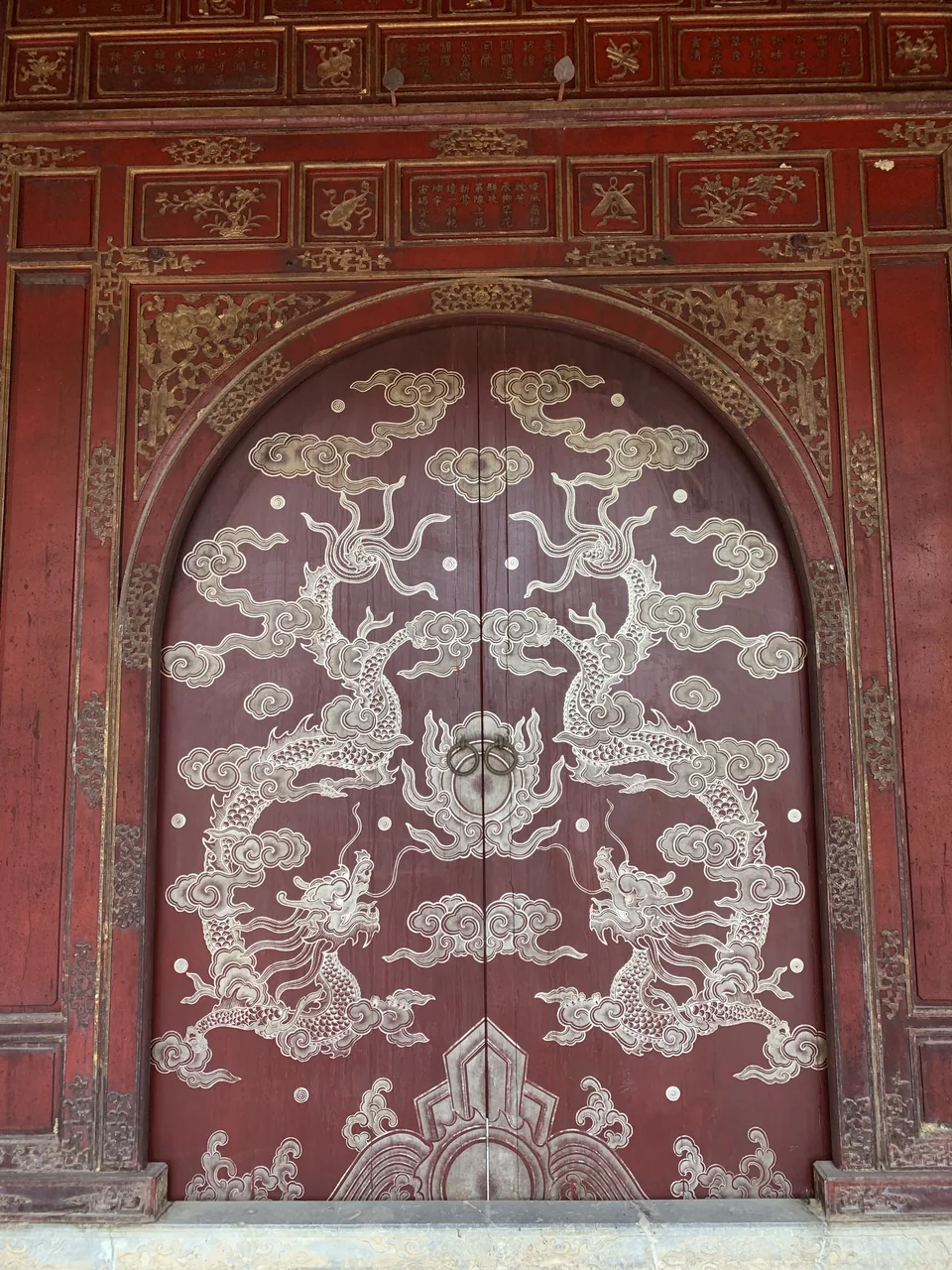

Dong Khanh Tomb: architectural layers in one complex
Dong Khanh commissioned Truy Tu temple to honour his father, Kien Thai Vuong. After the emperor’s death, his successor Thanh Thai adapted the building as Ngung Hy for Dong Khanh’s worship. Later, Dong Khanh’s son Khai Dinh undertook further work on the temple and funerary area. This sequence matters more than memorising a list of completion dates: the complex grew through changed needs and family remembrance. Ask a guide to distinguish the origins of the worship building from the later work on the burial architecture before comparing decorative styles.
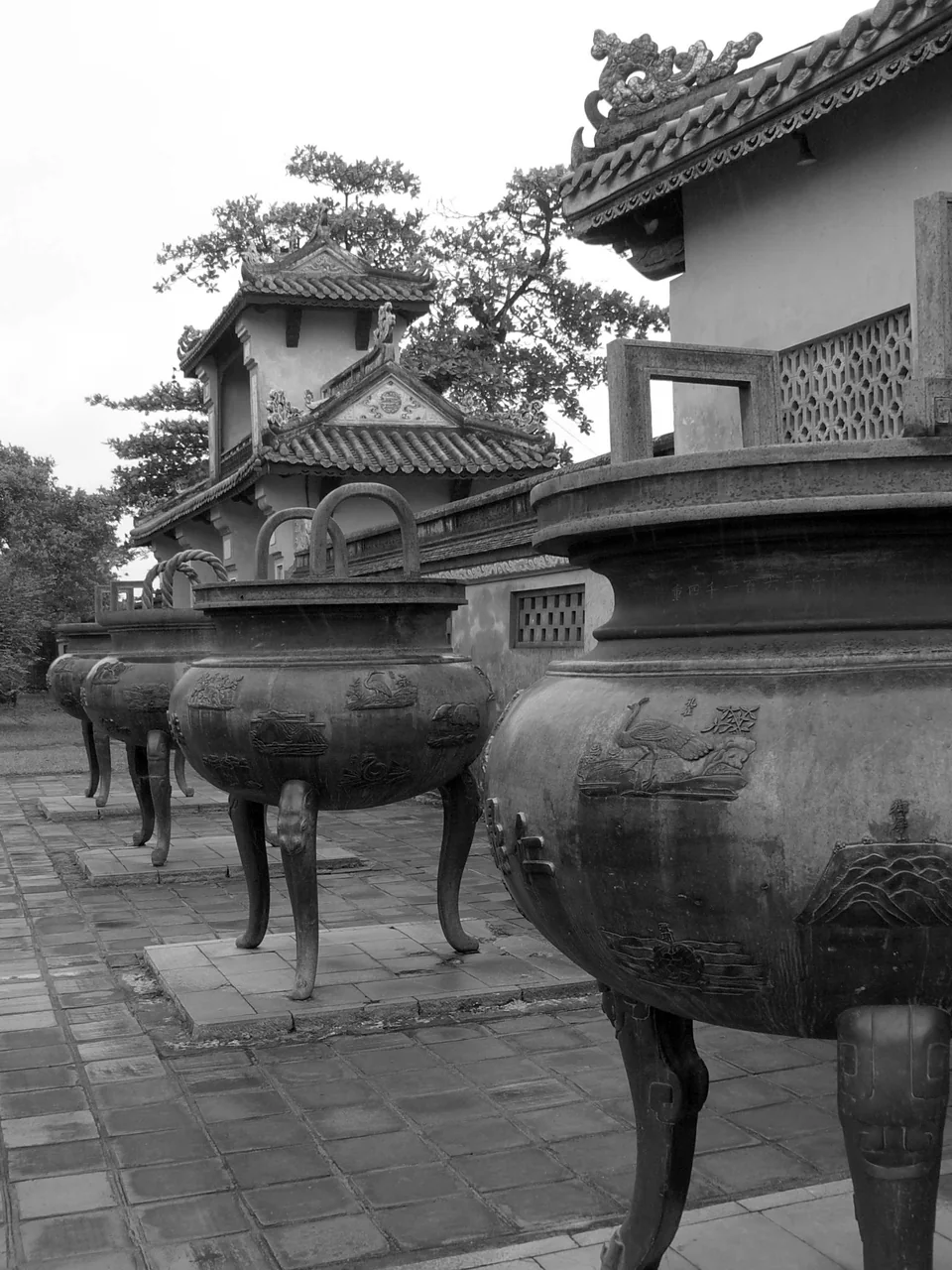

The Mieu and the Nine Dynastic Urns: Nguyen memory in bronze
The Mieu, also called The To Mieu, is an ancestral temple in the southwestern part of the Imperial City. Its role differs from Thai Hoa’s formal audience space and from the royal residences. The Nine Dynastic Urns stand in the associated court near Hien Lam Cac, the multi-storey commemorative pavilion. Read the ensemble before isolating an urn for a photograph. Temple, pavilion and bronze vessels combine remembrance of the dynasty with an architectural setting for reverence. This historical purpose does not mean every shrine interior is open to visitors; follow the route and instructions given at the site.
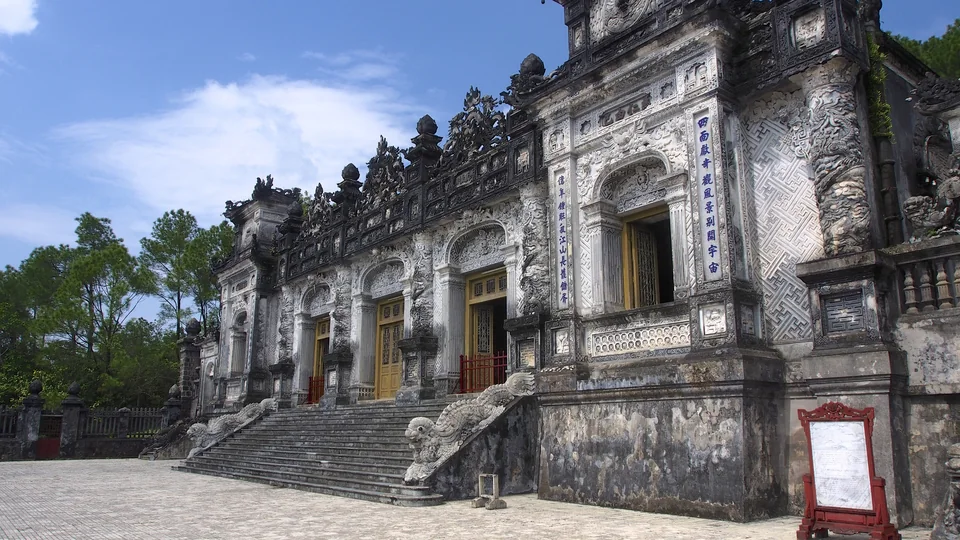

Khai Dinh Tomb: terraces and mosaic craftsmanship
Platforms rise towards Thien Dinh Palace, so the approach is part of the architectural experience. Courts and the stone ceremonial figures give pauses within that upward sequence. Traditional Vietnamese forms appear alongside European influences, rather than one style explaining the entire monument. Before concentrating on ornament, look at how walls, stairs and buildings make the slope visible. A broad view helps explain the compact, layered design; the impression differs from a tomb where the principal buildings unfold beside a chain of lakes and hills.
Choose the experience that fits
| Choice | What to consider |
|---|---|
| Dong Khanh Tomb: architectural layers in one complex | Use this question to decide: Wood, bronze and mosaic: begin Hue heritage with its materials. A visit is most useful when it gives attention to both the temple and the funerary zone. Ask which interiors and exterior areas are currently accessible, then choose a guide who can explain how the phases connect. Do not assume an old restoration report guarantees present entry to every room or the display of particular objects. If combining Dong Khanh with another tomb, keep enough time here to compare the two architectural settings instead of treating it as an extra photograph stop. Its distinctive story is the adaptation of a family memorial and the changing forms used to commemorate an emperor. |
| The Mieu and the Nine Dynastic Urns: Nguyen memory in bronze | In 2024, the bas-reliefs on the Nine Bronze Urns were inscribed on the UNESCO Memory of the World Asia-Pacific Regional Register. That documentary recognition is different from the Complex of Hue Monuments’ World Heritage inscription in 1993. Neither label makes the urns ordinary museum props: their location remains part of the experience. Give this compound its own pause within an Imperial City visit, after the main ceremonial axis if that fits the open route. You leave with a more concrete sense of how the Nguyen court represented both ancestry and the wider world. |
| Khai Dinh Tomb: terraces and mosaic craftsmanship | The contrast between exterior and interior is the main reward, so leave time for both rather than treating the palace as a quick photograph at the end of a climb. If arranging a visit for someone concerned about steps, ask the site or tour provider about the actual route, resting opportunities and which sections they would enter; do not infer accessibility from a distance photograph. Confirm current interior access and photography rules on arrival. A guide discussing materials and motifs can make this visit especially useful for travellers interested in craft, beyond a general account of the emperor’s life. |
Ask VietnamGuide AI
Ask VietnamGuide AISources
- 1. huetourism.gov.vn/tu-lang-lang-vua-dong-khanh/
Source checked:
- 2. khamphahue.com.vn/Du-lich/Ban-%C4%91o-so/WC-cong-cong/pid/1584/cid/28
Source checked:
- 3. artsandculture.google.com/story/the-nine-dynastic-urns-quang-binh-tourism-department/vAUh_i4YibICLw
Source checked:
- 4. www.unesco.org/en/articles/unescos-memory-world-mow-regional-register-inscribes-20-new-items-recognition-human-innovation-and
Source checked:
- 5. whc.unesco.org/en/list/678/
Source checked:
- 6. huetourism.gov.vn/Nghe-thuat-trang-tri-mosaic-trong-lang-Khai-Dinh.html/
Source checked:
- 7. bvhttdl.gov.vn/doc-dao-lang-khai-dinh-dinh-cao-nghe-thuat-tao-hinh-sanh-su-va-thuy-tinh-20190806083920468.htm
Source checked:
- 8. csdl.vietnamtourism.gov.vn/dest/
Source checked:
- 9. vietnam.travel/things-to-do/an-inside-guide-hue-tombs
Source checked:
Explore more
- Courtyard, water and sanctuary: how space changes a Hue visit
Courtyard, water and sanctuary: how space changes a Hue visit — Compare perspectives, access conditions and a main visiting focus.
- Without waiting for a show: meet Hue through a market, incense craft and village bridge
Without waiting for a show: meet Hue through a market, incense craft and village bridge — Compare perspectives, access conditions and a main visiting focus.
- Glass, bridge cables and rocky islands: how shapes guide a Ha Long visit
Glass, bridge cables and rocky islands: how shapes guide a Ha Long visit — Compare perspectives, access conditions and a main visiting focus.