Travel guide
Hue Imperial City: understand the layers of the royal capital
Hue’s royal centre makes more sense when you stop treating every wall as the edge of the same palace. The Nguyen capital contains nested spaces with different jobs: defending a city, presenting imperial authority and enclosing royal life. Learning those relationships gives a walk through the monuments a clear shape.
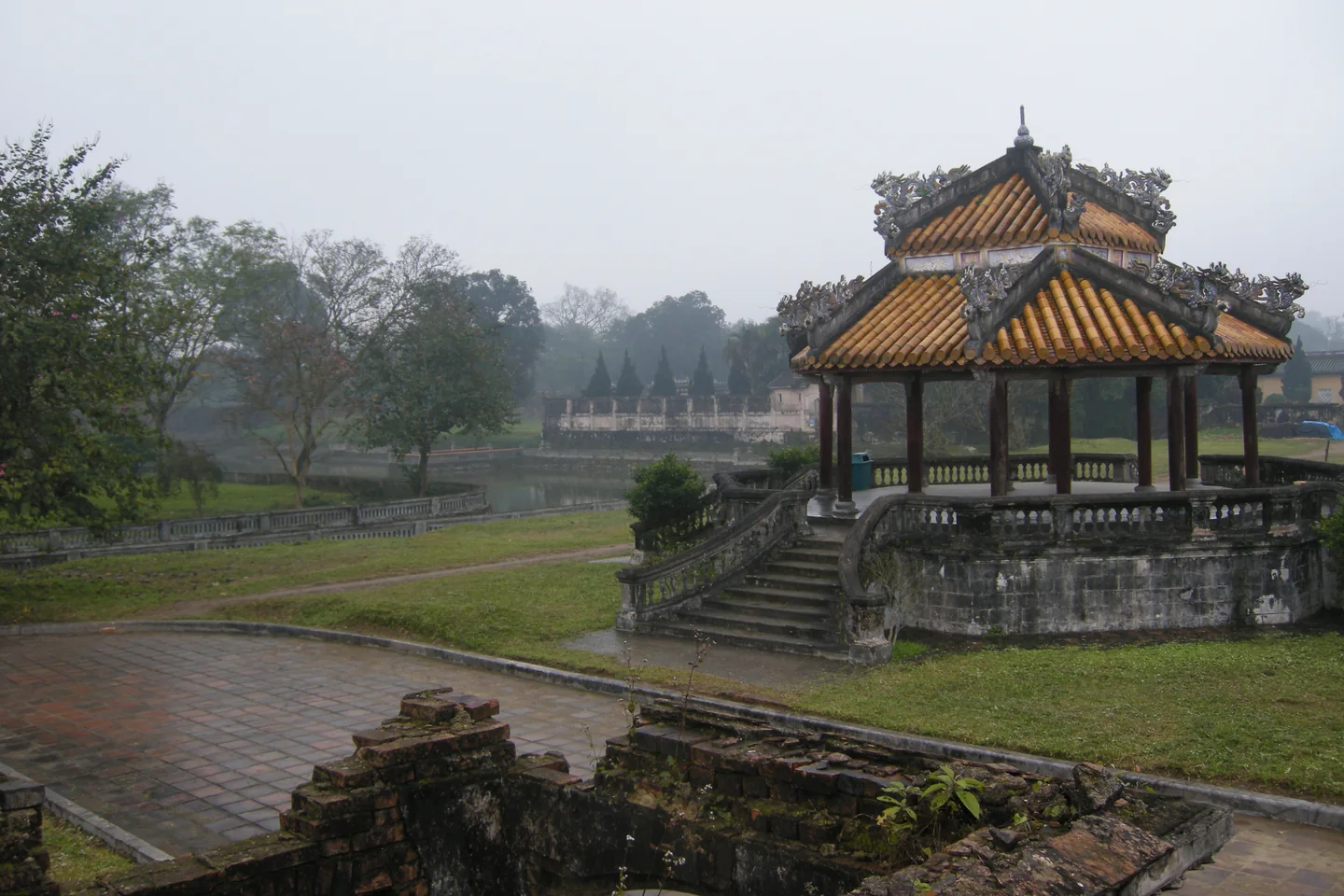
A pavilion and grounds inside Hue Imperial City. ·
Vyacheslav Argenberg · CC BY 4.0 · Resized and converted to WebP

Start with the largest enclosure
The Kinh Thanh, usually translated as the Citadel or Capital City, is the outer urban and defensive enclosure on the north side of the Perfume River. Its walls, gates and waterways belong to a capital rather than a single residence. The Nguyen dynasty made Hue its capital from 1802 to 1945; that period should not be confused with the earlier Nguyen lords. Before entering the palace precinct, look at the map beyond the ticketed core. The broad enclosure explains why an address “inside the Citadel” need not be inside the Imperial City.
Find ceremony inside the city
The Hoang Thanh, or Imperial City, sits within that larger framework. Its palaces and ancestral temples served different forms of royal authority. Ngo Mon marks the southern ceremonial approach, while Thai Hoa Palace and its forecourt introduce the formal court. Away from that axis, shrine compounds and the residences associated with royal mothers change the scale and purpose of the visit. Dai Noi commonly refers to the Imperial City and the Forbidden Purple City together; it is useful local vocabulary, not a reason to merge every historical boundary.
Recognise the most private layer
The Tu Cam Thanh, the Forbidden Purple City, is the innermost enclosure associated with the emperor’s work and the royal household. Historical restrictions are part of its meaning, not a description of today’s visitor permissions. Read surviving buildings, foundations and open spaces together: war damage and conservation mean the ensemble is not an untouched, complete palace. Choose a few relationships to follow rather than collecting every building name. A guide or site plan can help connect gate, audience space and residence; check the accessible route on arrival. The reward is understanding how Hue arranged power in space.
Ask VietnamGuide AI
Ask VietnamGuide AISources
Explore more
- Perfume River: choose your kind of boat experience
See Hue from the Perfume River and understand the difference between sightseeing, Ca Hue listening and dining afloat.
- Truong Tien Bridge: see Hue from both riverbanks
Read the steel curves and layered history of Truong Tien Bridge, then choose a riverfront walk that reveals Hue from different angles.
- Dong Ba Market: understand Hue through everyday trade
Explore Dong Ba's food, clothing and gift trade on the north bank of the Perfume River, with thoughtful choices for a market visit.