Travel guide
Truong Tien Bridge: see Hue from both riverbanks
Truong Tien Bridge is both a familiar outline over the Perfume River and a connection between everyday parts of Hue. A good visit includes looking at it from the bank, not only crossing it. The repeated steel curves give the riverfront a recognisable rhythm.
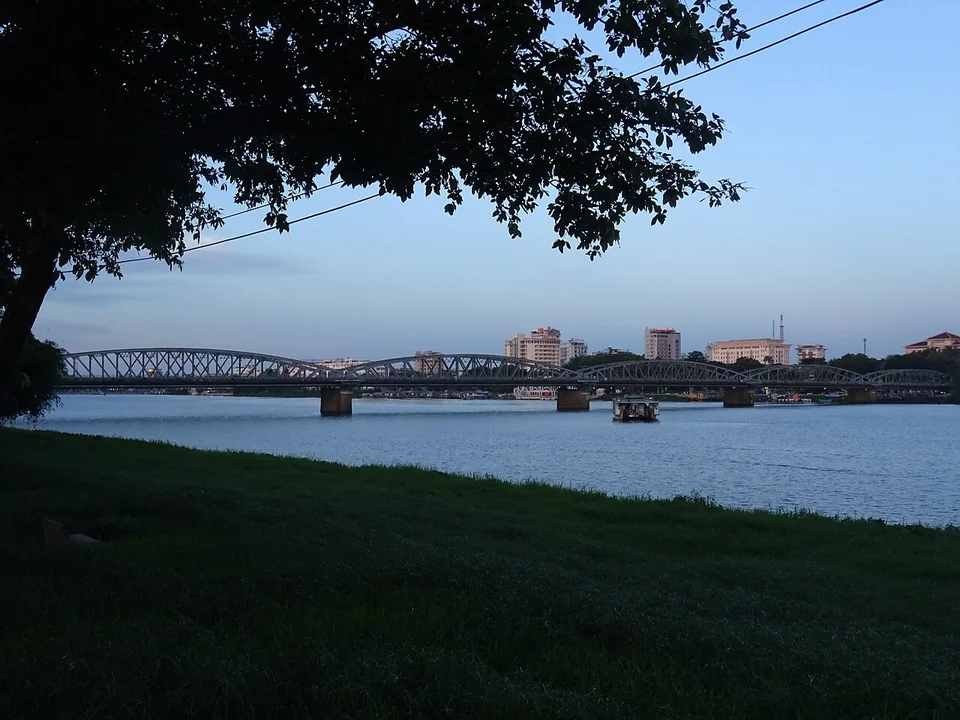
Reference photo: Truong Tien Bridge over the Perfume River in Hue. ·
Christophe95 · CC BY-SA 4.0 · Resized and converted to WebP

Begin with the whole silhouette
From a riverside viewpoint, look for the sequence of six curved steel spans. Their repetition is easier to appreciate from the bank than from within the structure, where the view breaks into close-up beams, railings and moving traffic. Shift your position along the waterfront and watch the spans overlap or separate against the opposite shore. Include a little water and riverbank in a photograph to explain the bridge's setting. This is an urban river crossing, so its interest lies partly in the movement of the city around it, rather than in an isolated architectural portrait.
Notice a bridge with more than one history
The steel bridge dates to the closing years of the nineteenth century, during Emperor Thanh Thai's reign. Over time it has carried different names, including Thanh Thai, Clemenceau and Nguyen Hoang. The familiar Truong Tien name refers to a royal coin-making workshop near the crossing. Storm damage, war and later repairs have also shaped it, so the structure should be understood as maintained and changed, not untouched since its construction. Knowing that layered history gives the repeated arches another meaning: they are a continuing city landmark that has been repaired, renamed and remembered across generations.
Choose a bank, a crossing or a small circuit
A short visit can stay on one bank and concentrate on the profile; a longer walk can compare perspectives on both sides, using the pedestrian route only as currently directed. The Tran Hung Dao side allows a separate Dong Ba Market visit, while Le Loi offers another riverfront setting. Decide where you want to finish before adding both. Keep viewpoints and a full crossing as separate choices if your group prefers less walking. For an evening outing, treat lighting as something to check locally, not a promised show. Current works or access instructions may change the walk, while a bank-side view can still be the main purpose.
Ask VietnamGuide AI
Ask VietnamGuide AISources
Explore more
- Perfume River: choose your kind of boat experience
See Hue from the Perfume River and understand the difference between sightseeing, Ca Hue listening and dining afloat.
- Dong Ba Market: understand Hue through everyday trade
Explore Dong Ba's food, clothing and gift trade on the north bank of the Perfume River, with thoughtful choices for a market visit.
- Thanh Toan Tile Bridge: village architecture over water
Discover Thanh Toan's covered timber bridge, its benefactor Tran Thi Dao and the relationship between crossing, shelter and village life.