Travel guide
Thanh Toan Tile Bridge: village architecture over water
Thanh Toan offers a different scale of Hue heritage: a roofed timber bridge that belongs to village life rather than a palace courtyard. Its interest is not only the crossing. The building gives people a place to pause over the water, with a benefactor's story at its centre.
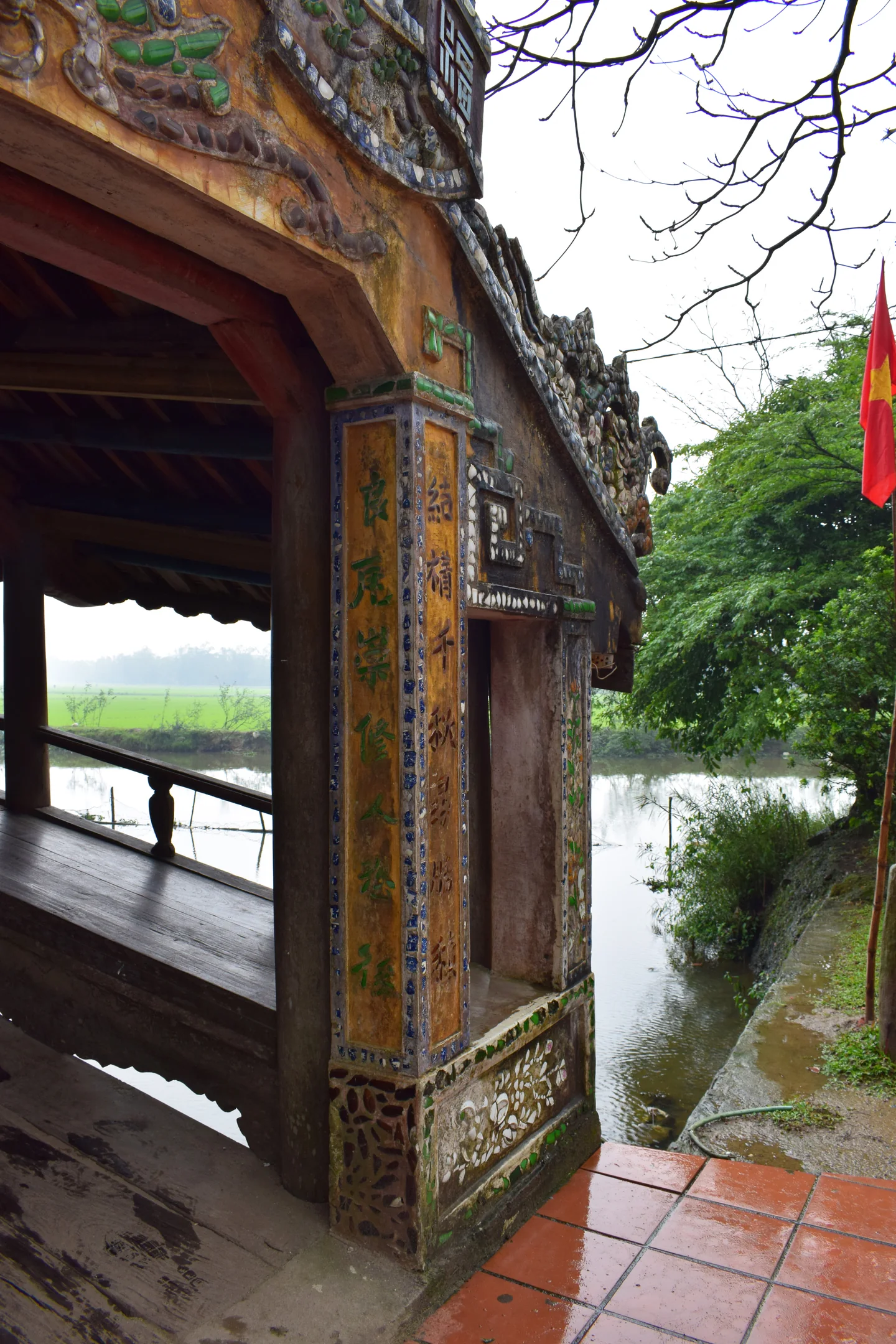
Details of Thanh Toan Tile Bridge and the water beside it. ·
Mig Gilbert from Brighton · CC BY-SA 2.0 · Resized and converted to WebP

Read the bridge as a house above water
The architectural idea is called thuong gia ha kieu: a house above, a bridge below. Seven bays organise the timber structure, with a passage through the middle and raised resting platforms along the sides. Look at that arrangement before concentrating on decoration: it explains how movement and shelter share one small building. A glazed-tile roof and dragon-and-phoenix motifs add a distinctly worked silhouette. From the bank, compare the roof's outline with the supports and water beneath it. This is Thanh Toan near Hue, a separate place from Hoi An's Japanese Covered Bridge, despite the broad family resemblance of roofed crossings.
Meet the woman behind the crossing
The bridge was built in 1776 with funds given by Tran Thi Dao, whose gift helped villagers cross without relying on a ferry and gave travellers a resting place. The central bay contains a shrine to her, linking the practical structure to remembrance and gratitude. That detail changes how to look at the bridge: its centre is not simply another spot for a photograph. Notice the symmetry of the remaining bays and the way space is shared between passage, rest and commemoration. Repeated repairs and restoration also form part of its history; an old construction date does not mean every timber is original.
Leave room for the surrounding village
Take time beside the water to see how the bridge sits among village paths and the surrounding agricultural landscape. A visit can focus on architecture alone, or include the nearby agricultural-tool display if its current opening and arrangements suit your day. Treat craft demonstrations, market events and participatory activities as separately confirmed additions, not permanent features guaranteed by the bridge's name. Plan the journey out and back rather than treating this as another central-city walk. Allow ordinary passage to continue, ask before photographing residents closely, and use posted access guidance. The reward is a small structure that makes the social purpose of architecture unusually easy to see.
Ask VietnamGuide AI
Ask VietnamGuide AISources
- 1. bvhttdl.gov.vn/khanh-thanh-cong-trinh-trung-tu-va-xuc-tien-du-lich-cong-dong-cau-ngoi-thanh-toan-20210426080010838.htm
Source checked:
- 2. ttdn.vn/hoi-nhap-va-phat-trien/van-hoa-xa-hoi/ghe-tham-cay-cau-ngoi-thanh-toan-247-tuoi-ben-dong-song-nhu-y-93037
Source checked:
- 3. vietnam.travel/places-to-go/north-central-coast/hue
Source checked:
Explore more
- Perfume River: choose your kind of boat experience
See Hue from the Perfume River and understand the difference between sightseeing, Ca Hue listening and dining afloat.
- Truong Tien Bridge: see Hue from both riverbanks
Read the steel curves and layered history of Truong Tien Bridge, then choose a riverfront walk that reveals Hue from different angles.
- Dong Ba Market: understand Hue through everyday trade
Explore Dong Ba's food, clothing and gift trade on the north bank of the Perfume River, with thoughtful choices for a market visit.