Travel guide
Ngo Mon and Thai Hoa Palace: read Hue’s ceremonial axis
Ngo Mon and Thai Hoa Palace are best understood together. The gate announces the court to the outside world; the palace and its forecourt organise the approach to the emperor. Following this sequence turns two famous photographic subjects into a lesson in how ceremony shaped Hue’s royal architecture.
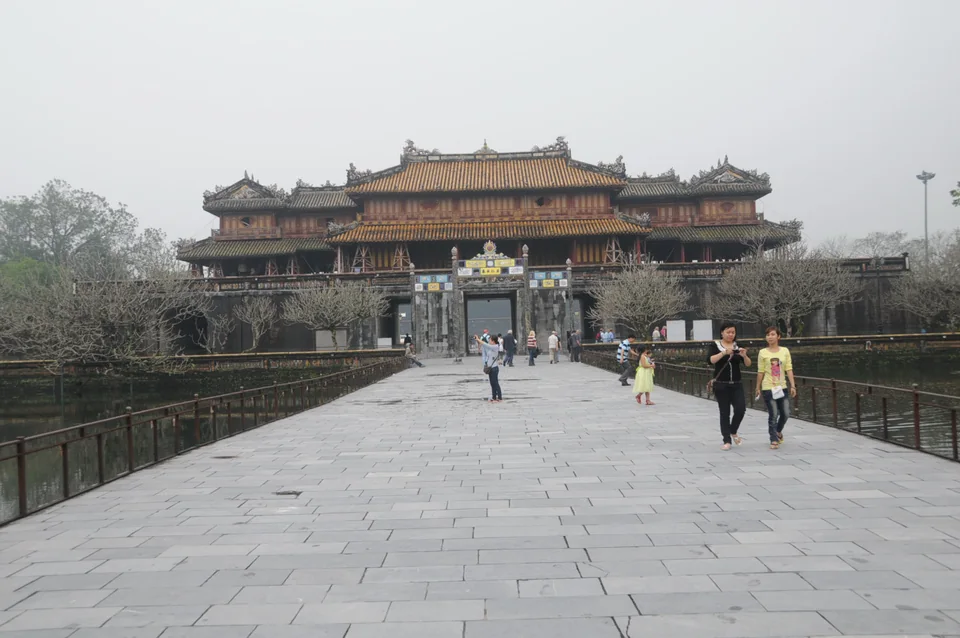
Reference photo: Ngo Mon and Hue Imperial City architecture; not a meal or performance photograph. ·
ChieuTimViet · CC BY 3.0 · Resized and converted to WebP

A gate that was also a stage
Ngo Mon is the main southern gate of the Imperial City, not simply a doorway into the whole outer Citadel. Its name refers to its southern orientation rather than a rule that it opened at noon. Look at the contrast between the substantial masonry platform and the timber Ngu Phung, or Five Phoenix, pavilion above it. The gate passages once separated the emperor’s movement from that of attendants. The pavilion made the threshold a place of public royal appearance as well as passage. In 1945, Bao Dai’s abdication ceremony took place here, adding a different ending to its imperial story.
From water to the formal court
Inside, the Trung Dao bridge and water form a transition toward Thai Hoa Palace. Pause to read the space in front of the hall rather than heading straight for its interior. The Dai Trieu Nghi court was arranged by official rank, marked by small stone tablets called pham son. Its open ground was part of the ceremony, not leftover space around an important building. From an accessible viewpoint, compare the strong central line with the width of the court. The layout helps explain how the emperor and assembled officials occupied different places within one carefully ordered event.
A hall made for meaning
Thai Hoa’s linked roof volumes, yellow glazed tiles and lacquered, gilded timber give the ceremonial axis its architectural focus. Dragon imagery and the alternation of poetry and painted decoration ask for a closer look after the broad view. Its name invokes great harmony, linking a place of authority to an ideal of order. Compare details you can actually see with a site explanation; a historic description does not establish current interior access. Plan the gate and hall as one connected visit, with enough time to look back along the axis. Their relationship is more revealing than either isolated facade.
Ask VietnamGuide AI
Ask VietnamGuide AISources
- 1. huetourism.gov.vn/chiem-nguong-bon-cua-vao-hoang-thanh-hue/
Source checked:
- 2. huetourism.gov.vn/Dien-Thai-Hoa.html/
Source checked:
Explore more
- Perfume River: choose your kind of boat experience
See Hue from the Perfume River and understand the difference between sightseeing, Ca Hue listening and dining afloat.
- Truong Tien Bridge: see Hue from both riverbanks
Read the steel curves and layered history of Truong Tien Bridge, then choose a riverfront walk that reveals Hue from different angles.
- Dong Ba Market: understand Hue through everyday trade
Explore Dong Ba's food, clothing and gift trade on the north bank of the Perfume River, with thoughtful choices for a market visit.