Travel guide
Nha nhac in Hue: listen to court music with context
Hue’s palaces show where court life took place; Nhã nhạc offers another approach through sound and the coordination of performers. A little context changes the listening experience. Instead of waiting for a familiar tune, you can notice how rhythm, instrumental colour and movement create a sense of occasion.
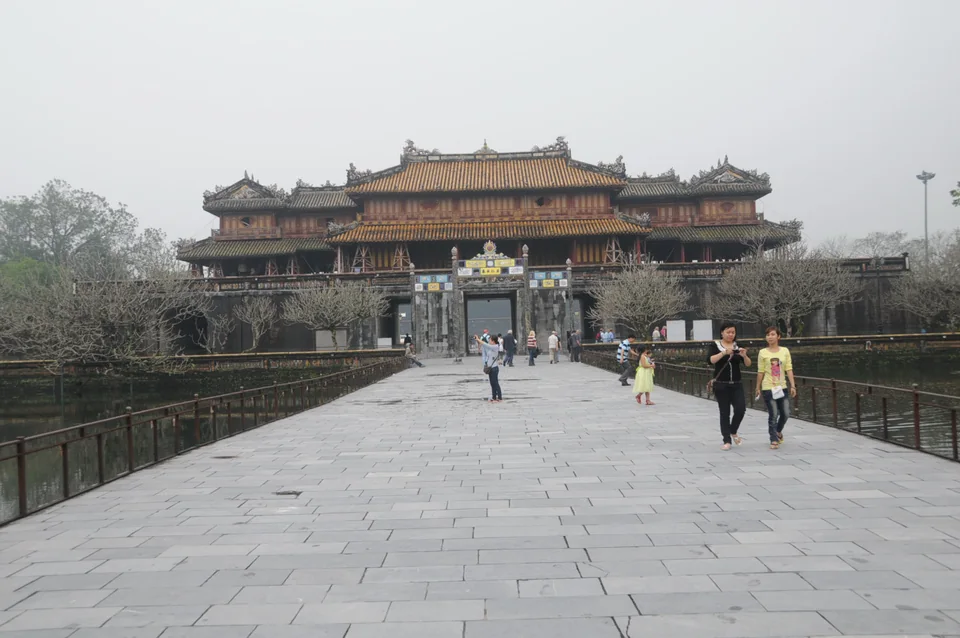
Reference photo: Ngo Mon and Hue Imperial City architecture; not a meal or performance photograph. ·
ChieuTimViet · CC BY 3.0 · Resized and converted to WebP

Know which heritage you are hearing
The Cultural Heritage Department describes Nhã nhạc as a court tradition associated with ceremonies, religious observances and occasions such as coronations and official receptions. It developed across centuries, with an important flowering under the Nguyen dynasty. UNESCO proclaimed it a masterpiece in 2003, and its Representative List inscription dates to 2008. This is intangible cultural heritage: a tradition carried by performers and knowledge, distinct from the World Heritage listing of Hue’s monuments. A palace setting can help explain the music’s context, but the living practice is more than the building around it.
Listen for contrasting instrumental colours
The department distinguishes Đại nhạc, with a strong role for drums and wind instruments in important ceremonies, from the more intimate colours of Tiểu nhạc, including flutes and string instruments alongside percussion. A visitor performance may select only part of that wider repertoire. If a programme introduction is offered, use it to identify what you are about to hear. Then follow one sound for a while and notice how it sits with the others. Watch the ensemble’s coordination and any dance included, without expecting every presentation to recreate a complete historical ceremony.
Confirm the performance rather than the label
Ca Huế is a related but distinct musical tradition, often presented to visitors on the Perfume River; a riverboat music ticket does not automatically mean Nhã nhạc. Ask for the actual programme, venue, performance date and explanation language. If you are visiting the monuments, confirm separately whether a performance is scheduled and whether your admission covers it. Allow time to be seated before it begins, and follow the venue’s guidance on photography and recording. Choosing a clearly described programme gives you a better chance to connect the sound with Hue’s history rather than merely collect another stop.
Ask VietnamGuide AI
Ask VietnamGuide AISources
- 1. whc.unesco.org/en/list/678/
Source checked:
- 2. www.unesco.org/archives/multimedia/document-3911
Source checked:
- 3. dsvh.gov.vn/nha-nhac-am-nhac-cung-dinh-viet-nam-483
Source checked:
- 4. dsvh.gov.vn/ca-hue-1180
Source checked:
Explore more
- Perfume River: choose your kind of boat experience
See Hue from the Perfume River and understand the difference between sightseeing, Ca Hue listening and dining afloat.
- Truong Tien Bridge: see Hue from both riverbanks
Read the steel curves and layered history of Truong Tien Bridge, then choose a riverfront walk that reveals Hue from different angles.
- Dong Ba Market: understand Hue through everyday trade
Explore Dong Ba's food, clothing and gift trade on the north bank of the Perfume River, with thoughtful choices for a market visit.