Travel guide
Hue Museum of Royal Antiquities: read heritage through objects
After the scale of Hue’s gates and courtyards, the Museum of Royal Antiquities offers a closer way into royal history. A vessel, a textile or a carved wooden object raises different questions from a palace facade: who made it, how was it used and what did its material communicate?
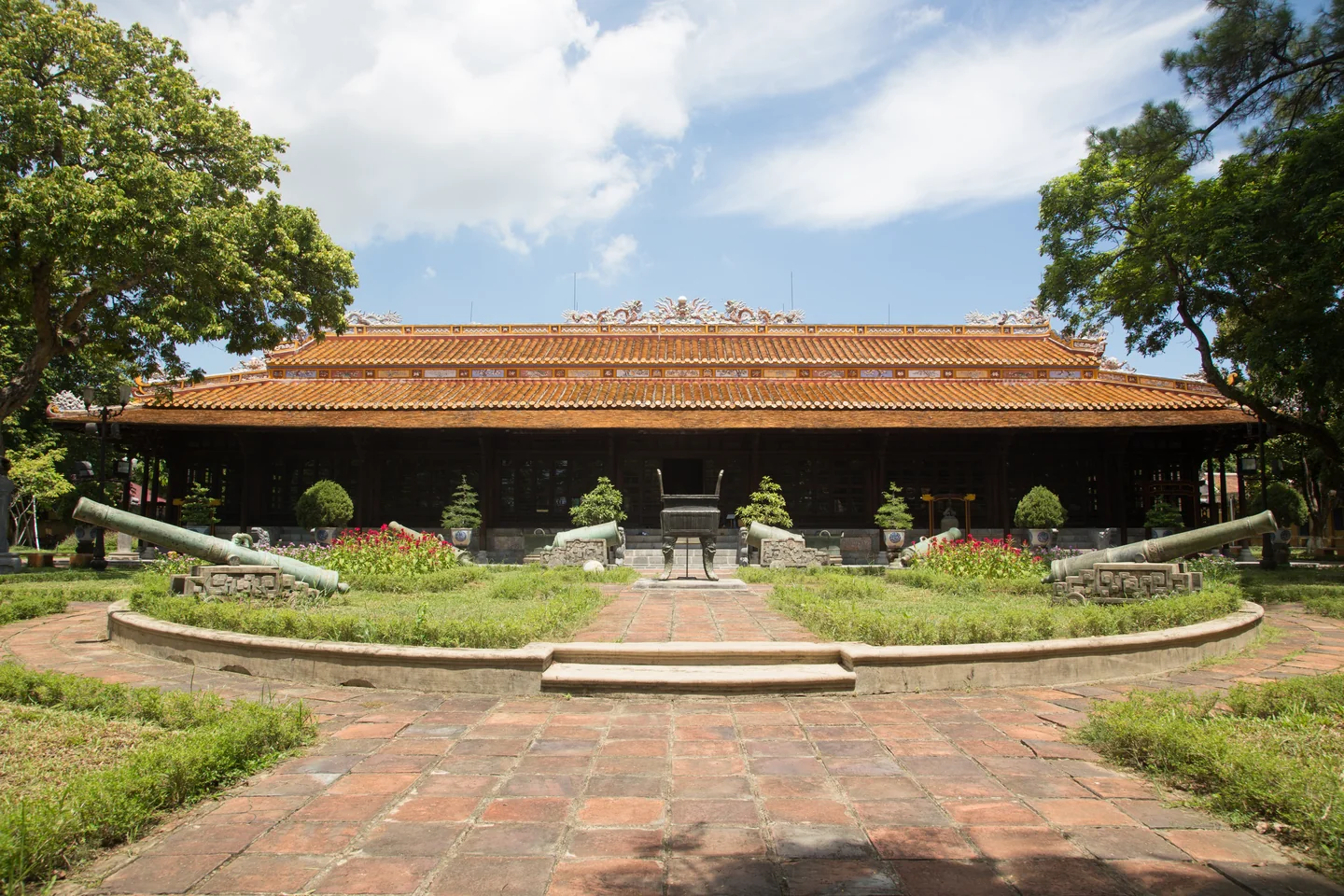
Hue Museum of Royal Antiquities with its courtyard and outdoor objects. ·
Gin The Wanderer · CC BY 2.0 · Resized and converted to WebP

The building is part of the collection
The museum is associated with Long An Palace at 3 Le Truc, within the wider Citadel area rather than an unnamed room inside the Imperial City. Founded in 1923 as the Khai Dinh Museum, the institution gives the building another chapter beyond its royal origins. Long An was built under Thieu Tri in 1845 and later moved to its present setting. Its timber structure and carved decoration deserve attention alongside the cases. Look upward and across the architectural bays as well as at individual objects. The room that holds the collection is itself evidence of the court’s investment in skilled making.
Follow materials into court life
The collections encompass royal material culture in porcelain, enamelled bronze known as phap lam, lacquered and gilded wood, metals and textiles. These categories can connect a visitor’s eye to different uses: dining, furnishing, dress or ritual. Pick a material and compare how shape and ornament change from one kind of object to another. A decorative motif may travel between a vessel and an architectural surface, while a familiar household form acquires a ceremonial role. Read labels for date, origin and use instead of treating every richly finished piece as an emperor’s personal possession.
Choose a focused museum visit
A collection is larger than any one display, so a photograph in an online feature does not guarantee that object is on view today. If a particular subject matters, ask the museum about the current exhibition and entrance arrangements before building the day around it. During the visit, let a small selection hold your attention rather than trying to memorise every case. Pair this with the Imperial City when you want objects to add texture to the buildings, while checking the connection and ticket arrangements separately. The museum’s reward is a sense of court culture made tangible through workmanship and use.
Ask VietnamGuide AI
Ask VietnamGuide AISources
Explore more
- Perfume River: choose your kind of boat experience
See Hue from the Perfume River and understand the difference between sightseeing, Ca Hue listening and dining afloat.
- Truong Tien Bridge: see Hue from both riverbanks
Read the steel curves and layered history of Truong Tien Bridge, then choose a riverfront walk that reveals Hue from different angles.
- Dong Ba Market: understand Hue through everyday trade
Explore Dong Ba's food, clothing and gift trade on the north bank of the Perfume River, with thoughtful choices for a market visit.