Travel guide
The Mieu and the Nine Dynastic Urns: Nguyen memory in bronze
The Mieu and the Nine Dynastic Urns bring two scales of royal memory together: a temple dedicated to Nguyen emperors and a country pictured on bronze. This is a place to move from the broad arrangement of the court to the small details that make each urn different.
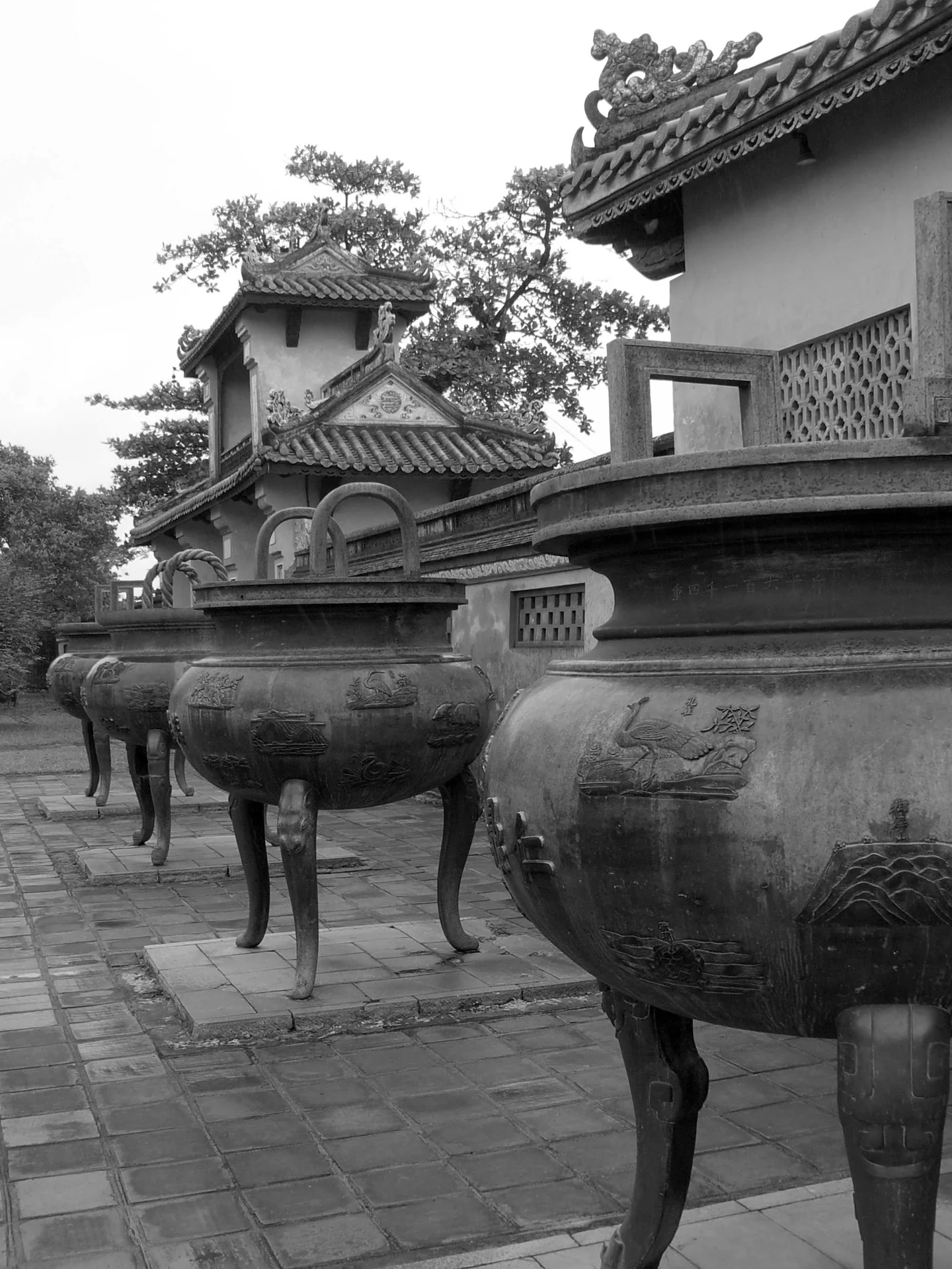
Bronze dynastic urns at The Mieu, Hue. ·

See the urns within their ritual setting
The Mieu, also called The To Mieu, is an ancestral temple in the southwestern part of the Imperial City. Its role differs from Thai Hoa’s formal audience space and from the royal residences. The Nine Dynastic Urns stand in the associated court near Hien Lam Cac, the multi-storey commemorative pavilion. Read the ensemble before isolating an urn for a photograph. Temple, pavilion and bronze vessels combine remembrance of the dynasty with an architectural setting for reverence. This historical purpose does not mean every shrine interior is open to visitors; follow the route and instructions given at the site.
Find a landscape on a bronze surface
Cast under Minh Mang in the 1830s, the urns are not nine identical containers. Their handles, supports and relief designs invite comparison. The imagery ranges across mountains, rivers, plants, animals, boats and weapons, bringing a view of the country into the court. Pick two or three subjects to compare rather than trying to identify everything at once. A rice plant or a sailing vessel can make the decoration easier to approach than an unfamiliar imperial title. Look at the relationship between image and inscription, and use a guide or explanatory panel to distinguish a named place from a symbolic creature.
Keep the heritage categories clear
In 2024, the bas-reliefs on the Nine Bronze Urns were inscribed on the UNESCO Memory of the World Asia-Pacific Regional Register. That documentary recognition is different from the Complex of Hue Monuments’ World Heritage inscription in 1993. Neither label makes the urns ordinary museum props: their location remains part of the experience. Give this compound its own pause within an Imperial City visit, after the main ceremonial axis if that fits the open route. You leave with a more concrete sense of how the Nguyen court represented both ancestry and the wider world.
Ask VietnamGuide AI
Ask VietnamGuide AISources
- 1. khamphahue.com.vn/Du-lich/Ban-%C4%91o-so/WC-cong-cong/pid/1584/cid/28
Source checked:
- 2. artsandculture.google.com/story/the-nine-dynastic-urns-quang-binh-tourism-department/vAUh_i4YibICLw
Source checked:
- 3. www.unesco.org/en/articles/unescos-memory-world-mow-regional-register-inscribes-20-new-items-recognition-human-innovation-and
Source checked:
- 4. whc.unesco.org/en/list/678/
Source checked:
Explore more
- Perfume River: choose your kind of boat experience
See Hue from the Perfume River and understand the difference between sightseeing, Ca Hue listening and dining afloat.
- Truong Tien Bridge: see Hue from both riverbanks
Read the steel curves and layered history of Truong Tien Bridge, then choose a riverfront walk that reveals Hue from different angles.
- Dong Ba Market: understand Hue through everyday trade
Explore Dong Ba's food, clothing and gift trade on the north bank of the Perfume River, with thoughtful choices for a market visit.