Travel guide
A quieter Hue: Tu Hieu and the space of Nam Giao
A human story and a ceremonial layout give an unhurried Hue visit plenty to discover.

A perspective for your choice
At Tu Hieu, the founder’s memory opens a way into monastic life; at Nam Giao, paths and platforms speak of court ritual. Together they show that a quiet visit can be read through both a story and the organisation of space.
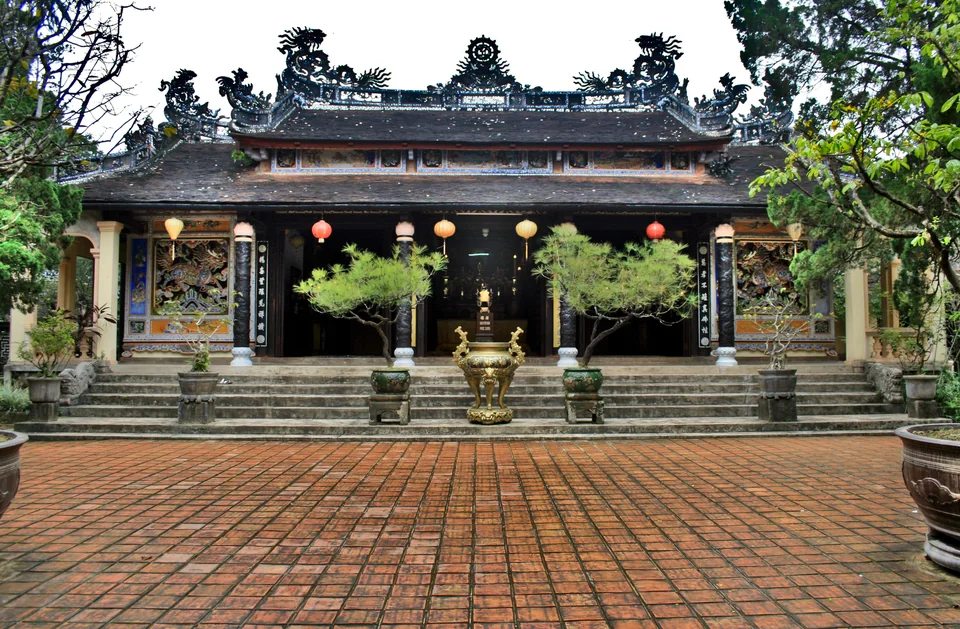
Tu Hieu Pagoda: a contemplative landscape and royal connections
The temple developed from An Duong hermitage, founded by Master Nhat Dinh in 1843. Its name connects compassion with filial devotion, and the temple tradition remembers his care for his mother alongside his religious practice. This human story provides an accessible way into the visit without reducing Buddhism to decoration. Ask how the founder is remembered and how a modest hermitage became a larger temple. The connection with Plum Village’s spiritual lineage adds another layer, but it does not turn a sightseeing stop into an organised retreat.
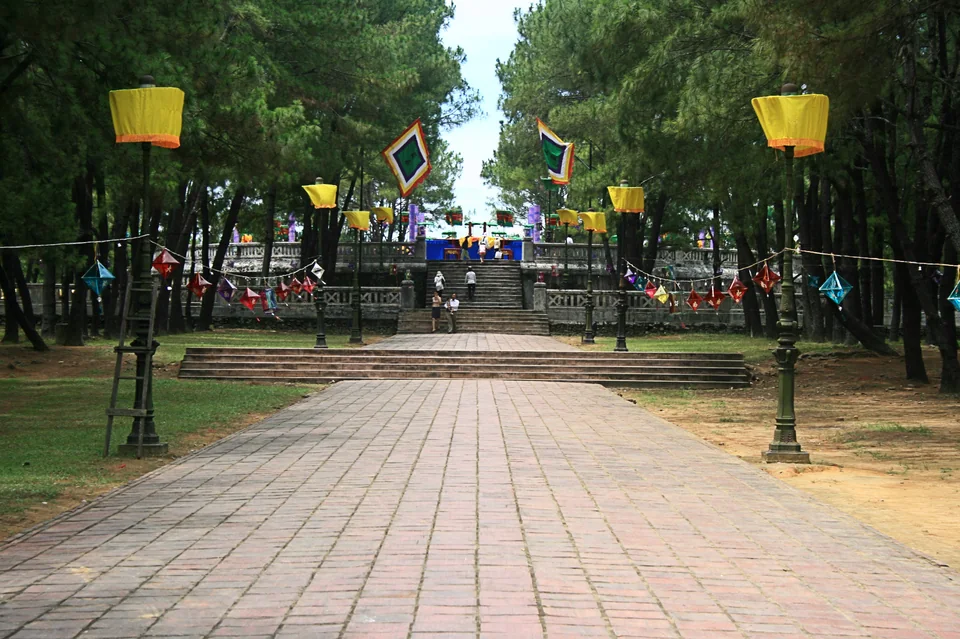

Nam Giao Esplanade: read the space of imperial ritual
Construction of the surviving esplanade began under Emperor Gia Long in 1806, with the first ceremony here in 1807. These dates place it in the early Nguyen dynasty, not in the earlier history of the Nguyen lords. The setting was used for the court’s rites of Heaven and Earth; it was not a royal tomb or an everyday residential palace. Keep that function in mind when the open ground seems less immediately elaborate than other monuments. The important architecture includes platforms, boundaries and routes, as well as anything that rises above them.
Choose the experience that fits
| Choice | What to consider |
|---|---|
| Tu Hieu Pagoda: a contemplative landscape and royal connections | Choose Tu Hieu if you want to spend time observing a religious landscape rather than adding another grand façade to a checklist. Check the accessible visitor route and follow guidance around worship areas and graves. A contemplative setting does not guarantee silence, a meeting with monks or a meditation class. If a guide is important, request explanation of the founder and court connections, not just transport to the gate. Leave space to walk and look slowly, and ask before photographing people. The visit rewards a respectful interest in the lives remembered here, whether or not any activity is taking place. |
| Nam Giao Esplanade: read the space of imperial ritual | Nam Giao suits visitors curious about how political authority and cosmology shaped architecture. It can complement a palace visit precisely because it offers a different function and scale. Request a current visitor route and confirmation of access for your date; a historical description does not establish which levels you may enter. Do not assume that a ceremony or reenactment accompanies an ordinary visit, or copy an old festival announcement into your plans. A simple plan or a guide’s explanation can be more valuable than waiting for a performance: the reward is learning to read the landscape itself as an instrument of ritual. |
| Try this | Choose one story to understand at the temple and one relationship between platforms to observe at Nam Giao. |
Ask VietnamGuide AI
Ask VietnamGuide AISources
Explore more
- Hue up close: Dong Khanh details and An Dinh façades
These two complexes reveal changing late Nguyen architecture through worship spaces and a royal family setting.
- Hue from incense bundle to temple courtyard: a small object’s wider life
Thuy Xuan incense village and Thien Mu connect colour with work and purpose.
- A Mekong skill to take home: from wrapping cakes to cooking
Banh xeo, banh cong and a suitable cooking session connect tasting with something you can learn to do.