Travel guide
Tu Hieu Pagoda: a contemplative landscape and royal connections
Tu Hieu offers a different introduction to Hue from a palace gate or a riverside tower. Woodland, water and temple roofs encourage attention to a smaller scale. The place also holds a striking connection between monastic life, care within a family and the people who worked around the royal court.
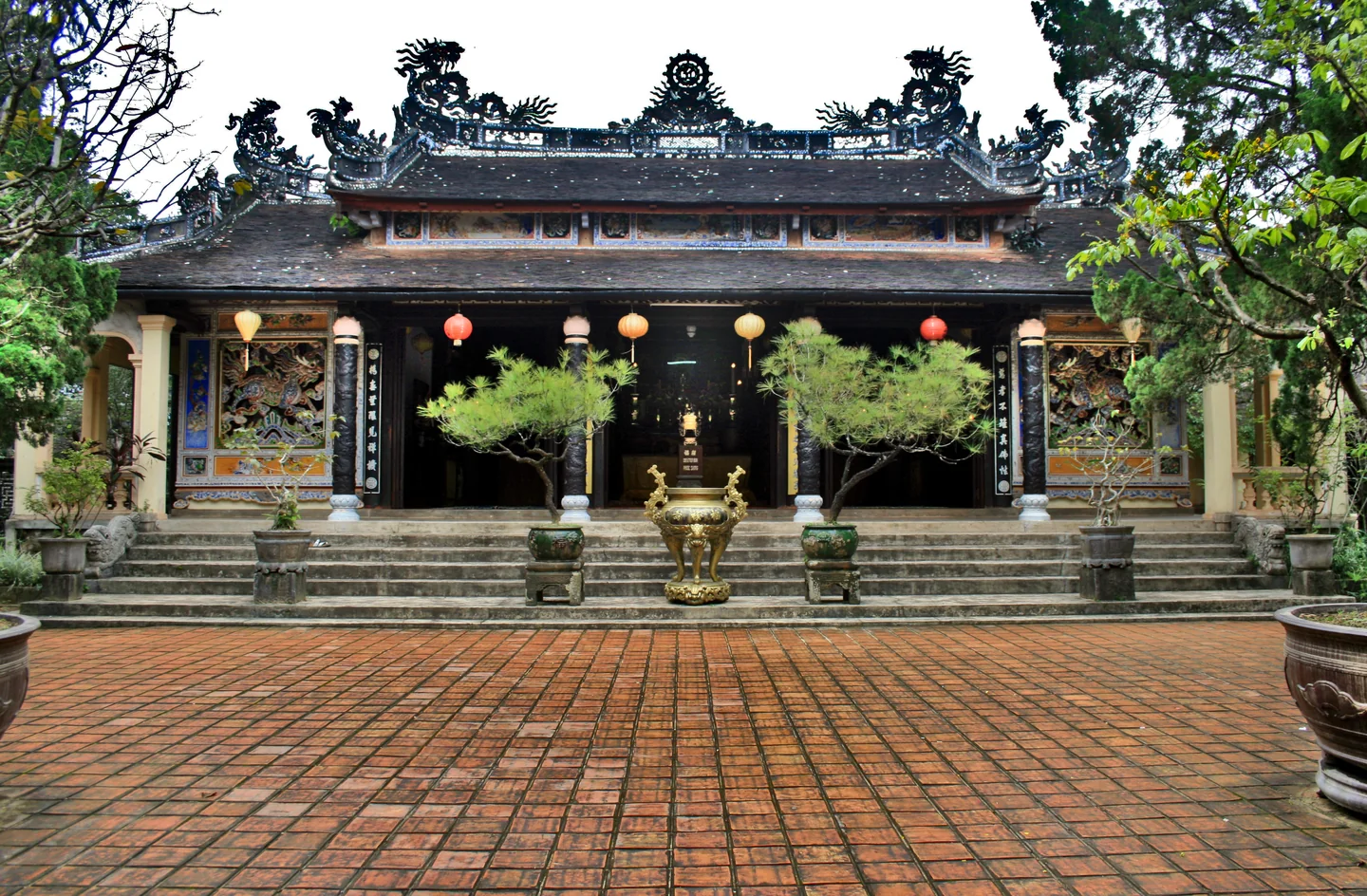
Reference photo: Tu Hieu Pagoda architecture in Hue; contextual scenery, not a vegetarian dish photograph. ·
Lưu Ly · Public domain · Resized and converted to WebP

Begin with the name and the founder
The temple developed from An Duong hermitage, founded by Master Nhat Dinh in 1843. Its name connects compassion with filial devotion, and the temple tradition remembers his care for his mother alongside his religious practice. This human story provides an accessible way into the visit without reducing Buddhism to decoration. Ask how the founder is remembered and how a modest hermitage became a larger temple. The connection with Plum Village’s spiritual lineage adds another layer, but it does not turn a sightseeing stop into an organised retreat.
Look for a landscape of remembrance
The approach through pine trees and the semicircular pond make water and vegetation part of the architectural experience. Notice how the entrance frames the buildings, then how courtyards lead towards worship and remembrance. Tu Hieu is also associated with court eunuchs who supported the temple; their burial ground recalls people whose lives are often absent from accounts centred on emperors. Treat that connection as social history rather than a curiosity. Together, the founder’s story and the graves broaden the meaning of royal Hue beyond ceremonial power and monumental tombs.
Allow a quiet visit without expecting a programme
Choose Tu Hieu if you want to spend time observing a religious landscape rather than adding another grand façade to a checklist. Check the accessible visitor route and follow guidance around worship areas and graves. A contemplative setting does not guarantee silence, a meeting with monks or a meditation class. If a guide is important, request explanation of the founder and court connections, not just transport to the gate. Leave space to walk and look slowly, and ask before photographing people. The visit rewards a respectful interest in the lives remembered here, whether or not any activity is taking place.
Ask VietnamGuide AI
Ask VietnamGuide AISources
Explore more
- Perfume River: choose your kind of boat experience
See Hue from the Perfume River and understand the difference between sightseeing, Ca Hue listening and dining afloat.
- Truong Tien Bridge: see Hue from both riverbanks
Read the steel curves and layered history of Truong Tien Bridge, then choose a riverfront walk that reveals Hue from different angles.
- Dong Ba Market: understand Hue through everyday trade
Explore Dong Ba's food, clothing and gift trade on the north bank of the Perfume River, with thoughtful choices for a market visit.