Travel guide
Hue: architecture within lakes and river scenery
Use water as the architectural setting, keeping a closer angle for roofs, walls and spatial rhythm.
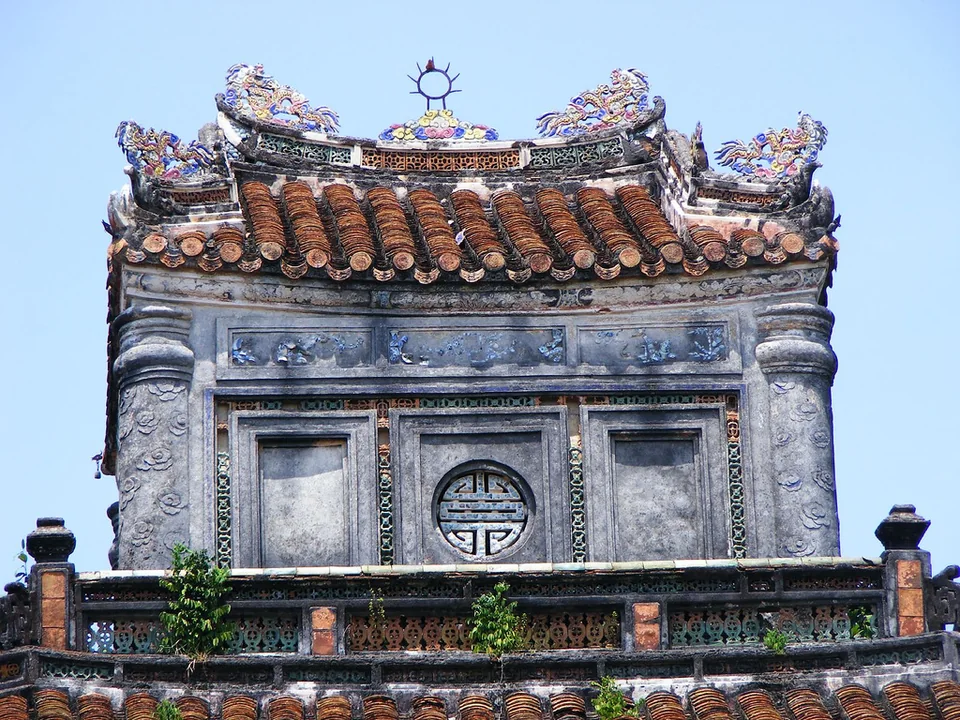

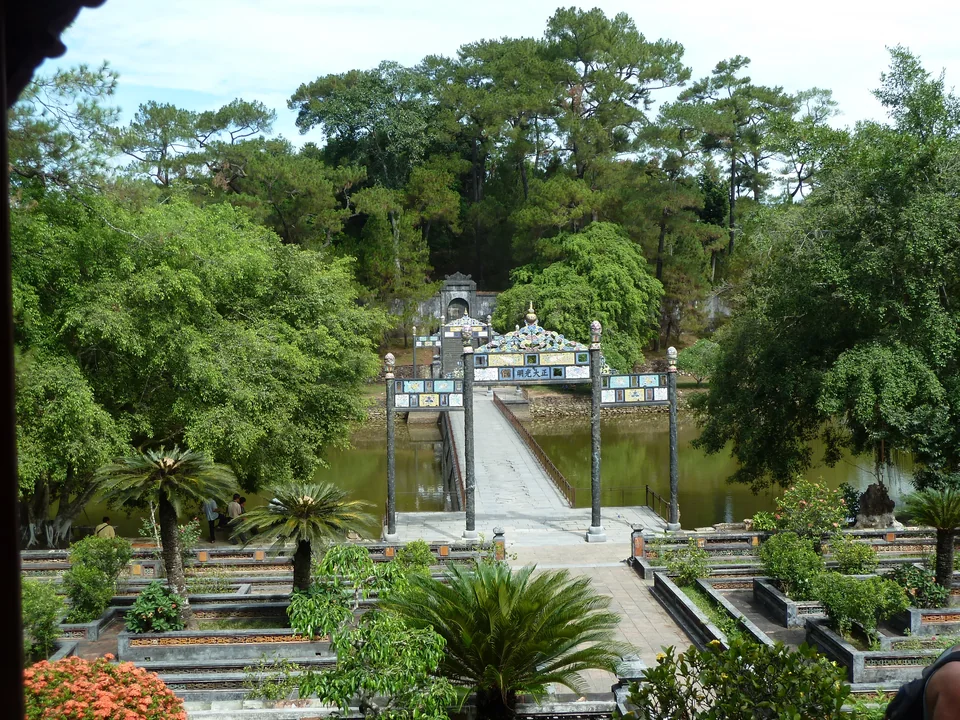

Minh Mang Tomb: architecture between lakes and hills
The principal buildings follow a ceremonial axis with paired elements on either side. Beyond the entrance area, the court’s stone officials, elephants and horses establish a formal register; the stele pavilion adds a written account of the emperor’s life by his successor, Thieu Tri. Sung An temple belongs to the worship area, reminding you that a royal tomb includes ritual buildings as well as a burial place. Look along the centre, then glance sideways: the arrangement becomes clearer when you compare the main line with its balanced flanking structures.
Tu Duc Tomb: lakes, poetry and the Khiem landscape
Luu Khiem Lake began as a stream enlarged into a lake, with Tinh Khiem Island within it. Xung Khiem and Du Khiem pavilions sit beside the water, associated with the emperor’s reading, poetry and enjoyment of the setting. Rather than treating these as scenery around the main tomb, consider them part of the reason the place exists. Watch how roofs frame the water and how buildings relate across it. The reward is an understanding of a royal retreat, not merely a photograph of a picturesque pond between monuments.
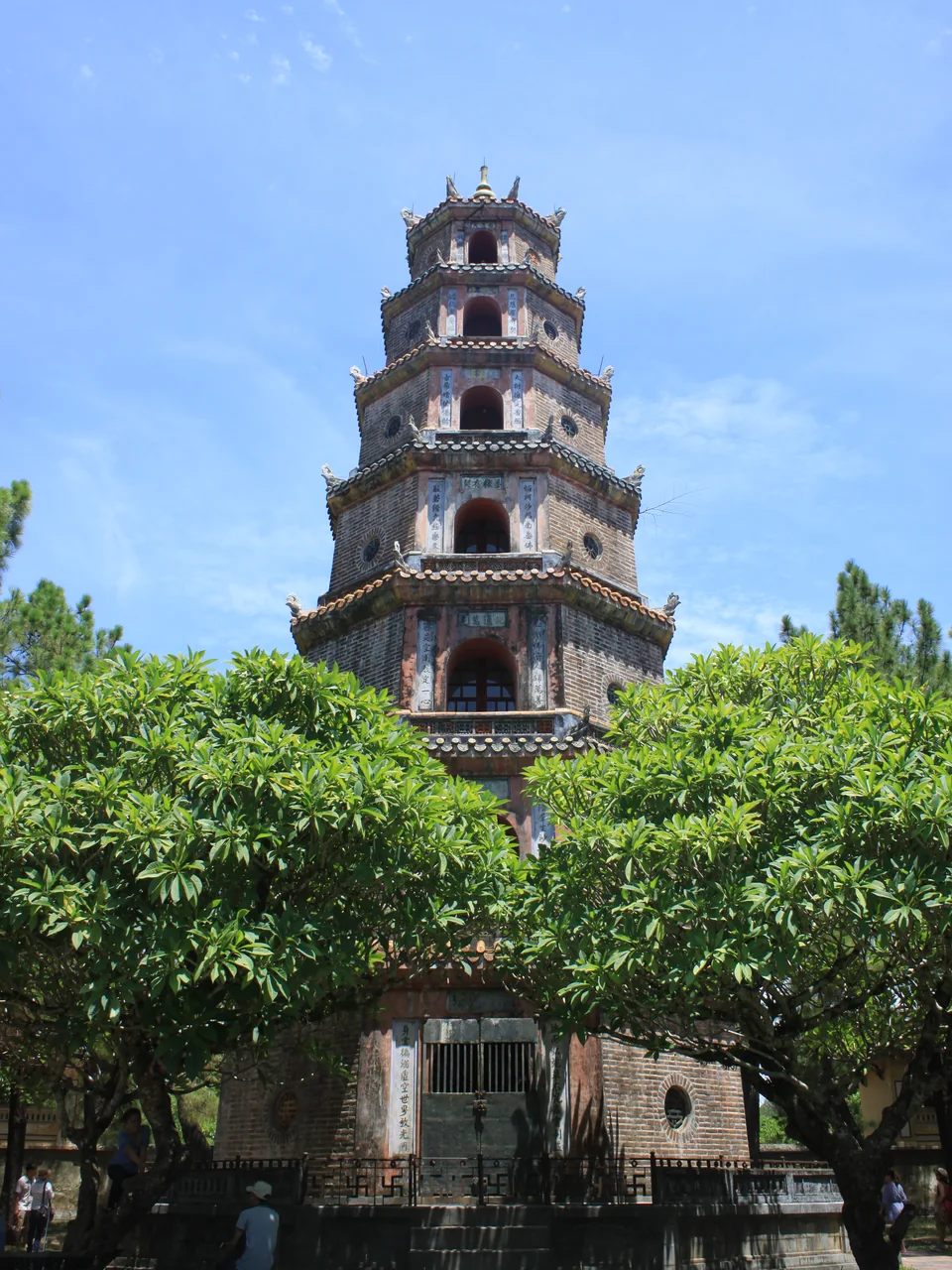

Thien Mu Pagoda: Phuoc Duyen Tower and the river setting
Phuoc Duyen is a seven-storey tower commissioned by Emperor Thieu Tri in the 1840s. It belongs to a much longer temple history associated with the earlier Nguyen lords, not simply the Nguyen dynasty that began in 1802. That distinction makes the tower a useful starting point rather than the whole story. Compare its strong vertical outline with the lower roofs behind it. Ask a guide to separate the dates of the pagoda, tower and later interventions, so different generations of building do not collapse into a single founding moment.
Choose the experience that fits
| Choice | What to consider |
|---|---|
| Minh Mang Tomb: architecture between lakes and hills | Construction began during Minh Mang’s lifetime and was completed under Thieu Tri in 1843. That history helps separate the emperor’s planning from his successor’s work. A guide who explains the axis, worship area and lake setting offers more than a ranking among Hue’s tombs. Ask how the actual walk covers these elements and where the group meets its vehicle afterwards. Confirm current entry arrangements, steps and any restricted areas with the site or provider; the designed axis is not a promise that every gate or burial enclosure is open to visitors. |
| Tu Duc Tomb: lakes, poetry and the Khiem landscape | A worthwhile visit follows the relationship between the residential and ritual buildings and the separate funerary spaces. It should not depend on being shown an accessible burial chamber or a proven exact burial location; the landscape and commemorative architecture already offer much to understand. When arranging a guide, ask whether the lake pavilions, former living spaces and stele are covered in the planned walk. Confirm current building access and any theatre activity separately: the presence of a historic theatre does not promise a performance. Choose enough time for these distinctions rather than simply adding another tomb to a circuit. |
| Thien Mu Pagoda: Phuoc Duyen Tower and the river setting | A road visit and a river outing offer different approaches, but neither description alone establishes the actual entrance arrangements. If arriving by boat, confirm whether landing at Thien Mu is included, where the group meets afterwards and how much time is available. On any visit, follow posted guidance on dress, photography and the areas open to guests. A view of the tower does not imply access inside it. Choose a programme that allows both the river-facing outlook and a respectful look through the accessible grounds, rather than judging the stop only by the famous silhouette. |
Ask VietnamGuide AI
Ask VietnamGuide AISources
- 1. huetourism.gov.vn/Net-kien-truc-lam-me-hoac-long-nguoi-cua-lang-Minh-Mang.html/
Source checked:
- 2. vietnam.travel/things-to-do/an-inside-guide-hue-tombs
Source checked:
- 3. whc.unesco.org/en/activities/318/
Source checked:
- 4. huetourism.gov.vn/Lang-Tu-Duc.html/
Source checked:
- 5. whc.unesco.org/en/activities/320/
Source checked:
- 6. whc.unesco.org/en/activities/322/
Source checked:
- 7. khamphahue.com.vn/Hue-24h/Chi-tiet/tid/Chua-Thien-Mu.html/pid/7243/cid/165
Source checked:
Explore more
- Hoang Su Phi: distant terraces or a closer walk?
Choose a viewpoint or permitted path; golden-field photographs establish neither harvest dates nor permission to enter fields.
- Dak Lak homes: read the community, do not guess from roofs
Use verified place and community names; a house photograph establishes neither residents’ identity nor an invitation inside.
- Dak Lak waterfalls: one wide frame, one detail
Begin wide to understand scale, then study where water meets rock from a permitted viewpoint.