Travel guide
Mo Luong Cave: follow the water story beneath Mai Chau
Mo Luong brings the landscape of Mai Chau indoors. The fields and stilt houses remain nearby, but the story turns towards the water moving through the limestone beneath them. It is worth approaching as both a geological place and a site of local memory. That combination is more interesting than calling it a hidden cave and assuming that every chamber described online can be visited without arrangement.

Begin with the spring, not a dramatic superlative
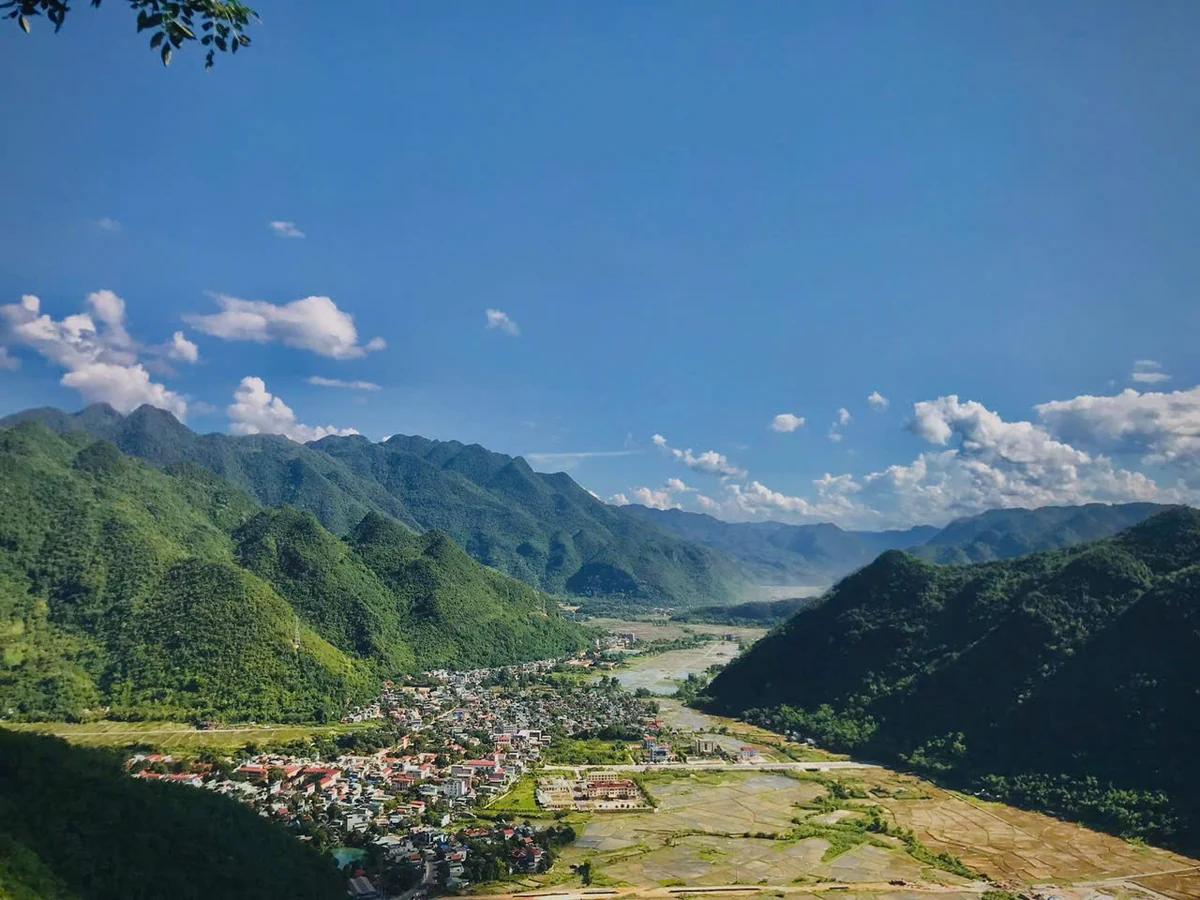
The national tourism database records the White Thai name Bo Luong and explains it as a large water source. Its description connects the underground stream with Mo Luong Lake outside the mountain. This provides a useful way to look at the cave: the landscape is not an isolated collection of rock decorations but part of the valley’s relationship with water. From outside, notice how the mountain edge, lake and settled ground relate to one another. You do not need a claim that it is the biggest or most beautiful cave to make that relationship worth exploring. Nor does an underground stream mean there is a visitor swimming area.
Hear a legend as a legend
The same official record tells a White Thai story about an egg that became a snake, the arrival of water for cultivation and the snake’s transformation into a dragon. It is a cultural explanation of water and gratitude, not a scientific account of how the limestone formed. If a local guide shares the story, ask which details belong to their telling rather than demanding a single definitive version. This makes space for living interpretation. Another recorded name is Hang Bo Doi, associated with wartime use of the cave. These layers of memory give Mo Luong a distinct identity within Mai Chau without turning the visit into a generic cave checklist.
Separate the described cave from the open visitor route
Official descriptions discuss several chambers, formations and changes of level. Historical dimensions or a mention of a ladder do not establish which route is currently maintained for guests. Before setting out, ask your accommodation or the site contact which entrance is in use, whether a guide is required, what part is open and whether there are steps or narrow sections. That conversation matters more than choosing between conflicting distances in travel articles. Someone seeking a gentle valley day should not assume the whole interior is level just because the entrance is close to the settled area. Arrange a shorter visit if that better matches the group.
Combine it with the lakeside and village landscape
Mo Luong can add geological and cultural depth to a stay centred on village walks. Keep the surrounding lake and town setting in the same mental map rather than treating the cave as a remote wilderness expedition. Confirm current charges and visiting arrangements, carry a light if advised, and follow the route the site actually provides. View mineral formations without touching or collecting them. Afterwards, compare the water story with the fields you see outside, or ask your host about local place names over a meal. You do not need to add Chieu Cave on the same outing: one well-understood cave and an unhurried village afternoon can make a richer day than two rushed entrances.
Ask VietnamGuide AI
Ask VietnamGuide AISources
- 1. csdl.vietnamtourism.gov.vn/dest/
Source checked:
- 2. www.vietnamairlines.com/go/en/plan-book/travel/travel-guide/mai-chau-vietnam
Source checked:
Explore more
- Chieu Cave: earn the view without rushing the climb
Understand Chieu Cave’s long stair approach, limestone setting and afternoon-light reputation, then plan a visit that matches your actual walking pace.
- Go Lao Waterfall: make time for the trail, not just the pool
Plan a Go Lao waterfall outing from Mai Chau around the lakeside approach, forest descent, changing water and the return climb.
- Mai Chau in two days: a gentle village stay with time to breathe
A realistic two-day Mai Chau plan centred on village lanes, a comfortable room, hosted meals and a short second-morning outing.