Travel guide
A little poetry, a pause by the sea: Quy Nhon slowly
Read about Han Mac Tu before his memorial at Ghenh Rang, then reserve a separate pause for the city beach. Poetry and everyday seaside life offer different kinds of reflection.


Han Mac Tu at Ghenh Rang: poetry and a place of remembrance
Choose a reliable edition or introduction in a language you understand and read a little before visiting. You do not need to master a whole body of work. Instead, notice a single image, mood or recurring concern, then consider how your response changes in the memorial setting. Read any on-site interpretation carefully and distinguish it from stories told for entertainment. The coastal surroundings may enrich your reading, but they do not prove where a particular poem was composed or whom every line describes.
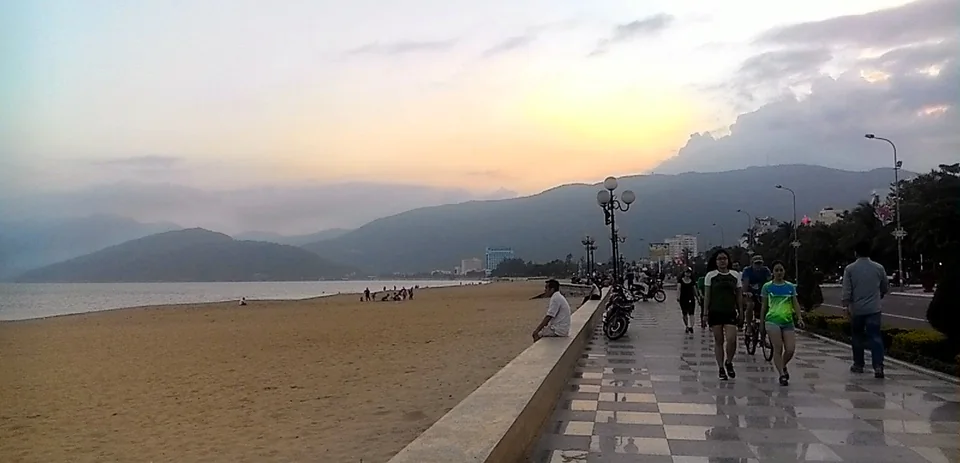



Dawn on Quy Nhon Beach: an unhurried city morning
Choose a convenient section of the city waterfront rather than trying to walk its full length. The national tourism authority describes a central sandy beach with a waterfront cycle path, so there is room to enjoy the sea from the promenade as well as from the sand. Start at a recognizable street junction or landmark and remember it for your return. Look first at the shape of the bay: buildings behind you, a wide horizon ahead and the shoreline carrying the eye towards the hills.
Choose the experience that fits
| Choice | What to consider |
|---|---|
| Han Mac Tu at Ghenh Rang: poetry and a place of remembrance | Pair the tomb with a quiet drink and time to reread your chosen passage or discuss it with a companion. Check current access and the walking approach before travelling, especially for someone who finds slopes or steps difficult. Use comfortable footwear and keep your voice low near other visitors who may be remembering someone. Avoid invented romantic anecdotes or treating illness as a spectacle. If you also plan Quy Hoa, arrange it separately and respect the living medical community; literary interest never grants permission to enter private or clinical spaces. |
| Dawn on Quy Nhon Beach: an unhurried city morning | Check the forecast and that day’s sunrise time for your actual date; do not build the walk around a fixed year-round hour. Bring drinking water and footwear that suits the surface you choose. Follow local beach notices and keep clear of working boats or closed areas; an early walk does not require entering the sea. If rain, strong wind or rough water makes the shoreline uncomfortable, shorten the outing and move breakfast earlier. Families can use the same route as a brief out-and-back stroll with an easy turning point. |
Ask VietnamGuide AI
Ask VietnamGuide AISources
Explore more
- Approaching Cham towers: let the first steps reveal the complex
Banh It’s hilltop forms separate and overlap as you move; Po Nagar places architecture within active worship. Notice the approach and surrounding space to deepen the view beyond a facade.
- Hoi An through ceramics: sea trade and a courtyard dragon
A vessel opens a story of maritime trade; a ceramic dragon draws you into a communal courtyard. Pair these perspectives with the present-day market.
- Hue at three scales: royal home, ancestors and the cosmos
Dien Tho brings royal domestic life closer, The Mieu frames dynastic memory, and Nam Giao opens onto rites of Heaven and Earth. Let function guide your visit.