Travel guide
Quy Nhon in spacing: a pair in town, four structures on a hill
Twin Towers and Banh It become more memorable when composition comes before individual carvings.
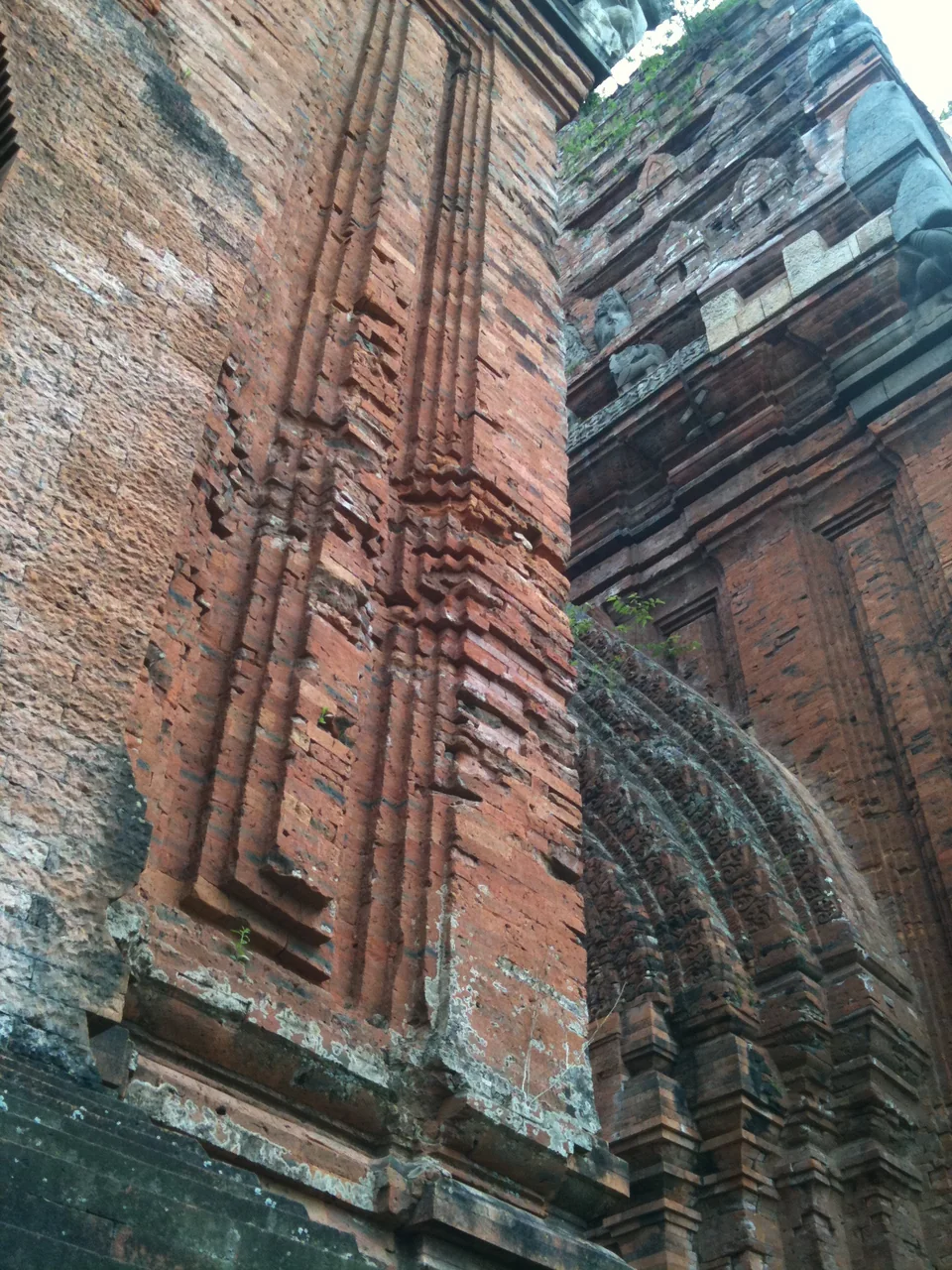

A perspective for your choice
A pair of towers draws attention to the proportions between two masses; Banh It reveals relationships among four structures. Changing your permitted viewpoint lets you read Cham architecture as an arrangement of space, rather than only an attractive brick surface.
Twin Towers: Cham architecture within Quy Nhon
From a permitted position in the grounds, take in the two towers as a single composition. Compare their proportions and the way each upper section narrows above its substantial body. The national tourism authority identifies the site as a Cham monument with Hindu artistic influences. That context gives the brick forms a purpose beyond their striking appearance: these are remains of a sacred architectural tradition. Let the outline settle in your mind before seeking individual carvings; it will help you understand where decoration sits within the larger structure.
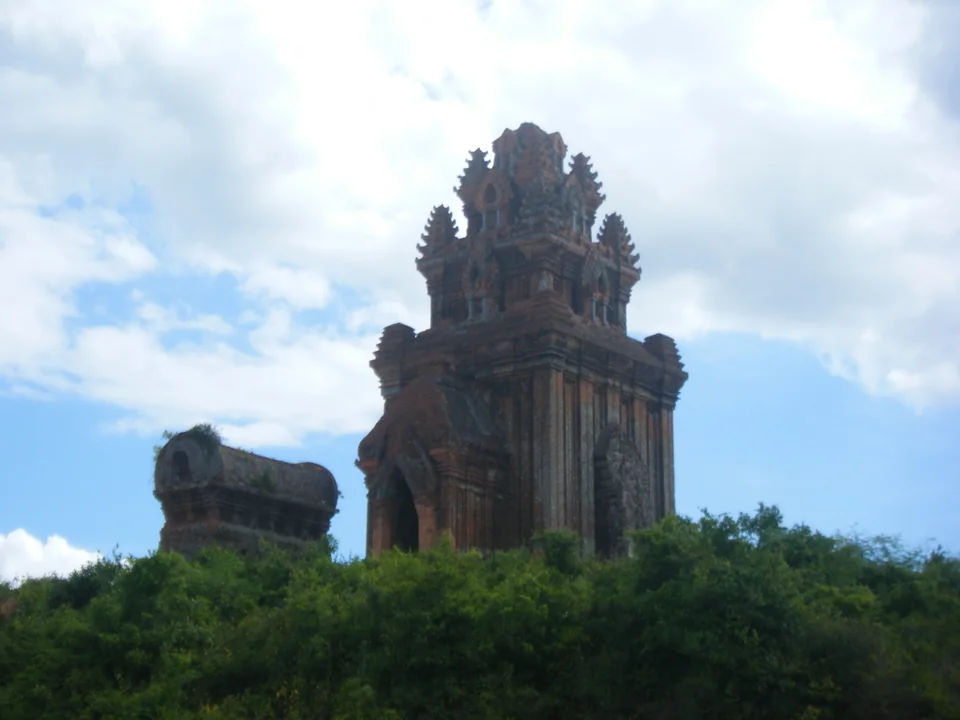

Banh It Towers: four Cham buildings on a hill
Begin at an authorised viewpoint where you can understand the arrangement before moving among the buildings. The national tourism authority explicitly identifies four independent towers, each with a distinct architectural character. Instead of searching for the most impressive one immediately, compare a broad wall with a narrower profile, a roof shape with a doorway, and the spacing between structures. The group becomes more interesting when you notice those relationships. Keep the count of four in mind even when a particular angle hides one building behind another.
Choose the experience that fits
| Choice | What to consider |
|---|---|
| Twin Towers: Cham architecture within Quy Nhon | Choose a part of the day when you can look slowly and take a water break afterward. Confirm the current entrance arrangements when planning your visit, particularly if you need step-free movement or are joining a group. Stay on permitted paths, keep hands and climbing feet off historic brickwork, and follow any instructions about entering the structures. Allow time for a final view of both towers before leaving. A nearby meal or a museum visit can extend the cultural thread without turning this compact urban stop into a rushed circuit of distant monuments. |
| Banh It Towers: four Cham buildings on a hill | Arrange the outward journey and return to Quy Nhon together, allowing for walking, pauses and a meal rather than relying on an ambitious list of stops. Ask about the current entrance arrangements and the amount of climbing if anyone in your party has limited stamina. Bring drinking water and suitable footwear, and shorten the circuit if heat or rain makes the hill uncomfortable. Respect barriers and historic masonry. One carefully chosen additional heritage stop is enough; the four towers deserve space in the day of their own. |
| Try this | Sketch two masses at Twin Towers and four positions at Banh It; add one decorative detail to each diagram. |
Ask VietnamGuide AI
Ask VietnamGuide AISources
- 1. vietnam.travel/node/1453
Source checked:
- 2. dulichquynhon.binhdinh.gov.vn/vi/thapbanhit
Source checked:
Explore more
- Ky Co–Eo Gio with children: choose what the family wants to join
A family-friendly programme need not have the most activities; clear rests and a return plan matter.
- A Mekong skill to take home: from wrapping cakes to cooking
Banh xeo, banh cong and a suitable cooking session connect tasting with something you can learn to do.
- Hue up close: Dong Khanh details and An Dinh façades
These two complexes reveal changing late Nguyen architecture through worship spaces and a royal family setting.