Travel guide
Photographing Tay Ninh respectfully: scenery and sacred spaces
Good Tay Ninh photographs do not require interrupting worship or stepping beyond a safety boundary. The mountain, Holy See, lakeshore and local food offer different subjects, but permission and the purpose of the place come first. Plan a few scenes you want to observe and leave enough time to experience them without turning every stop into a photo session.
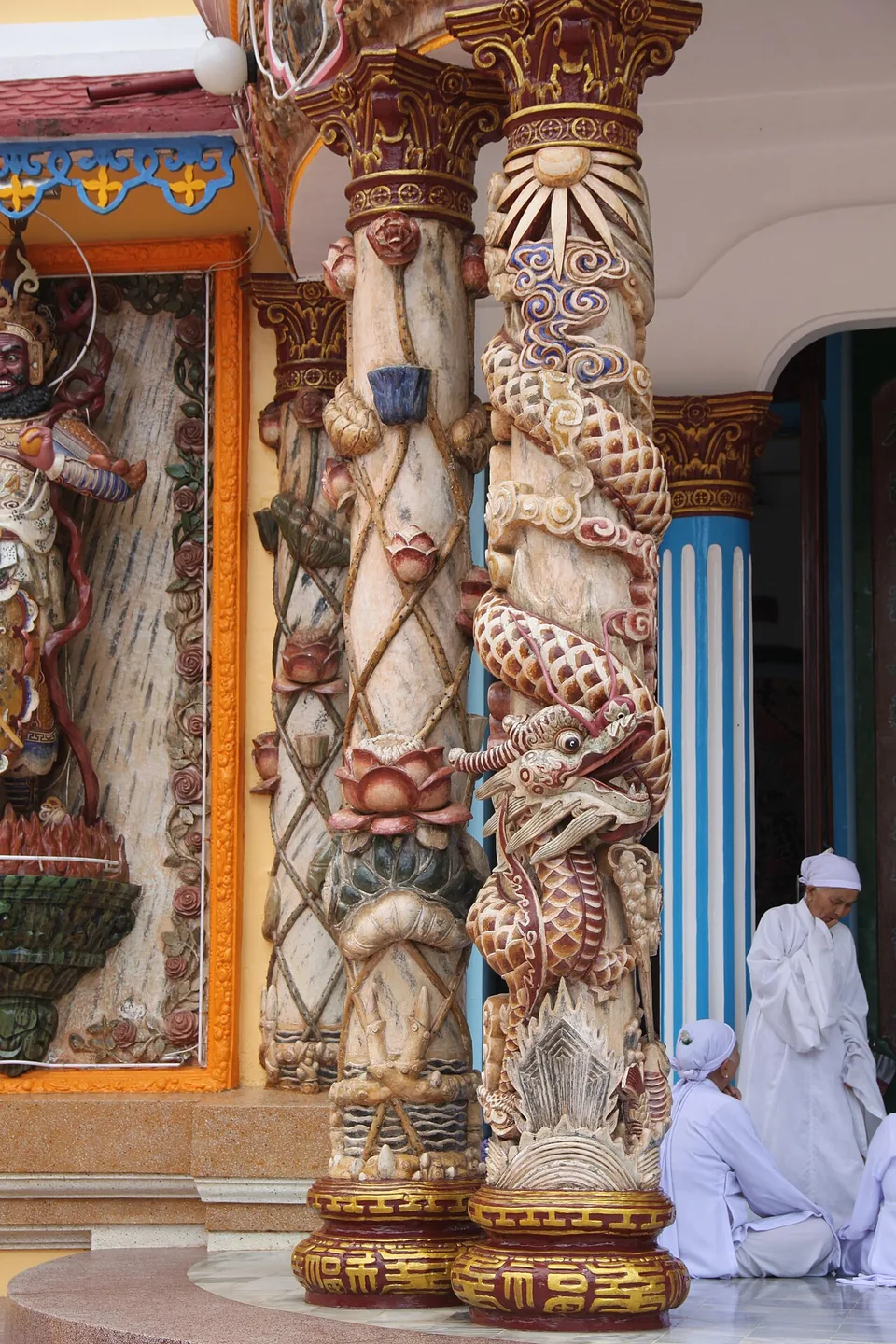
Dragon-column detail at the Cao Dai Holy See — Historical photograph; not evidence of current facilities, operating schedule or travel-day conditions.
Gary Todd from Xinzheng, China / Wikimedia Commons / CC0; resized and converted to WebP · CC0 1.0 · Resized and converted to WebP

Sacred architecture and active worship
At the Cao Dai Holy See, begin by observing visitor instructions and where people are praying. Wear appropriate clothing, keep quiet and ask whether photographs are allowed in the area you want to enter. Permission to visit does not automatically include close portraits, flash, tripods or photography during a ceremony. If an attendant redirects you or asks you to stop, comply immediately. Do not move religious objects or ask worshippers to perform for the camera.
Landscape photographs without unsafe shortcuts
At Ba Den and around the countryside, work from permitted paths and viewpoints. Cloud, rain and visibility change; a clear panorama is never guaranteed. Do not cross railings, walk onto exposed rocks or stand on the carriageway for a cleaner composition. Around Dau Tieng, choose stable ground and keep children back from the water. A calm-looking reservoir is not evidence that swimming or entering the water for a photograph is safe.
People, markets and food
Ask before photographing a person at close range, especially a child, a worker or a worshipper. A purchase does not buy consent to a portrait. For a craft or food visit, agree on photography before entering a working area and keep equipment away from food preparation. Accept a refusal politely. Record the correct name and location for your caption; avoid presenting a staged arrangement or contextual image as an unaltered record of daily life.
Prepare a light, flexible plan
Carry only equipment you can manage without blocking paths, and protect it from rain. Select a small number of stops, then adjust to actual light and visitor access rather than chasing an unverified sunrise or ceremony timetable. This guide does not recommend drone flying: aerial equipment needs separate checks of permissions and restrictions. Share images with accurate captions and respect requests not to publish identifiable people. The best result preserves both the scene and the dignity of those in it.
Ask VietnamGuide AI
Ask VietnamGuide AISources
- 1. dulich.tayninh.gov.vn/tin-tuc/toa-thanh-cao-dai-tay-ninh-1293
Source checked:
- 2. sunworld.vn/vi/ba-den/di-chuyen/bat-mi-kinh-nghiem-di-cap-treo-nui-ba-den-cho-nguoi-di-lan-dau-20193
Source checked:
- 3. congan.tayninh.gov.vn/vi/chi-tiet-tin-tuc
Source checked:
- 4. dulich.tayninh.gov.vn/tin-tuc/toa-thanh-cao-dai-diem-den-van-hoa-tam-linh-doc-dao-giua-long-tay-ninh-1883
Source checked:
Explore more
- Tay Ninh areas: understand the destination before planning
Distinguish the expanded Tay Ninh province from the Ba Den, Hoa Thanh and Trang Bang visitor circuit, and group stops without backtracking.
- Tay Ninh on a rainy day: change the plan intelligently
Adapt a Tay Ninh itinerary to rain without substituting another exposed mountain, forest trail or lakeshore.
- Tay Ninh in three days and two nights
A slower three-day, two-night Tay Ninh itinerary with a separate nature or history day and no compulsory forest-and-lake marathon.