Travel guide
Vuong family residence: architecture and historical context
The Vuong family residence is a major architectural stop in the Dong Van landscape. Often advertised with a royal nickname, it deserves a more careful visit than that label alone suggests. Look at how buildings, courtyards and ornament form a household complex, and use interpretation to place the family within the history of the highlands without treating an attractive story as established fact.
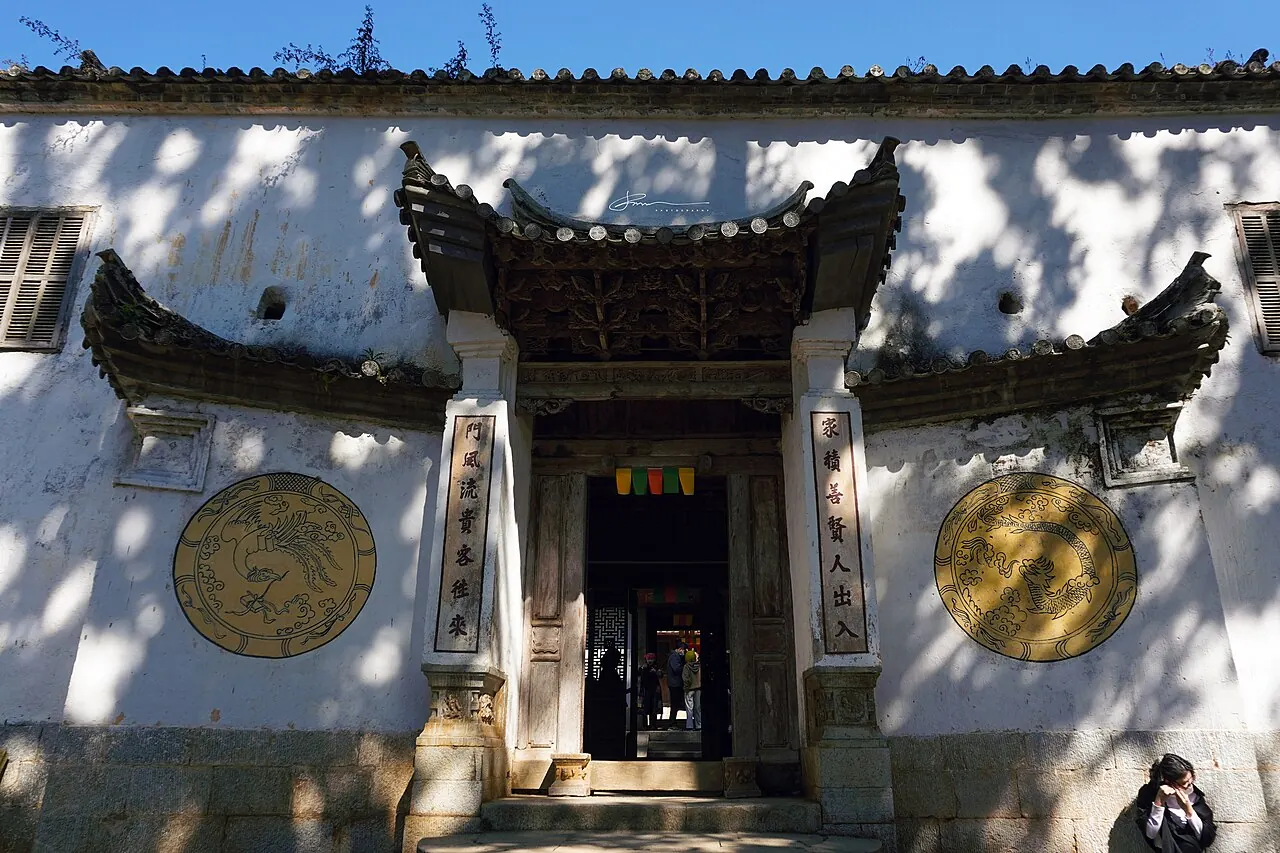
Reference photo: Vuong family residence — entrance ·
NKSTTSSHNVN · CC BY-SA 4.0 · Resized and converted to WebP

Understand the name and setting
The residence is associated with the Vuong family in Sa Phin. If a guide uses a title such as Hmong king, ask what period and social role the phrase refers to rather than assuming it means the same institution as an imperial court. Stories about wealth, construction or political relationships should be distinguished from information presented on official signs. You do not need a precise building date to appreciate the site when the source for that date is unclear.
Read the building materials
UNESCO describes stone, timber and terracotta tiles among the residence's materials, together with carved decorative motifs. Follow the visitor route slowly enough to notice thresholds, roof structure, courtyards and changes between open and covered space. Ask which details are original, repaired or reconstructed if that distinction matters to you. Do not touch fragile carvings, lean against vulnerable woodwork or enter an area behind a barrier for a closer photograph.
Arrange a focused visit
Check current admission, opening arrangements and whether a guide is available before planning a tightly timed stop. A building visit may involve steps, thresholds and uneven ground, so explain mobility needs in advance. Carry a small bag rather than bringing your main luggage through confined spaces. Choose enough time for interpretation and a pause afterwards; a rushed circuit through every courtyard can leave you with little understanding of what you saw.
Connect it to the wider journey
The residence works well as a separate heritage stop alongside the landscapes and villages of the plateau. Avoid presenting it as a universal description of Hmong life: a prominent family's complex is not equivalent to every home or community. If combining Sa Phin with Sung La or Dong Van, let the driver confirm the road order and current conditions. Keep the historical visit distinct from shopping claims or staged activities that are not part of the site's verified programme.
Ask VietnamGuide AI
Ask VietnamGuide AISources
- 1. www.unesco.org/en/iggp/dong-van-karst-plateau-unesco-global-geopark
Source checked:
- 2. vietnam.travel/things-to-do/ha-giang-loop
Source checked:
Explore more
- Ha Giang buckwheat flowers: fields, season and honest expectations
Plan a flower-focused visit around recent field reports, respectful access and a route that still works without peak bloom.
- Ha Giang heritage: reading historic places in context
Separate geology, family history and living culture when visiting heritage sites around Ha Giang.
- Au tau porridge in Ha Giang: understand the risks before ordering
Learn what au tau porridge is, why its ingredient requires caution and how to choose another local meal if preferred.