Travel guide
Buon Ma Thuot on foot: a city walk with room to look closely
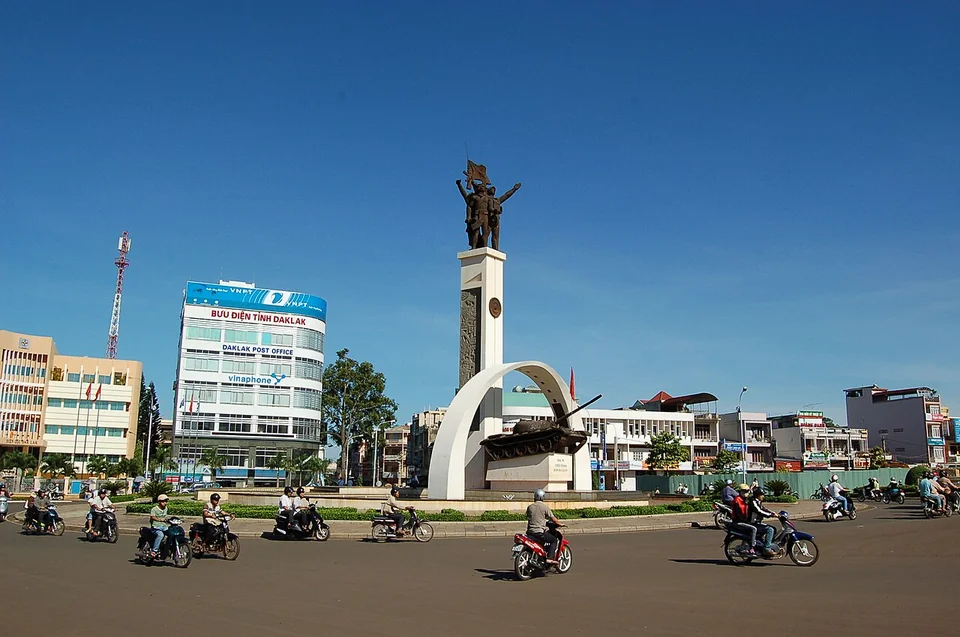
At the central intersection, Buon Ma Thuot reveals itself in motion: motorbikes turning, people meeting, a monument rising above ordinary journeys. A rewarding city walk begins by slowing down enough to read that scene. Build a compact outing around the centre, then choose one extension according to your energy and the day’s conditions.

Read the centre from the pavement
The provincial government’s postcard collection identifies the six-way intersection and Victory Monument as a central city landmark. Start from a public pavement with a clear view rather than aiming straight for the traffic island. Watch how the streets meet and use the monument to orient yourself before consulting the map again. Notice the difference between a photograph that removes all the traffic and the working junction in front of you: movement is part of the place. A wide photograph from an appropriate pavement can explain the setting better than a close-up taken after an awkward crossing. Keep entrances open for shops and residents, and put the camera away while walking around parked vehicles. This is an observation stop, not a reason to claim a ceremonial space or interrupt traffic.
Build a small route instead of chasing pins
Choose your starting pavement, one further stop and a place to finish before leaving your accommodation. Check the actual pedestrian route on a current map; straight lines between attractions hide junctions, entrances and road crossings. If you add Dak Lak Museum, find its visitor gate rather than navigating only to the institution’s postal address. A museum notice dated July 2023 redirected visitors from the Y Ngong entrance to Phan Dinh Giot Street, a useful reminder that a correct building pin can still deliver you to the wrong side. Reconfirm the gate and opening arrangements before setting out. Treat an indoor visit as its own block of time rather than promising to see every display while completing a brisk loop. A shorter walk with a considered stop is easier to adapt when heat or rain changes the afternoon.
Let a pause reveal ordinary city life
Between the landmark and your next stop, choose a café or simple food venue that is visibly receiving customers. Sit where you are welcome to linger, order something you actually want and watch the changing pace of the street. The national tourism authority describes coffee, leafy urban spaces and bun do among the ways to experience Buon Ma Thuot; none needs to become a compulsory checklist. Ask what is being served today rather than requiring a particular dish from an old online picture. If photographing a vendor or someone at work, request permission and accept a refusal without discussion. A conversation about the neighbourhood can add more to the walk than buying several drinks simply to collect café names. Save the place name afterwards so your own notes distinguish a genuine visit from something you merely passed.
Keep the final stretch flexible
Use marked crossing points where available and wait for a workable opportunity; do not step into the junction while studying your phone. Follow local signals and keep children beside you rather than dispersing for photographs. Pavements can require detours around parked vehicles or activity, so anyone with mobility needs should check the proposed stretch and retain a vehicle option. Carry water and protect against the day’s weather without loading yourself for a rural expedition. If the group is tired, finish at the agreed café or arrange a clearly named pickup instead of forcing a circular route back to the start. Before leaving, look again at the monument from the side you have reached and compare the scene with your first impression. The best result is a usable sense of the city’s centre, not a map filled with hurriedly visited pins.
Ask VietnamGuide AI
Ask VietnamGuide AISources
- 1. vpubnd.daklak.gov.vn/TaiLieu/Dak%20Lak_Bo%20Buu%20Thiep.pdf
Source checked:
- 2. daklakmuseum.vn/tin-tuc-su-kien/bai-viet/thong-bao-thay-doi-cong-vao-tham-quan-bao-tang-dak-lak-va-di-tich-lich-su-quoc-gia-biet-dien-bao-dai
Source checked:
- 3. vietnam.travel/things-to-do/7-reasons-explore-dak-lak
Source checked:
Explore more
- Hear the Central Highlands gongs: music within a living culture
Understand gong culture in Dak Lak as community heritage, then arrange a respectful hosted listening experience with clear expectations about context and recording.
- Tong Ju village: follow an Ede textile from thread to meaning
Plan a hosted weaving visit in Tong Ju near Buon Ma Thuot, learn to look at the cloth, meet a maker respectfully and buy with a clearer idea of the work.
- Dray Nur waterfall: make time for the water and the landscape
Plan an unhurried Dray Nur visit with clear expectations about viewpoints, mist, changing river conditions and a practical return to Buon Ma Thuot.