Travel guide
Ko Tam: a garden visit with Ede cultural context
Ko Tam offers a gentler alternative to a long rural drive: a managed setting where landscaped space and cultural presentation meet. Its interest is not that every corner represents an untouched village, but that visitors can slow down, notice design choices and ask how Ede references are being interpreted. A clear expectation makes this a more rewarding stop than arriving for a photograph alone.

Understand the kind of place you are entering
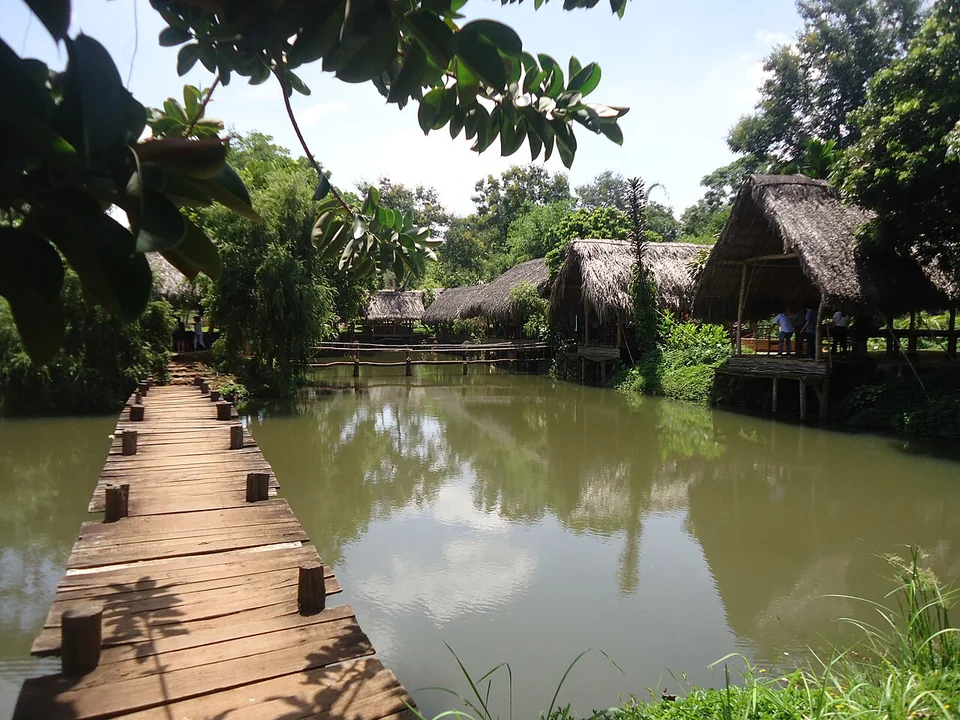
Provincial planning records describe Ko Tam as an ecocultural tourism development intended to present Ede and Central Highlands cultural elements. That is a useful frame: this is a visitor attraction with designed spaces, rather than an invitation into any private home or a national park. Notice how paths, planting, resting places and buildings organise the visit. Some features may serve leisure, others interpretation or food service. A managed landscape is not less worth seeing because it is managed; the important question is what it helps you understand and which services you actually wish to use.
Read architecture as an introduction
The cultural references in built form can prepare you to recognise details later in a living village or museum. Look at the overall relation between a raised building, its access and the shared space around it, rather than using a decorative detail as a definition of all Ede houses. Ask a guide or staff member which structures are recreations, which objects have explanatory labels and what local people contributed to the presentation. Communities and households are diverse, and a tourism display cannot stand for every family’s life. A short, informed conversation can give the visit more depth than a rapid circuit of photo points.
Let the garden set a slower pace
Instead of trying to consume every feature, choose a walking section and a place to sit. Plants, shade and the arrangement of water or open ground shape how the space feels at different times of day. Photograph the relationship between a building and its surroundings, not only a tightly framed doorway. If a public path is busy, wait or return after a rest rather than stepping into planted areas. For a family or a mixed-ability group, check the surfaces, steps, shade and toilet access at arrival so the outing fits the least mobile person as well as the keen walker.
Arrange a cultural or food experience deliberately
Do not assume gong performances, weaving demonstrations or a particular traditional meal happen continuously. Ask what is available on your date, whether a group booking is needed, which language an explanation can use and what the separate charge covers. If meeting a maker or performer, give their time the same respect you would give a formal workshop. Seek permission before close photographs and avoid handling instruments or craft materials without an invitation. At a meal, ask which dishes are being served and explain dietary restrictions directly. Paying for an entrance does not settle the content of every additional service.
Fit Ko Tam into the city part of your trip
Pairing a measured Ko Tam visit with city coffee or museum time can be more coherent than adding several distant natural sites. Check current opening, the exact drop-off and return transport before leaving your accommodation. Planning documents describe intentions, not a live checklist of completed facilities, so use direct confirmation for prices, activities and access needs. Leave with a question you have explored: how does a tourism landscape present local culture, and what would you like to understand next in a community-led visit? That connection turns an easy outing into a useful part of a wider Dak Lak journey.
Ask VietnamGuide AI
Ask VietnamGuide AISources
- 1. vhttdl.daklak.gov.vn/Articles/Detail/213
Source checked:
- 2. daklak.gov.vn/-/cac-iem-tham-quan-du-lich
Source checked:
Explore more
- Ea Kao lake: an afternoon beside Buon Ma Thuot’s working waters
See Ea Kao as a reservoir shaped by irrigation, village labour and changing shorelines. Plan a slow lakeside afternoon without assuming a beach or boat service.
- Photographing Dray Nur: water, mist and a sense of scale
Make stronger Dray Nur photographs from authorised viewpoints, using foreground, changing water texture and practical protection against spray.
- Gia Long waterfall: find the distinct landscape behind the name
Understand Gia Long, also called Dray Sap Thuong, and plan a focused visit with confirmed access, realistic transfers and time for the forest-edge setting.