Travel guide
Da Lat climate: seasons and practical packing
Da Lat’s highland climate changes the packing question: prepare for cool evenings and wet outings, rather than assuming a beach wardrobe will work. Choose dates according to how much your holiday depends on outdoor views, and keep the daily forecast separate from general seasonal patterns.
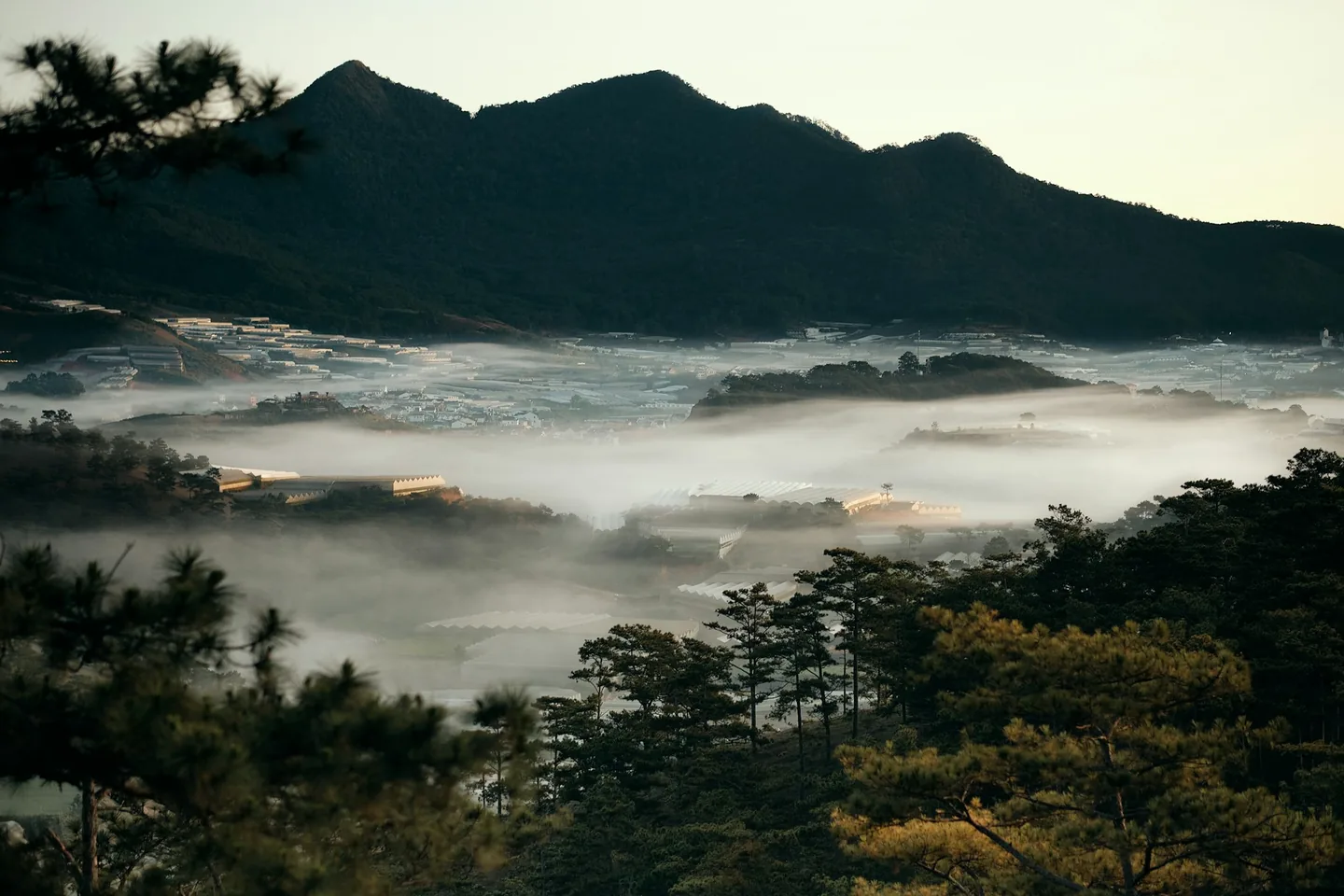
Morning mist over a Da Lat valley and pine trees.
Mạnh Ngô · Unsplash License · Resized and converted to WebP
Choose a season around your priorities
Vietnam Tourism describes a cool highland setting at roughly 1,500 metres, with rain generally from May to October and December to March highlighted for drier visits. These are planning patterns, not a promise for particular dates. If long walks, mountain views or photography are central to your trip, allow spare time for a weather change. If cafés, architecture and relaxed meals are your priorities, you can build a more flexible programme with shorter outdoor intervals.
Pack a small, adaptable system
Bring a warm layer for evenings, a light waterproof outer layer and shoes with grip that you can comfortably walk in. A spare pair of socks and a bag for wet items are useful when moving between activities. Keep sun protection and drinking water available even when the air feels cool. For children or relatives sensitive to cold, make the evening layer easy to reach rather than leaving it in checked luggage.
Read the day before choosing the route
Check the local forecast before leaving, then ask your host about actual conditions on your intended route. A wet city pavement and a muddy forest trail require different decisions. Shorten or replace an outing if visibility, wind or rain would remove its main attraction. Ask accommodation about room warmth, drying space and vehicle access; a scenic photograph tells you little about comfort after a rainy afternoon.
Ask VietnamGuide AI
Ask VietnamGuide AISources
Explore more
- Da Lat villas: reading architecture from the street
Plan an observant walk among Da Lat’s villa architecture, with public viewpoints, private-property boundaries and colonial context in mind.
- Cau Dat: tea hills and highland agriculture
Explore Cau Dat as a working tea landscape, separating field views, tasting and farm access from cloud-chasing promises.
- K’Ho coffee: beans and the people who grow them
Plan a respectful K’Ho coffee visit near Da Lat: producer questions, workshop expectations, photography and useful buying choices.