Travel guide
K’Ho coffee: beans and the people who grow them
A K’Ho coffee visit is most rewarding when the people making the coffee lead the conversation. The producer describes itself as a family cooperative growing Arabica on Langbiang Mountain. Approach this as a chance to learn about a particular business and its growers, rather than a general tour of an ethnic community.
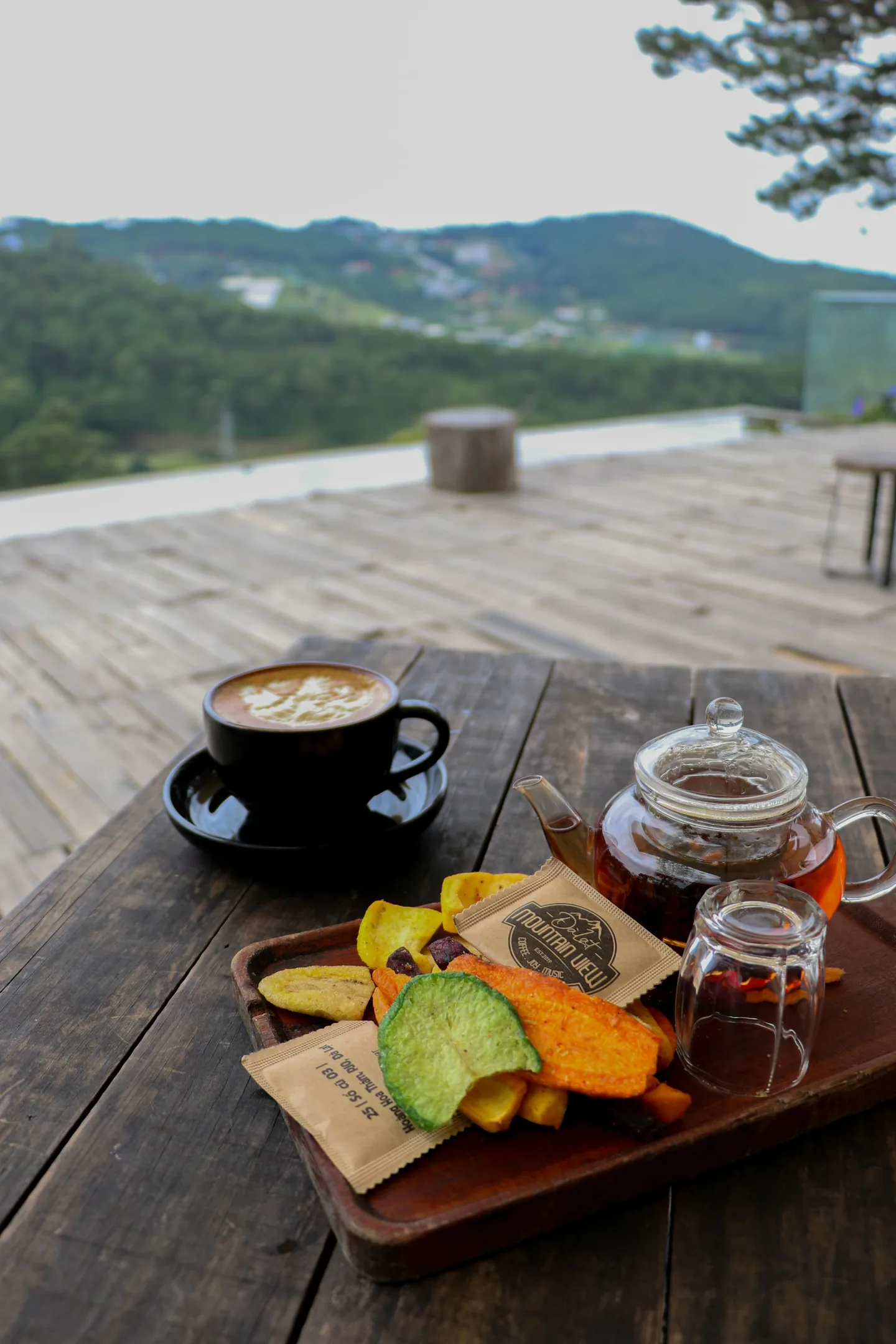
Illustrative photo: Coffee, tea and snacks with a Da Lat view.
Hoang Thanh · Unsplash License · Resized and converted to WebP
Ask who will host you
Write to the producer with your date, group size and preferred language. Ask whether the available experience is a café stop, a guided explanation or a practical workshop; these are different commitments. Explain if you want to understand cultivation, processing or roasting. A useful question is who performs each stage and how beans move from a family plot to a labelled retail bag. Let the host decide which working areas can be entered.
Follow the coffee, with permission
Ask your guide to connect one sample with its grower, variety and processing method. If demonstrations are offered, distinguish a teaching example from work actually taking place that day. Harvesting cannot be inferred from photographs of ripe cherries. Ask before touching equipment or picking fruit. Photograph people only with consent, and do not enter homes, gardens or village paths on the assumption that a paid coffee visit grants wider access.
Choose a purchase you understand
Before buying beans, compare the roast date, recommended brewing method, grind and pack size with what you can use at home. Ask what the label establishes about origin and avoid assuming that community ownership automatically proves a certification. Confirm the workshop language, included tastings, total charge, walking surfaces and return transport directly. A short, clearly agreed visit can be more meaningful than an ambitious itinerary.
Ask VietnamGuide AI
Ask VietnamGuide AISources
- 1. www.khocoffee.com/
Source checked:
- 2. vietnam.travel/things-to-do/da-lat-tour-coffee-lovers
Source checked:
Explore more
- Da Lat villas: reading architecture from the street
Plan an observant walk among Da Lat’s villa architecture, with public viewpoints, private-property boundaries and colonial context in mind.
- Cau Dat: tea hills and highland agriculture
Explore Cau Dat as a working tea landscape, separating field views, tasting and farm access from cloud-chasing promises.
- Da Lat Arabica: planning a thoughtful coffee tasting
Compare Da Lat Arabica with useful questions about origin, processing, roast and brewing. Design a tasting that helps you choose beans.