Travel guide
Da Lat Arabica: planning a thoughtful coffee tasting
A tasting should help you recognise what you enjoy, not test whether you can repeat a barista’s vocabulary. Da Lat’s coffee producers offer a starting point for exploring Arabica; the useful next step is identifying the particular beans in your cup. Ask for a small, explained comparison rather than ordering several unrelated sweet drinks.
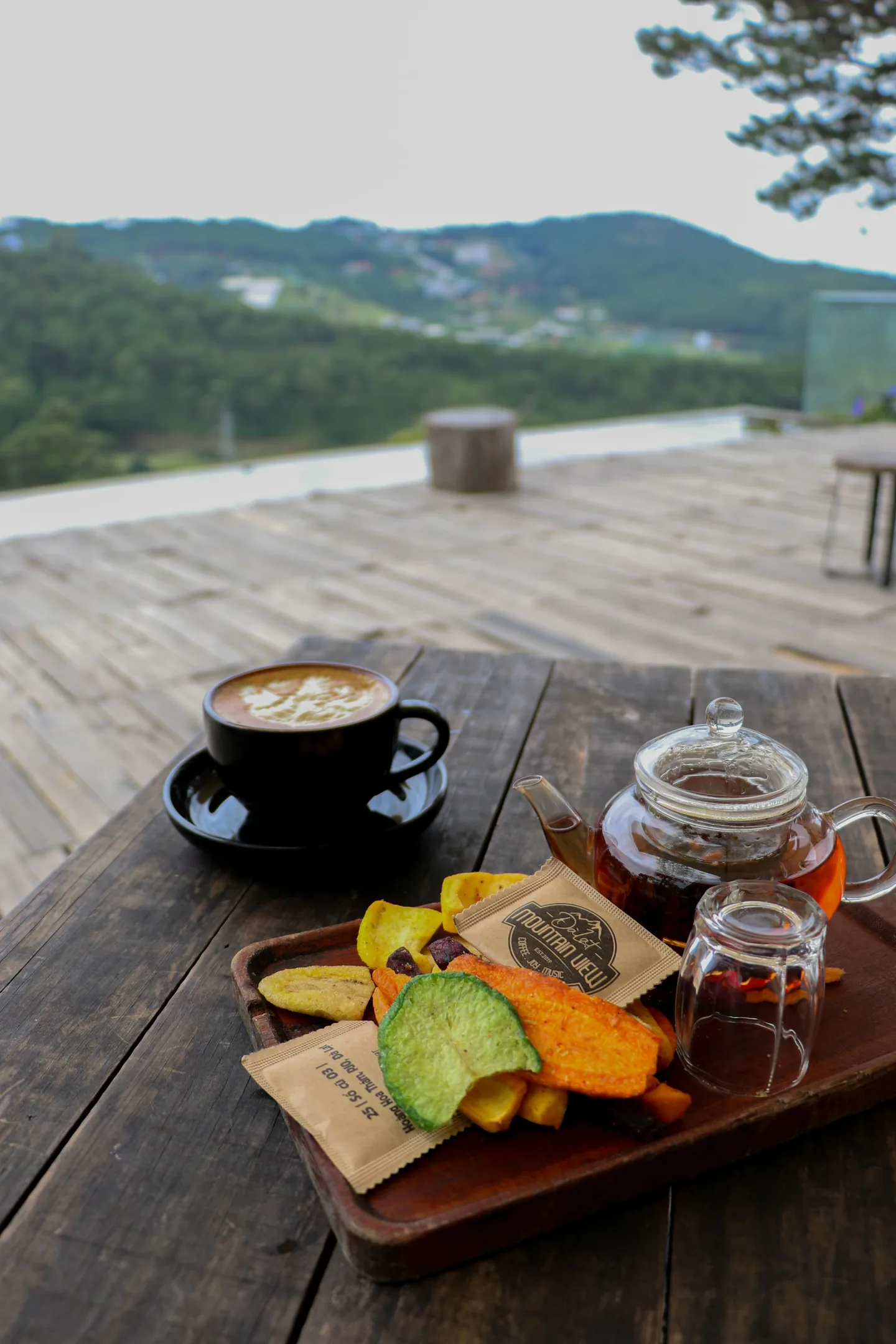
Coffee, tea and snacks with a Da Lat view.
Hoang Thanh · Unsplash License · Resized and converted to WebP
Build a comparison you can interpret
If the café agrees, compare two coffees brewed by the same method, preferably without added milk or sugar at first. Ask the host to explain which variables differ: origin, variety, processing or roast. If both beans and brewing change, your preference remains useful but cannot identify one single cause. You do not need a formal cupping session to learn; an ordinary tasting with clear labels can be enough.
Make your own notes before the explanation
Try describing aroma, perceived sweetness, acidity, bitterness and texture in everyday language. A fruit comparison describes a sensation, not proof that fruit was added. Taste again as the cup cools if comfortable, and ask whether the experience changes. Keep portions modest, drink water and stop when you have had enough caffeine.
Turn preference into a sensible purchase
Ask for the farm or growing area, processing method, roast date and recommended recipe for the coffee you liked. A Da Lat shop address alone does not establish where the beans grew. Tell the seller whether you use a phin, filter or espresso machine and whether you need grinding. Buy a quantity you can finish rather than choosing the largest bag. Confirm tasting charges and language beforehand; if an explained comparison is unavailable, one well-described cup is still a useful introduction.
Ask VietnamGuide AI
Ask VietnamGuide AISources
- 1. www.khocoffee.com/
Source checked:
- 2. vietnam.travel/things-to-do/da-lat-tour-coffee-lovers
Source checked:
Explore more
- Da Lat villas: reading architecture from the street
Plan an observant walk among Da Lat’s villa architecture, with public viewpoints, private-property boundaries and colonial context in mind.
- Cau Dat: tea hills and highland agriculture
Explore Cau Dat as a working tea landscape, separating field views, tasting and farm access from cloud-chasing promises.
- K’Ho coffee: beans and the people who grow them
Plan a respectful K’Ho coffee visit near Da Lat: producer questions, workshop expectations, photography and useful buying choices.