Travel guide
Linh Phuoc Pagoda: mosaic craftsmanship in Trai Mat
Linh Phuoc Pagoda in Trai Mat rewards a slower look at surfaces rather than a race through photo spots. Vietnam’s national tourism authority identifies its mosaic-covered architecture; the useful question is how small pieces become a coherent religious setting.
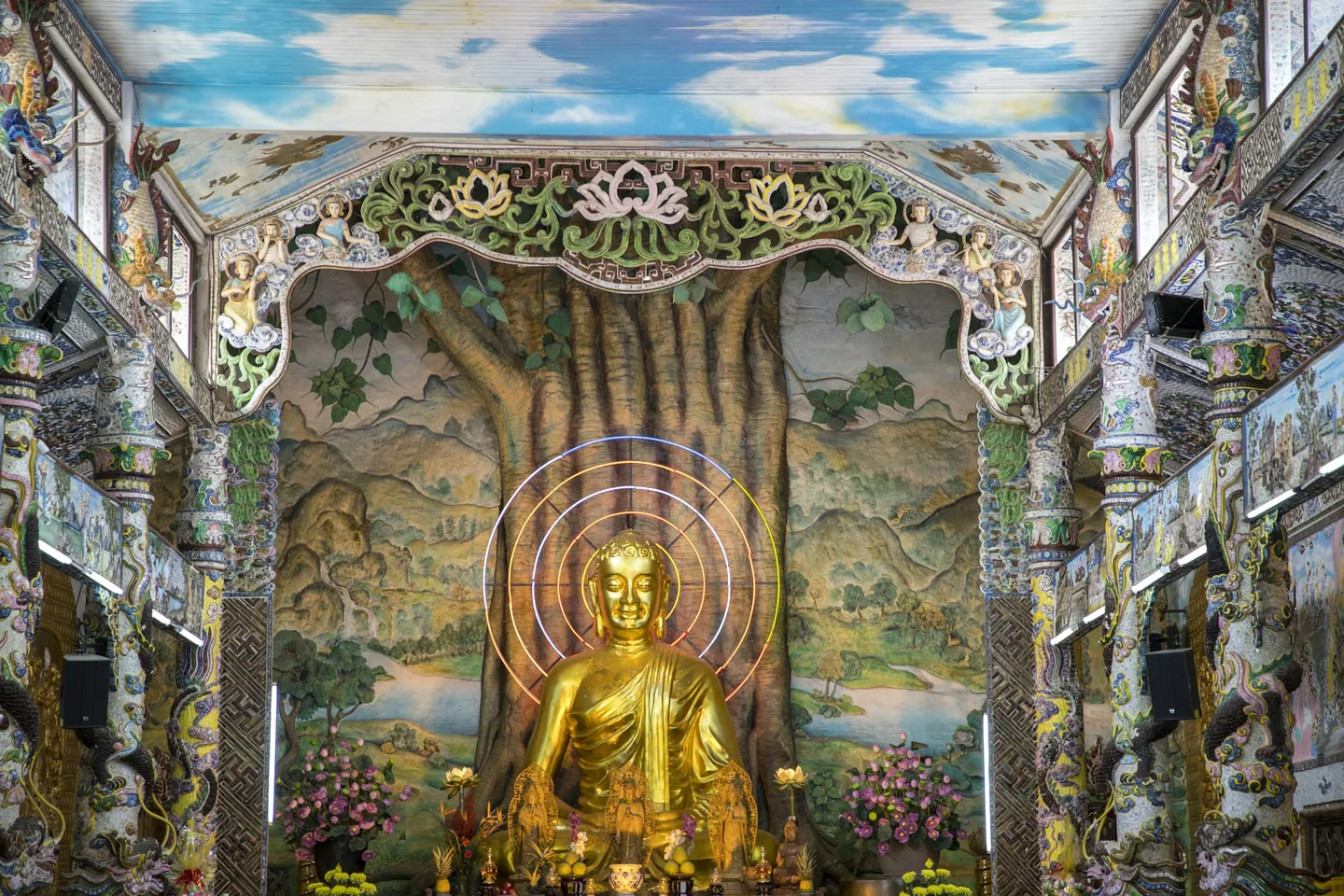
A Buddha statue and decorated columns at Linh Phuoc Pagoda, Trai Mat.
Abdelrahman Ismail · Unsplash License · Resized and converted to WebP
Look from the whole to the detail
Begin in a permitted courtyard, taking in the relationship between decorated structures before concentrating on one panel. Observe how fragments create colour changes, outlines and a sense of movement. Then step back to see how the detail belongs to the larger composition. This is a way of looking, not an instruction to touch fragile decoration or enter every building. For a meaningful photograph, make one wider frame and one detail from a permitted position instead of collecting many nearly identical portraits.
Give worship priority
This remains a Buddhist place of worship. Wear modest clothing, keep voices low and follow signs about shoes and photography. Ask before photographing people at prayer, and leave entrances and ritual spaces clear. A closed room is a boundary, not an invitation to find another entrance. Families can turn the visit into a quiet observation exercise, asking children to identify patterns without climbing or touching.
Plan the Trai Mat direction
Treat the pagoda as a focused outing toward Trai Mat rather than a quick addition between distant countryside attractions. A railway journey can provide a different approach, but check actual departures, ticket arrangements and the return before building the day around it. A station visit does not guarantee a train service. Confirm present access and ask about steps if mobility is limited; leave time for transport and a nearby break. Choose this visit for craft and religious architecture, rather than expecting a countryside hike or guaranteed ceremony.
Ask VietnamGuide AI
Ask VietnamGuide AISources
Explore more
- Da Lat villas: reading architecture from the street
Plan an observant walk among Da Lat’s villa architecture, with public viewpoints, private-property boundaries and colonial context in mind.
- Cau Dat: tea hills and highland agriculture
Explore Cau Dat as a working tea landscape, separating field views, tasting and farm access from cloud-chasing promises.
- K’Ho coffee: beans and the people who grow them
Plan a respectful K’Ho coffee visit near Da Lat: producer questions, workshop expectations, photography and useful buying choices.